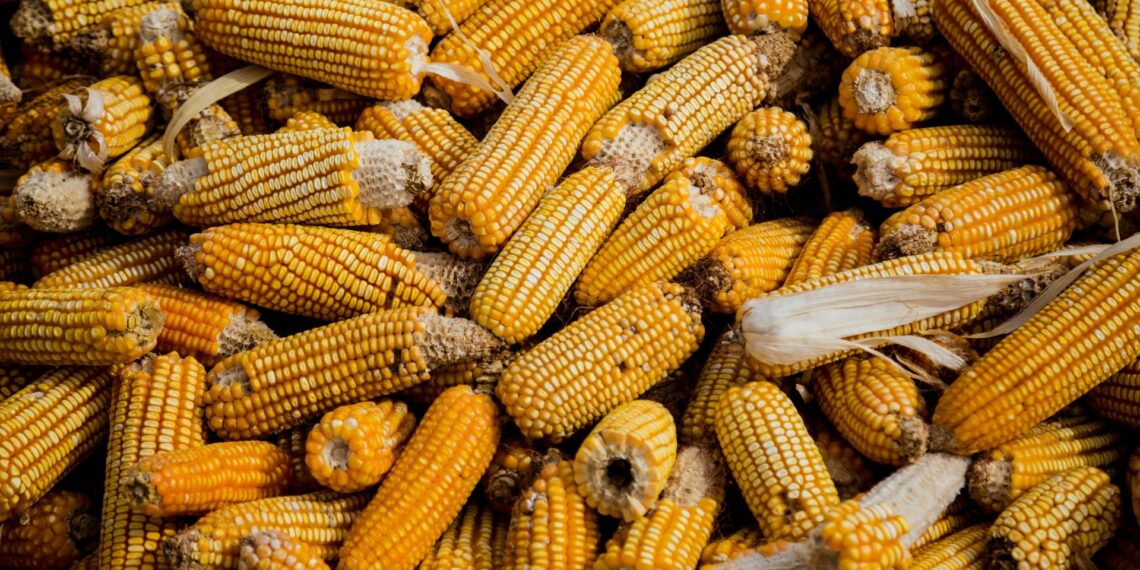
The severe drought that has wreaked havoc on farmers nationwide has forced the country to import white maize for the first time in eight years. The poor harvests caused by the prolonged dry conditions have resulted in a significant shortage of this essential crop.
The executive director of the South African Cereals and Oilseeds Trade Association (Sacota), Dr André van der Vyver, said the imports do not mean the country cannot feed itself, however, the demands from neighbouring states forced the decision to be taken.
SA needed to import maize
“From a Southern African perspective, during most years South Africa also supplies countries such as Botswana, Namibia, etc. with the bulk of their demands. What the South African grain industry did not fully anticipate was that the drought would also affect crop production in the countries around us, and we saw strong demand from particularly Zimbabwe, not only for white maize but also yellow maize.
“As early as end February 2024 it became evident that South Africa would have to import yellow maize and possibly white maize and soybeans. Johannesburg Stock Exchange traded maize and soybean prices started to increase steadily and by end April 2024, the first shipment of Argentinian yellow maize was offloaded in Cape Town,” he said.
Related stories
- White maize prices rise, food costs to go up
- Farmers demand fair play amid GM maize imports
- Mzansi’s maize production drops, but exports hold firm
He said to date, Sacota’s multi-national grain trading members have imported a total of 20 yellow maize vessels or approximately 518 000 tons of yellow maize.
“The first of two vessels containing 32 255 tons of United States soybeans was offloaded in November 2024 with more anticipated during the remainder of the season. A thousand tons of soybeans were also imported from Ukraine.
“According to South African Grain Information Services (SAGIS) published on Friday, another vessel – also likely from the US – containing 46 000 tons of white maize is anticipated to be imported in February 2025. While traders are importing products through Cape Town, Gqeberha and Durban, they are also exporting to other Southern African countries at a record pace,” he said.
‘We will get back to our feet’
Van der Vyver added that maize imports are not permanent and they hope the situation will normalise, especially with recent rains that have hit the central parts of the country.
“Imports will and hopefully should continue until end April 2025. Prices will probably remain high to encourage imports. Good and continuous rain for the new 2024/25 production season finally started shortly before Christmas, depending on the area.
“Most plantings have since been completed and earlier plantings that suffered from the November/December 2024 heatwave have, in most cases, recovered nicely. After last year’s drought, not only the farmers but all of South Africa is desperately looking for an above-average crop,” he said.
According to Van der Vyver, South Africa is a small open economy by global standards and will therefore always import and export as needed.
“We also have a moral responsibility to supply products to our neighbouring countries. However, the minister of agriculture and government, in general, must take cognisance of the impact on staple food prices for the underprivileged consumers and be prepared to support these consumers timely, where necessary, and if not done already.
“In the end, the consumers who can least afford it will be forced to pay the high prices. White maize remains a basic staple food for the underprivileged, of which there are millions in South Africa,” he stated.
Committed to supplying grains
He said Sacota trading members remain committed to the timely supply of grain and oilseeds to all areas and consumers to the best of their ability.
A maize farmer in Denilton, Limpopo Oupa Mokoena, said they are hopeful that with the recent rains, the country can be able to continue feeding itself and neighbouring countries.
“From our understanding, it is a matter of ensuring that the country does not run out of food. In the interim, we hope the government will fast-track helping farmers especially those who have faced drought.
“While exporting is not what we are looking for, at this moment it is needed and we remain hopeful that soon we will not need to export and sustain ourselves because part of sustaining jobs is being able to plant and harvest and sell,” he said.
READ NEXT: Steenhuisen urges unity for Africa’s food security goals
Sign up for Mzansi Today: Your daily take on the news and happenings from the agriculture value chain