Goss’s wilt is emerging as a significant bacterial disease affecting maize production across South Africa, raising concern among crop producers due to its ability to spread rapidly and reduce yields.
Once established in a field, Goss’s wilt can be difficult to manage and may lead to premature plant death, reduced grain fill, and substantial yield losses if not identified early, as explained in Grain SA Magazine. Its impact extends beyond individual farms, as it can spread through infected residue, contaminated equipment, and water movement, making it a broader regional production risk.
For farmers, understanding how to identify, prevent, and limit the spread of Goss’s wilt is now a critical part of protecting both productivity and profitability in maize production systems.
Neo Hlongwane, research and development lead at Barenbrug Seeds South Africa, says the disease has become a growing concern for local producers. “Goss’s wilt is a bacterial disease of maize caused by Clavibacter michiganensis subsp. nebraskensis. It thrives in hot, humid conditions and primarily affects cereal crops such as maize and sorghum,” Hlongwane explains.
With Goss’s wilt classified as a regulated disease in South Africa, reporting and collaboration are essential. As of 2026, Goss’s wilt (Clavibacter nebraskensis) is officially listed as a regulated pest under the Agricultural Pests Act, 1983 (Act No. 36 of 1983), reinforcing the importance of coordinated surveillance, reporting, and containment efforts across the maize production sector.
“An injury to one farmer is an injury to all,” Hlongwane says. “The sooner we contain outbreaks, the better we protect regional production and national food security.”
Related stories
- Maize farmers tighten defences as Goss’s wilt spreads
- Goss’s wilt: The silent threat farmers cannot ignore
- Maize farmer Matsole builds empire on education and hard work
- Post-planting checklist for a successful crop season
Understanding how Goss’s wilt spreads
Unlike many crop diseases that are insect-driven, Goss’s wilt spreads mainly through physical and environmental pathways.
“The pathogen spreads through infected crop residue, rain or irrigation water, and contaminated agricultural equipment. Farmers often share machinery, and without proper sanitation, that becomes a major risk factor,” Hlongwane cautions.
Although not confirmed as seed-borne, the disease can still be carried on contaminated seed surfaces.
“There’s an important distinction: a seed-borne pathogen infects the seed internally, while in this case, the bacteria may simply be present on the surface of infested seed or grain.”
Key symptoms to look out for
Regular field scouting is critical, and farmers should monitor crops from early growth stages through to silking. Hlongwane advises that inspection is very important and farmers should look for:
- Premature plant death
- Wilting
- Brown or reddish streaks in the vascular tissue when cutting the stalk
- A foul-smelling bacterial exudate, which is a key indicator of infection
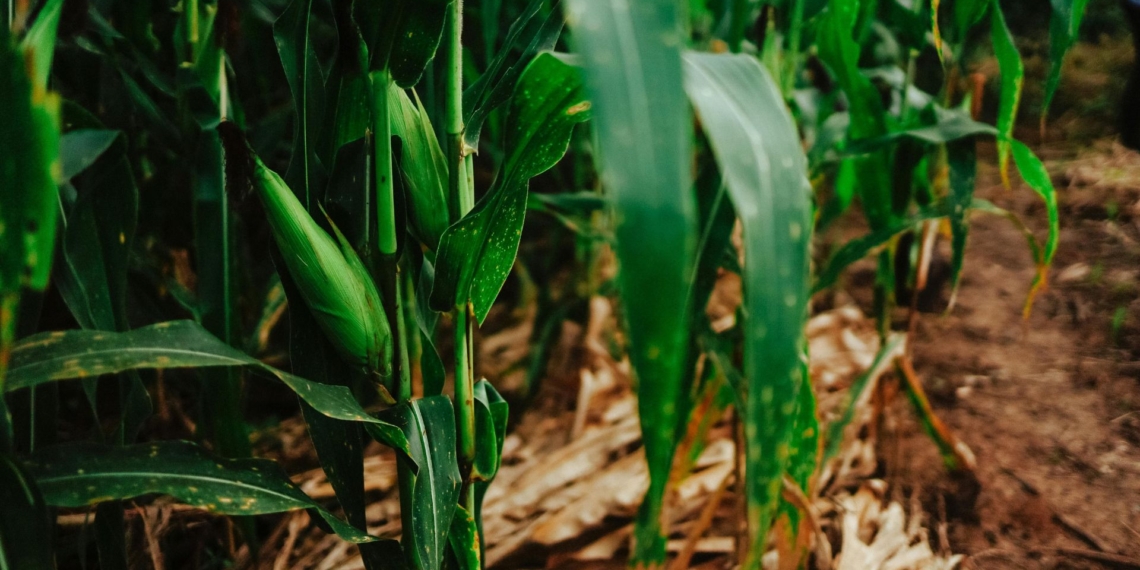
Leaf symptoms are particularly telling. Hlongwane says, “You’ll notice irregular, water-soaked lesions that turn tan or brown with dark borders. The most distinctive sign is the presence of shiny, slimy bacterial exudates, which is what sets Goss’s wilt apart from similar diseases.”
The disease is often confused with conditions such as leaf blight, making accurate identification essential. The department of agriculture advisory guides how farmers can distinguish Goss’s wilt from other similar foliar diseases to ensure correct diagnosis and appropriate management decisions.


What to do if you suspect Goss’s wilt
Farmers are strongly advised not to act on assumptions.
“If you suspect Goss’s wilt, contact the department of agriculture’s directorate of plant health or relevant plant pathology clinics,” avises Hlongwane. “Accurate diagnosis is critical; otherwise, you risk wasting money and resources on the wrong intervention.”
Farmers can contact the department of agriculture’s directorate of plant health at phytomatters@dalrrd.gov.za, as well as the Grain SA research coordination teams for guidance on the correct steps to follow. These channels can advise on sampling procedures and direct farmers to the appropriate disease clinics for confirmation and diagnosis.
Institutions such as the Agricultural Research Council, the University of Pretoria (FABI), and Stellenbosch University are actively involved in surveillance and diagnostics.
No chemical cure, prevention is key
According to the department of agriculture, there are currently no registered chemical or biological products available globally to control Goss’s wilt.
“Farmers must be cautious; there are no approved products for this disease at present. Anyone claiming otherwise should be verified,” Hlongwane cautions.
Instead, management relies on an integrated approach:
- Strict sanitation: Clean and disinfect equipment before and after use.
- Worker hygiene: Ensure boots and tools are disinfected.
- Residue management: Bury infected crop residues through appropriate tillage.
- Weed control: Reduce alternative hosts and inoculum sources.
- Crop rotation: Rotate with non-host crops such as soybeans, sunflowers, or lucerne.
Seed selection: your first line of defence
Seed choice remains one of the most effective preventative strategies.
Hlongwane emphasises that certified hybrid seeds with tolerance or resistance to Goss’s wilt are a farmer’s best investment. These seeds are bred for performance, resilience, and uniformity under stress.
To avoid counterfeit or substandard products, farmers should verify suppliers through the South African National Seed Organisation (SANSOR).
“Always check that your supplier is a registered member and ensure the cultivar has been tested under your local conditions,” he advises.
Minimising losses through early action
Timeous intervention can significantly reduce economic damage. “If even 5% of your field is affected, acting early can prevent further spread and protect the rest of your crop,” Hlongwane notes.
Beyond disease management, farmers should optimise planting times, soil conditions, and crop nutrition to strengthen plant resilience.
READ NEXT: Calf rearing: Why the first few hours define your future herd