The department of agriculture (DoA) has raised the alarm as Goss’s wilt spreads across the South African maize belt. Once confined to four provinces, a recent delimiting survey confirms the bacterial disease is now present in nearly every corner of the country.
According to the department, Goss’s wilt was first detected in 2024 in the Free State, North West, Gauteng, and Eastern Cape. However, following extensive monitoring in 2025, the disease has now been confirmed in Limpopo, Mpumalanga, Northern Cape, and the Western Cape.
Currently, KwaZulu-Natal is the only province where no cases have been recorded.
This wider presence, accelerated by climate change, is reshaping planting decisions as farmers tighten biosecurity and prioritise seed tolerance to mitigate new disease threats.
Jan Hendrik Venter, director of plant health at the department of agriculture, confirmed that scientific efforts are underway to better understand the pest’s biology, with both field observations and molecular testing contributing to identifying the most damaging stages of its lifecycle.
“To date, the pest is manageable at the production level, and cultural methods have been confirmed to limit the activity of the pest. Thus, the damages that could have been incurred by the maize industry due to this emerging plant pest are being lowered, and there is a stewardship workshop programme to educate producers about the pest and its management,” Venter noted.
No restrictions, focus on biosecurity
While the outbreak has raised concerns within the maize industry, authorities emphasise that current conditions do not warrant trade or movement limitations. Instead, the focus remains on equipping farmers with practical tools and knowledge to contain the pest at source.
Industry stakeholders note that early intervention and coordinated awareness efforts are key to preventing escalation. The department’s stewardship workshop programme is expected to play a central role in ensuring that farmers remain informed and equipped to respond effectively.
“On-farm biosecurity measures should be implemented (strict sanitation measures, and cleaning farm implements), and cultural practices such as removing debris, crop rotation, spacing and soil treatment can be used. There are no restrictions and no quarantine zone,” Venter explained.
Related stories
- Goss’s wilt: The silent threat farmers cannot ignore
- White maize hybrid leads Croplan’s South African debut
- White maize prices rise, food costs to go up
- Africa’s seed industry faces pressure amid global uncertainty
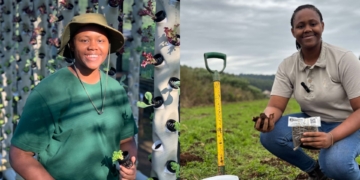
Motshidisi Modise, a maize farmer from Mpumalanga, said the rate of disease discovery is tied to changing weather patterns.
“There will be more discoveries of diseases as climate change continues to affect us at a higher rate than the previous years. We’ve experienced Goss’s wilt at a minimum rate in the past season, but confirmed cases in Gert Sibande have pushed us to reassess our maize block,” Modise said.
Selecting disease-tolerant seeds
For the current season, Modise has prioritised seeds with stronger tolerance ratings. After consulting an agronomist, the farm has planted DKC70-76BK from Dekalb, pulling back on the DKC73-76BR variety used last year.
According to Modise, while no current hybrid seeds offer total avoidance of the disease, selection is critical.
“Our baseline practices haven’t changed drastically because we already focus on crop rotation and residue management,” she noted. However, since the department’s reclassification, the farm has tightened several protocols, including:
- Awareness: Attending grain training with Grain SA and Afasa.
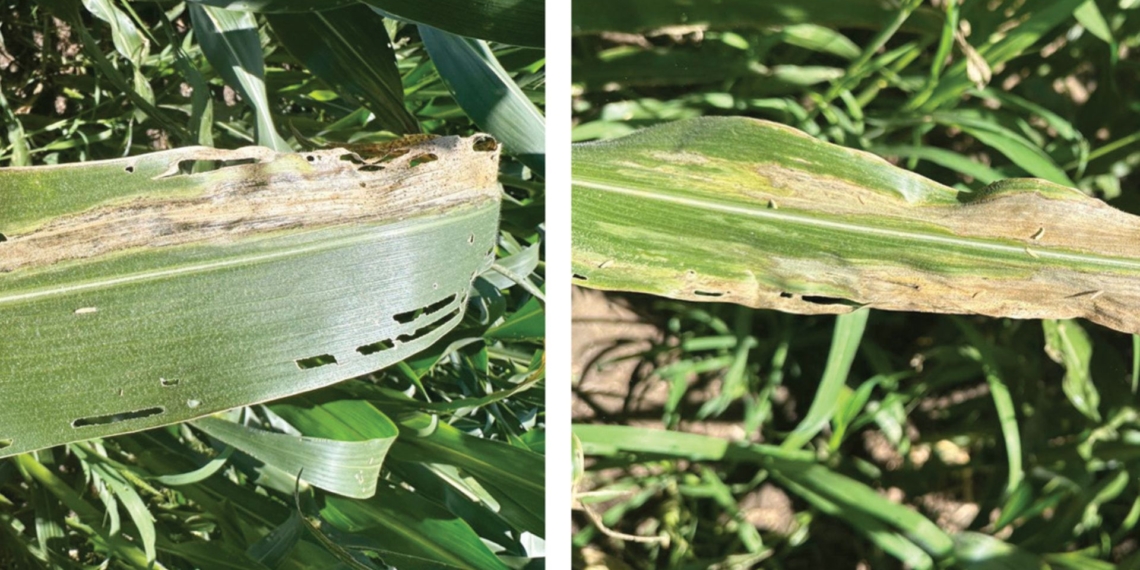
- Scouting: Increased monitoring for symptoms like water-soaked lesions and bacterial ooze.
- Biosecurity: Washing down implements, planters, and tractors when moving between farms.
- Planning ahead: Rotating with soybeans in the coming season.
The impact of the disease is also being felt in the Eastern Cape, one of the original four provinces where the department first identified the pathogen. Farmer Aphiwe Poyo said the wider presence of Goss’s wilt has significantly influenced their crop planning.
“We have become more cautious in selecting maize varieties, prioritising those with better tolerance or resistance to the disease. In addition, we have adjusted our crop rotation plans and reduced continuous maize planting in certain fields to lower the risk of infection,” Poyo explained.
A shared responsibility
Poyo’s team is implementing strict field sanitation, including cleaning equipment between fields and proper residue management to reduce bacterial survival.
“Compared to last year, we have strengthened our preventative approach by increasing awareness and being more proactive rather than reactive,” said Poyo.
While some farmers have not yet encountered the disease, the sentiment on the ground is one of collective responsibility. Simemo Nkosi, a farmer in Mpumalanga who has not been affected personally, believes communication is the best defence.
“If there is one [disease] around my area, we talk about it as farmers and share if there are solutions. If there is an issue, we ensure that we work together as farmers, black or white.
“We do understand that if my neighbour has it, we all have it. We deal with any diseases by working with each other,” he said.
READ NEXT: Why insurance brokers must speak the ‘language of the farmer’