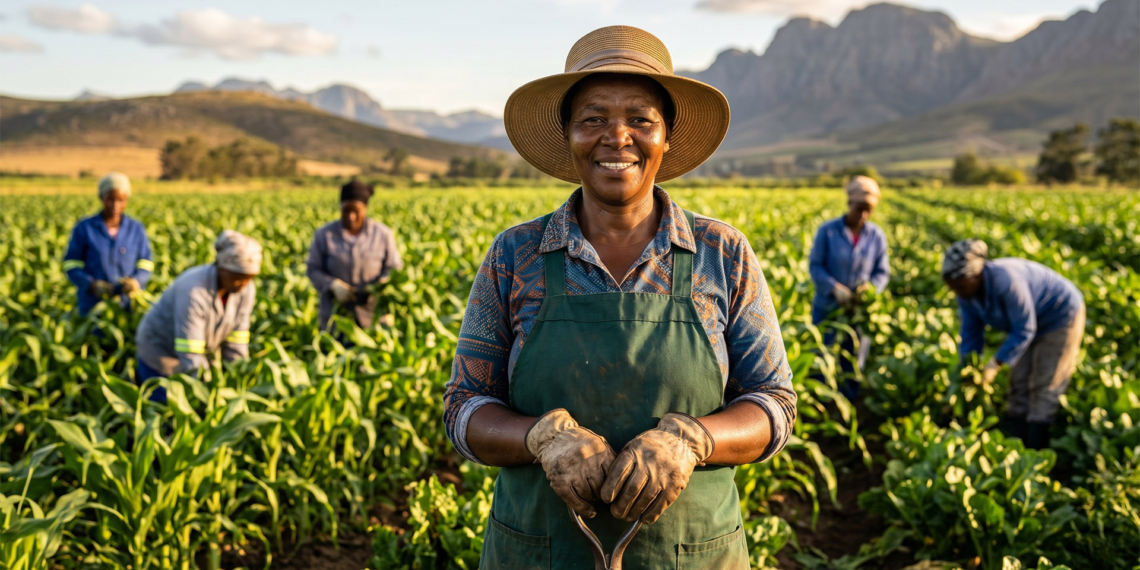
As South Africa celebrates Workers’ Day, many female farmers have vowed to stand in solidarity with farmworkers and create space for fellow women farmers and workers.
The women said it is important to look after the labour force, especially those who produce food. They added that as women, they are often undermined and overlooked as employers of choice.
Sophy Musabeni, a crop farmer operating in Gauteng and Limpopo, said as a woman leading a farming operation, she sees it as an opportunity to honour the people who make the farm function every day.
“Farming is physically demanding and often unpredictable, so I prioritise acknowledging workers not just on this day, but consistently through fair treatment, respect, and inclusion.
“My experiences have shaped a more people-centred approach to management. I place strong emphasis on fair pay, safe working conditions, and clear, respectful communication,” she said.
Putting workers first
Musabeni said women farm owners have an important role in setting a standard for fair labour practices in agriculture. “On my farm, this includes implementing fair wage structures, prioritising safety, and promoting respect across all levels of work.
“I also focus on skills development and empowering workers through knowledge-sharing. These changes may seem small, but they contribute to a more equitable and sustainable farming environment,” she said.
Iris Nompumelelo Nkosi, Mpumalanga crop farmer, said Workers’ Day is deeply personal for her.
“It’s not just a public holiday, it’s a moment to pause and recognise the hands and hearts that keep the farm alive every single day. As a woman leading a farming operation, I see my team as more than workers; they are partners in purpose. On this day, I reflect on how we treat one another beyond production targets.
“I make it a priority to acknowledge their contribution, whether through simple appreciation, sharing a meal, or creating space for open conversations about their needs and well-being,” she said.
Related stories
- Women farmers call for inclusive growth and development
- CGE: Women farmworkers still trapped in systemic exploitation
- On the frontline: Why veterinarians are critical infrastructure
- Rockman unveils R1 billion budget to combat disease, boost jobs
Nkosi indicated that being a woman in agriculture has taught her the importance of empathy, fairness, and strong communication.
“I understand what it feels like to be overlooked or underestimated, so I intentionally create an environment where every worker’s voice matters. Women farm owners carry a powerful responsibility; we are not just running farms, we are shaping the culture of agriculture. We have the opportunity to lead differently and set a higher standard for fairness and humanity in the workplace.
“I believe leadership is not about control, but about impact. If we want to see a better agricultural sector, it starts with how we treat the people who work the land with us. As women, we lead with strength, compassion, and vision, and that combination can transform lives and communities,” she explained.
Building relationships
Meanwhile, Pholisa Bidla, a livestock farmer from Elliot in the Eastern Cape, said 2026 also marks the International Year of the Woman Farmer.
“All this is a big highlight for the critical role of a female farmer and her workers as they need to ensure food security, fight for land rights, better pay and an end to rural eviction.
“Since I am away from them, I make it a point that I make special phone calls and give my time in the form of a conversation with everyone. In these calls, I listen to them and have a personal discussion. I remind them why I have had them there, and we reflect on the job that they are doing, and we also talk about how much I appreciate them,” she said.
Bidla said that for her, it is important to ensure that their voices are heard and that she meets the working conditions stipulated by the Human Rights Commission.
“As documented by the South African Human Rights Commission, as women, we are no different. We need to educate and raise awareness in order to promote respect for human rights and a culture of human rights.
“As a female farmer, I would say it is our responsibility as women to create a good working relationship with our workers. Making sure that each employee feels needed and important, treat them with respect and respect for their rights. For me, the happiness of my employees is reflected in the quality of my livestock,” Bidla said.
She said female farmers need not only to believe that they can, but to show it. “We need to find confidence and speak up, protect the rights of our employees and let our voices be heard.”
READ NEXT: Livestock prices remain high as disease and supply shocks reshape the market