Behind South Africa’s devastating unemployment numbers are young people trapped in a revolving door of short-term contracts. Seriti Institute is using the green economy, agriculture and agri-nodes to turn temporary jobs into sustainable pathways.
South Africa’s latest unemployment figures once again confirmed a painful reality: millions of young people remain locked out of meaningful economic participation.
The latest Quarterly Labour Force Survey released by Statistics South Africa (Stats SA) showed the official unemployment rate increasing to 32.7% in the first quarter of 2026, with young people remaining among the most vulnerable in the labour market.
But beyond the statistics lies another growing challenge: what happens after young people access temporary
opportunities?
Too often, young people move from one short-term opportunity to another without clear pathways into long-term employment, entrepreneurship, or sustainable livelihoods.
Related stories
- Seriti Institute connects partners for lasting community change
- Seriti Institute drives renewal in Komati through agriculture
- Seriti leads grassroots movement for clean air in Jozi
- Proposed Transformation Fund needs clarity to drive real change
The rotating door of short-term employment
Since its inception, Seriti Institute has led successive phases of the National Youth Service (NYS) and Social Employment Fund (SEF) programmes, creating thousands of work opportunities for unemployed youth across South Africa, including more than 12 584 opportunities through NYS and 14 267 through SEF.
“One of the biggest challenges facing young people is not only accessing opportunities but being able to transition beyond them. Skills development becomes more meaningful when it is connected to practical experience, mentorship, and real economic pathways,” says Alwyn Esterhuizen, chief operations officer at Seriti Institute.

More than 3 868 young people have successfully transitioned into full-time employment, entrepreneurship, and other sustainable earning opportunities, highlighting the importance of linking youth programmes to meaningful skills development and long-term economic participation.
Planting seeds for the future green economy
At Seriti Institute, this approach is taking shape through youth pathway internships, which equip young people with practical skills and development opportunities linked to emerging sectors and evolving workplace demands.
Seriti is currently proud to host 73 interns across various projects through the Standard Bank Youth Pathways Skills Programme (YPSP). Based in Modimolle, Standerton, and Deelpan, these young people are actively building competencies aligned with the needs of a future green economy.
Through these placements, they are strengthening their knowledge and practical skills in sustainability, climate resilience, and green enterprise development, ensuring that they are not only prepared for employment but also becoming changemakers in their communities.
The JET Green Pathways Programme has further expanded this impact by onboarding 20 young people in Standerton and Newcastle. This initiative is designed to deepen youth participation in the green economy, while embedding community-based climate action.
At our Seriti offices, an additional 17 interns are gaining critical workplace readiness skills tailored to their chosen career paths. These experiences go beyond technical training, embedding values of professionalism, adaptability, and leadership.
Importantly, interns based at Seriti are being exposed to project implementation, stakeholder engagement, and organisational systems, giving them practical insight into how development programmes operate on the ground. They also gain experience in report writing, coordination, and monitoring tools, ensuring they leave with both technical and administrative competencies, strengthening their employability.
Gaining practical skills for a sustainable future
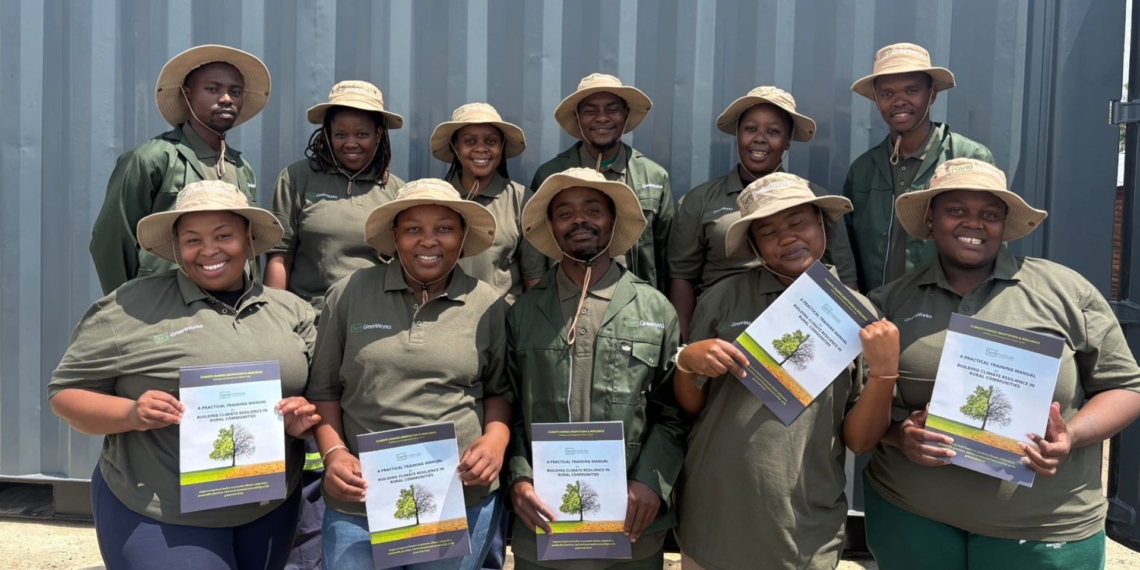
On the ground, young people are gaining practical exposure through climate adaptation activities, technical training, mentorship, enterprise coaching, and access to local market opportunities through Seriti Institute’s Multi-Functional Agri-Nodes (MFANs).
GreenWorks demonstrates that skills development becomes far more impactful when connected to practical
experience and sustainable economic opportunities.
South Africa’s youth do not only need opportunities to survive the present. They need systems that prepare them to participate meaningfully in the future economy.
Stronger investments in skills development, transition support, and future-focused youth programmes supported through stronger collaboration between the government, the private sector, NGOs, and community-based organisations will be critical if South Africa hopes to create sustainable economic participation for young people.
Because behind every unemployment statistic is a young person still waiting not only for work, but for a real chance to build a future.
READ NEXT: Beating the rot below ground: How to protect your root crops