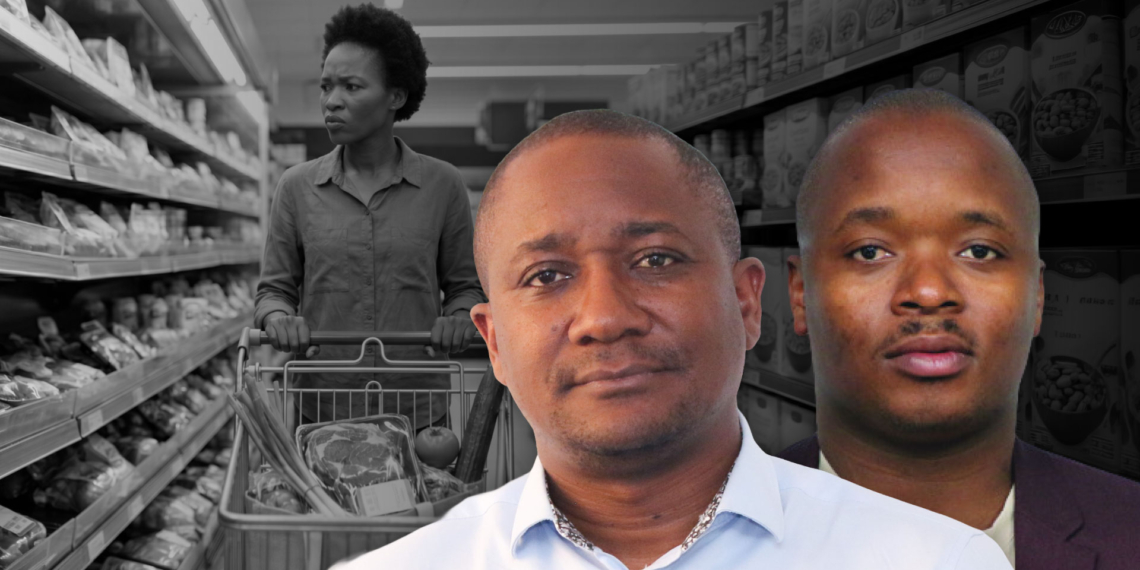
South African consumers remain under pressure as meat prices and logistical costs keep food inflation above CPI. Despite a reprieve from La Niña harvests, NAMC economists Bhekani Zondo and Dr Moses Lubinga warn that skyrocketing diesel prices and a 121% annual spike in global urea fertiliser will inevitably squeeze local farmers and drive up shelf prices.
Global food prices have been on the rise for the third consecutive month as of April 2026, underpinned by the ongoing geopolitical tensions in the Middle East involving the United States/Israel and Iran.
The Middle East conflict is characterised by logistical disruptions in the Strait of Hormuz and has resulted in significant global supply constraints of key agricultural inputs.
This has led to an uptick in maritime trade costs, international crude oil and fertiliser prices that have translated into high global food prices in addition to other supply-related factors. For instance, between February and April 2026, the global price of Brent crude oil has increased by about 69% and by over 78% compared to the same period last year.
Similarly, fertilisers such as Urea have depicted price spiking over 121% year-on-year (y-o-y) compared to the level in April 2025. On the other hand, between January and April 2026, the international food prices indices by the Food and Agriculture Organisation (FAO) have increased by 5%.
During this period, the oil price index recorded the highest increase of 15%, followed by cereals (4%) and the meat price index (4%), respectively, although dairy and sugar prices declined modestly by 1%, reflecting generally adequate global supplies.
Related stories
- How Middle East tensions are reshaping SA agriculture in 2026
- Middle East war: Fuel, fertiliser hike could deal double blow to farmers
- Middle East conflict: SA farmers brace for impact on agri exports
Higher food prices continue
In South Africa, Statistics South Africa (Stats SA) reported that the consumer price index (CPI) increased for the second month to 4% in April 2026 after decelerating for three consecutive months since December 2025, when it was at 3.6%.
On the other hand, inflation on food and non-alcoholic beverages decelerated further for the third month in a row to 2.9%, compared to 3.6% in March. This moderating of consumer food price inflation was underpinned by sufficient domestic supplies of grains, fruits, and vegetables due to the La Niña phenomenon, among other factors.
Nonetheless, South African food prices have been trending well above the CPI since March 2025 and peaked at 5.7% in July 2025 before starting their fluctuating decline, indicating sustained pressures for South African consumers.
The higher-than-CPI food inflation has been driven by several factors, such as the ongoing foot-and-mouth disease (FMD) outbreak, which has led to domestic supply constraints for meat (particularly red meat). Consequently, meat has been one of the most significant drivers of food inflation, with y-o-y increases remaining well above 10% since July 2025.
As of April 2026, despite decelerating for three months in a row meat price inflation remained elevated at 9.4% y-o-y, followed by unprocessed foods (4.3%), other foods products (4.1%), fish and other seafoods (3.2%), sugar & confectionery products (2.5%), oils & fats (2%), and other processed foods (1.7%), respectively. In contrast, fruits and nuts continued to soften food prices with a 6.6% y-o-y inflation decline, followed by vegetables (-1.3%), and cereals (-1.2%).
Impact of rising fuel prices, weather
The rise in agricultural commodity prices, domestically and globally, along with rising fuel costs, presents significant upside risks to consumer food price inflation. If the Middle East conflict persists, sustained increases in fuel and fertiliser prices and other potential input supply disruptions could result in the reduction of agricultural output, thus constraining the supply of essential food commodities and exerting upward pressure on food prices.
This could further be worsened by the expected El Niño phenomenon, characterised by warmer and drier conditions in Southern Africa, which could reduce next season’s summer crop production yields.
It should be noted that farmers do not necessarily produce food products, but rather agricultural commodities that are raw materials for manufactured food. This means that the prices consumers pay for the final food products are a combination of a range of factors, which include labour, transport, and processing, etc. For instance, the recent implementation of the approved 8.7% electricity tariff increase from 1 April 2026 is likely to increase manufacturing costs.
In addition, despite the reprieve of the fuel levy rebate, the department of mineral and petroleum resources (DMPR) has recently announced price hikes of R3.27 per litre for petrol and R5.27 per litre for diesel. Hence, these electricity and fuel price shocks are driving up processing, packaging and distribution costs through the value chain, contributing to retail food price inflation.
Support measures needed for farmers
Although food inflation eased for a second consecutive month in March 2026, the outlook remains uncertain due to rising global crude oil and fertiliser prices, driven by ongoing Middle East tensions, domestic disease outbreaks, and looming El Niño risks. Sufficient domestic food supplies have helped moderate inflationary pressures; however, increasing fuel and electricity costs are likely to exert renewed upward pressure on food prices in the coming months.
Policymakers should therefore strengthen short-term support measures such as biosecurity measures, expansion of the fuel rebate facility, sufficient farmer support initiatives, and targeted social protection for the vulnerable households to cushion farmers and consumers from rising input costs.
Over the medium-long term, implementation of the Agriculture and Agro-processing Master Plan (AAMP) should be fast-tracked. This implies strengthening energy security, exploring policies that support the transition to lower fuel dependence and increasing efficiency in logistics infrastructure.
- Bhekani Zondo and Dr Moses Lubinga are agricultural economists at the National Agricultural Marketing Council (NAMC). The views and opinions expressed in this article are those of the author and do not necessarily reflect the views or positions of Food For Mzansi.
READ NEXT: Plan before you plant: Key insurance lessons for SA farmers