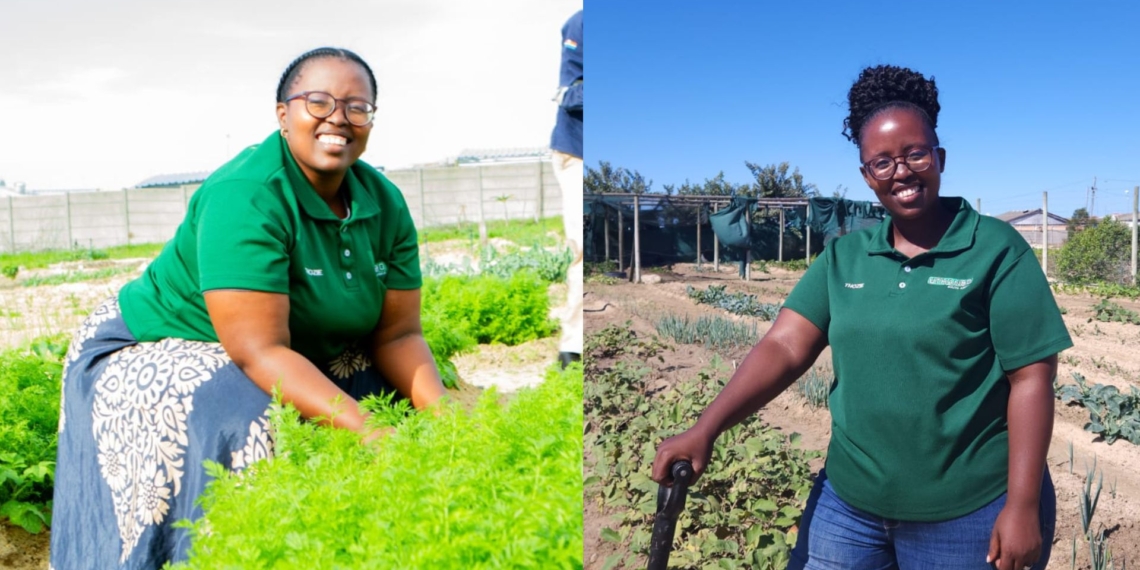
For ten years, Thozama Sikiti from Khayelitsha in Cape Town was a contract worker, but that kind of life never really sat well with her. She wanted something of her own, something that could give her purpose. With time, she found the answer in farming.
In 2019, she started Thuraniso Organic Garden from her backyard. Today, she works with individuals and cooperatives, training and helping them start their own home food gardens.
Before starting, Sikiti says she often saw food gardens in different institutions in Khayelitsha. She then went to Abalimi Bezekhaya and Stodels for training.
“I remember 2019 as a year of self-sacrifice, pushing myself to get information that would help me find independence,” she says. “It was a year of learning and finding spaces with people who share my vision.”
A garden that grows a community
When she started in her backyard, her three children showed interest. They began bringing friends along, and Sikiti saw an opportunity to teach them, not just about farming but entrepreneurship, including how to sell.
“They started showing up on weekends and after school. That gave me confidence to share what I had learned.”
In 2020, she secured a lease on half a hectare of land in Khayelitsha through the City of Cape Town, where she began training others to start their own food gardens. More people joined, many affected by job losses during the Covid 19 lockdown.

She initially focused on spinach due to its abundance. In 2022, Abalimi Bezekhaya brought Ucook SA on board, and Sikiti received training to expand her vegetable production to supply them weekly.
“I got training mainly on production planning,” she says.
She also partnered with Uthando SA, which helped her to grow her market and expand into schools. She now negotiates access to land by giving schools 30% of the produce while keeping 70%.
Related stories
- Goat-getter Selinah inspires kids with farming tales
- Ma Pitso’s food garden makes safe space for kids
- Soweto couple conquers hunger with community farm
- Growing more than food: Ngxanga shapes future farmers
Growing food and young minds
In 2023, she realised her passion leans strongly toward teaching children how to grow food. She began hosting school holiday sessions, and the programme has since grown into something consistent. Each term, she runs training sessions for children aged five to 18.
“The feedback from parents has been encouraging. They really appreciate the change I’m bringing to their children and how it keeps them engaged and safe.”
Sikiti believes farming is a life skill everyone should have. “I’m teaching them for their future. No matter what career they choose, this is a skill they will always need.”
She still uses the methods she learned from Abalimi Bezekhaya, along with knowledge she has picked up online.
“We have two main seasons in farming. Right now, we are planting winter crops like cabbage, spring onions, spinach, carrots, broccoli, cauliflower, radish, turnip, broad beans and kale.”
However, farming does not come without challenges. One of her biggest challenges is working with sandy soil.
“Sandy soil needs a lot of compost,” she explains. “We also need organic fertilisers, proper garden tools, and a space to wash our vegetables. Right now, we are using buckets and nets, especially during summer.”

To manage this, Sikiti uses what is available. They recycle garden waste, use tea manure, bone meal, chicken pellets, and compost their trench beds. “We don’t use any chemicals,” she says.
Trench beds work particularly well with organic waste like chicken manure, she adds, allowing it to break down and enrich the soil naturally.
Community solidarity through farming
Sikiti grew up in Khayelitsha after she left the Eastern Cape at a very young age. Much of what she knows today, she credits to organisations working to change lives in the township.
Farming has shaped her and awakened something within her. “Farming taught me that the soil is alive, and you can start with what you have. Everything else will follow.”
In 2023, she also partnered with the Regenerative Neighbourhoods Development Agency (RNDA), which helps provide stipends to people she trains. This support enables them to start their own gardens and create a source of income.
Building a market has not been easy, but social media has helped her grow her business. At the same time, she sees her work as more than just farming. Teaching and training others, she says, is a wake-up call to a generation growing up disconnected from food.

Her clients include local restaurants, community members, and households. She also has a steady market, supplying produce weekly to Lumingemi Supermarket in Khayelitsha.
Looking ahead, Sikiti envisions Thuraniso Organic Garden expanding into every part of the community, and seeing organic gardens in schools, crèches, clinics, and even police stations.
She also dreams of owning land and building a farming school where children can learn both theory and practical skills. Continuing to educate others on how to start their own food gardens and the importance of eating well-nourished produce remains a goal close to her heart.


READ NEXT: Betty Nkoana’s gardens bring hope to struggling families