Monday, May 18, 2026
SUBSCRIBE
21 GLOBAL MEDIA AWARDS
Food For Mzansi
  • News
  • Changemakers
  • Lifestyle
  • Farmer’s Inside Track
  • Food for Thought
No Result
View All Result
  • News
  • Changemakers
  • Lifestyle
  • Farmer’s Inside Track
  • Food for Thought
No Result
View All Result
Food For Mzansi
No Result
View All Result
in News

Beating the rot below ground: How to protect your root crops

Root and tuber crops face massive below-ground threats from climate stress and pests. Experts share why soil testing and integrated management are non-negotiable for formal market success

by Vateka Halile
18th May 2026
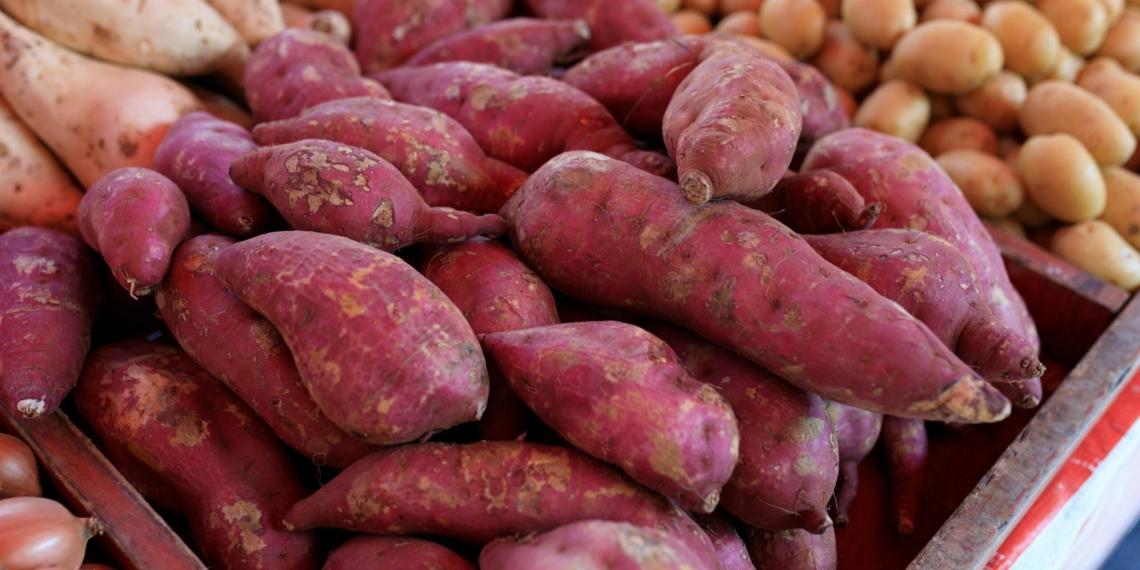
Root and tuber crops are vital for South Africa's food security, but keeping them healthy underground is a major challenge. Photo: Matheus Bertelli/Pexels

Root and tuber crops are vital for South Africa's food security, but keeping them healthy underground is a major challenge. Photo: Matheus Bertelli/Pexels

Share on FacebookShare on TwitterShare on WhatsApp

Farming often comes with unexpected losses, and post-harvest challenges are common, especially for root and tuber crops such as potatoes, onions, and amadumbe. 

For farmers supplying formal markets, this can be serious because produce is expected to be of consistent quality and timing, and any failure to deliver affects income and trust. 

Problems such as rotting, holes, maggots, or water damage often appear even when normal practices are followed, making it hard to trace the cause. Understanding these risks can help farmers better prepare for future harvests.

Below-ground crops: Reducing losses

Farm practices that help reduce crop losses begin with understanding soil health, says North West agronomist Mandisa Mazibuko.

She explains that successful crop production depends on knowing what the soil contains, what it lacks, and what each crop needs to grow effectively.

FARMER POLL

📢 Which bank is powering your farming journey?

Tell us which bank you use so we can better advocate for the specialised financial tools and accessible capital needed to help South African farmers overcome growth barriers and thrive!

All submissions are kept strictly confidential. 

“This is where extension officer support can play a huge role, by assisting farmers with soil testing and sharing knowledge on fertiliser application and nutrient management,” she says.

Mandisa Mazibuko is an agronomist based in North West. Photo: Supplied/Food for Mzansi

Mazibuko notes that vegetable crops such as carrots and beetroot perform poorly in compacted soils with poor drainage. She adds that over-fertilisation should also be avoided, as it can increase soil salinity, damaging roots and resulting in small or poor-quality harvests.

On cultivar selection, she stresses that not all varieties perform equally under different conditions.

“There are beetroot cultivars that can tolerate heat and perform well in specific soil types.” 

Mazibuko recommends using disease-resistant cultivars and ensuring farmers are informed about variety selection to reduce losses.

Crop rotation, she adds, remains important in breaking the cycle of soil-borne diseases such as root rot. She also emphasises field sanitation, including the removal of infected plant material and proper weed control, as weeds can harbour pests and increase disease pressure.


Related stories
  • Why post-harvest tomato handling is key to profits
  • Maize farmers tighten defences as Goss’s wilt spreads
  • Experts share essential tips for optimal post-harvest crop handling
  • Why a fly management programme is a must for farmers

Pests and climate stress challenges

According to Nangamso Mtamzeli-Cekiso, a horticultural scientist at the Dohne Agricultural Development Institute in Stutterheim, Eastern Cape, root and tuber crops such as potatoes, carrots, sweet potatoes, onions, garlic, ginger and turmeric store food in their underground structures and play a vital role in food security and nutrition, particularly in developing regions such as South Africa. 

She says these crops are rich in key nutrients like vitamin A, zinc and iron and have a longer shelf life than many above-ground vegetables, making them important for both subsistence and commercial farming systems. However, she adds that production is increasingly threatened by a combination of biological, environmental and soil-related factors.

Mtamzeli-Cekiso explains that below-ground crops are highly vulnerable to pests such as sweet potato weevils and tuber moths, particularly under humid conditions. Climate change is worsening the situation by creating favourable environments for pest outbreaks.

Nangamso Mtamzeli-Cekiso is a horticultural scientist at the Dohne Agricultural Development Institute in Stutterheim, Eastern Cape. Photo: Supplied/Food For Mzansi

A major cause of losses is the use of infected planting material. In sweet potato production, farmers often reuse vines, which leads to the build-up of viral diseases over time. 

“The continuous recycling of planting material leads to the accumulation of viral diseases, resulting in reduced yield and poor crop performance.”

Nangamso Mtamzeli-Cekiso

Mtamzeli-Cekiso says climate variability further contributes to production losses. Excessive rainfall leads to waterlogging and oxygen loss in soils, while drought reduces growth and delays tuber formation. High temperatures reduce yield and quality, sometimes by up to 30%.

She also notes that onion and garlic production is sensitive to light and temperature, where incorrect conditions can prevent proper bulb formation. Low temperatures may cause chilling injury, while in onions, temperatures below 13°C can trigger bolting. 

READ NEXT: Safeguard your crops against pesky pests

Soil testing and integrated solutions

Mtamzeli-Cekiso further notes that soil conditions remain central to successful production. 

Loose, well-drained sandy loam soils support proper root development, while compacted soils lead to deformities such as forking in carrots and misshapen onion bulbs.

Poor drainage increases the risk of waterlogging and root rot, while excess moisture can cause cracking in carrots. 

She tells Food For Mzansi that soil fertility management through soil testing is essential before planting to guide fertiliser use and prevent imbalances such as excess nitrogen or soil acidity.

According to Mtamzeli-Cekiso, crop rotation, use of resistant varieties and field sanitation are key to managing soil-borne pests and diseases. An integrated approach combining improved planting material, climate-smart practices and proper soil management is essential to reduce losses.

READ NEXT: Post-harvest pests, poor storage cut smallholder yields

Sign-up for the latest agricultural news delivered straight to your inbox every day with Mzansi Today!

Vateka Halile

Vateka Halile grew up in rural areas of Cofimvaba in the Eastern Cape. She was raised in a traditional family setting and found writing to be a source of comfort and escape. Vateka participated in an online citizen journalism course through Food For Mzansi, and her passion for health and medicine-related stories was born. Her dedication to community work and love for social justice and solidarity spaces is evident in her quality time with the community when she isn't working.

Tags: Post-harvestTeach meTubersVegetable farming
Deputy minister Nokuzola Capa delivers the 2026 budget vote, outlining billions in support for black farmer development, training and inclusive agricultural growth. Photo: Supplied/Food For Mzansi
News

Agriculture gets billions: 10 key budget takeaways

by Ivor Price
15th May 2026

Mzansi’s agriculture sector was firmly in the spotlight during the 2026 budget vote speech delivered by deputy minister Nokuzola Capa....

Read moreDetails
Farminist founder blends farming skills with smart business

Farminist founder blends farming skills with smart business

15th May 2026
Kagiso Mashiane, events manager for Engen South Africa, at the Engen Tractor Museum during Nampo Harvest Day in Bothaville, where heritage farming machinery and modern agricultural innovation meet. Photo: Supplied/Engen

Engen keeps tractors and farming dreams moving at Nampo

15th May 2026
Citrus farmers count losses as floods drown export hopes 

Citrus farmers count losses as floods drown export hopes 

15th May 2026
The South African table grape industry continues to thrive, with producers focused on quality, innovation, and expanding global market access. Photo: Supplied/Food For Mzansi

Quality and export markets drive SA table grape industry growth

15th May 2026

Standard Bank, Orizon launch first bank-backed carbon crop programme

SA marks Plant Health Day with warning over food security

Land Bank pushes back on ‘bailout’ claims amid funding talks

Eggsellent growth: How Lebo Mashigo built a poultry empire

Steenhuisen boosts SA’s FMD fight with 2 million more vaccines

Join Food For Mzansi's WhatsApp channel for the latest updates!

JOIN NOW!
Next Post
‘Cayenne Chilli Lady’ brings the heat with 8.5ha farming success

‘Cayenne Chilli Lady’ brings the heat with 8.5ha farming success

THE NEW FACE OF SOUTH AFRICAN AGRICULTURE

With 21 global awards in the first six years of its existence, Food For Mzansi is much more than an agriculture publication. It is a movement, unashamedly saluting the unsung heroes of South African agriculture. We believe in the power of agriculture to promote nation building and social cohesion by telling stories that are often overlooked by broader society.

Development finance key to growing future commercial farmers

‘Cayenne Chilli Lady’ brings the heat with 8.5ha farming success

Beating the rot below ground: How to protect your root crops

This week’s agri events: 18 – 22 May

SA marks Plant Health Day with warning over food security

Standard Bank, Orizon launch first bank-backed carbon crop programme

  • Awards & Global Impact
  • Our Story
  • Contact Us
  • Cookie Policy
  • Privacy Policy
  • Copyright

Contact us
Office: +27 21 879 1824
News: info@foodformzansi.co.za
Advertising: sales@foodformzansi.co.za

Contact us
Office: +27 21 879 1824
News: info@foodformzansi.co.za
Advertising: sales@foodformzansi.co.za

  • Awards & Global Impact
  • Our Story
  • Contact Us
  • Cookie Policy
  • Privacy Policy
  • Copyright
No Result
View All Result
  • News
  • Changemakers
  • Lifestyle
  • Farmer’s Inside Track
  • Food for Thought

Copyright © 2024 Food for Mzansi

This website uses cookies. By continuing to use this website you are giving consent to cookies being used. Visit our Privacy and Cookie Policy.