Sustainability is no longer simply about meeting environmental expectations. For South African potato growers, it is increasingly becoming a business strategy that can improve profitability, strengthen access to finance and prepare farms for future market requirements.
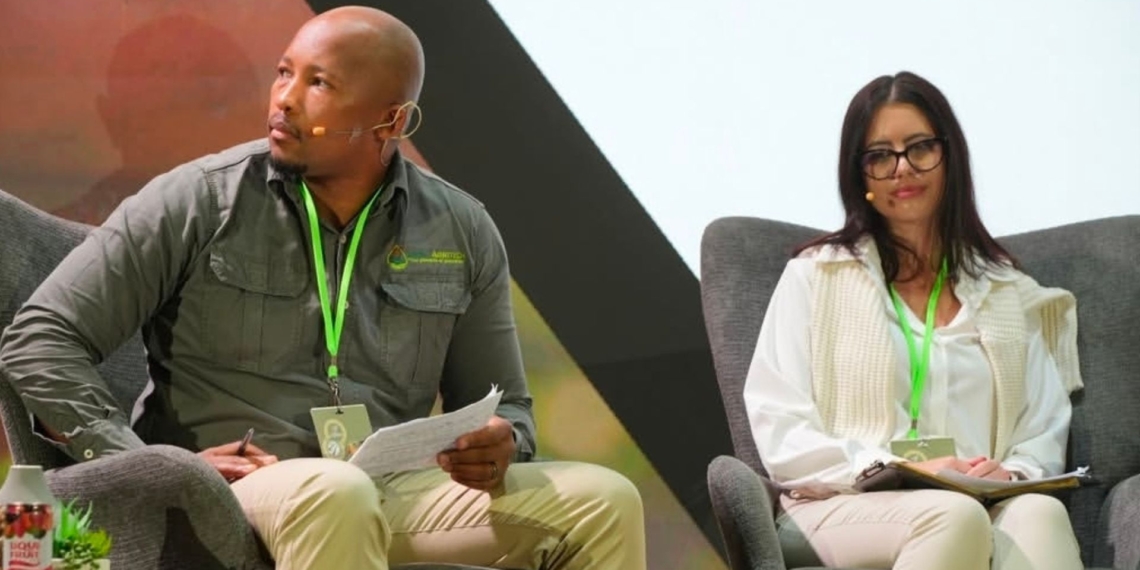
This was a key message from speakers during a sustainability panel discussion at the Potato South Africa Congress and Potato Seed Growers Forum in Johannesburg last week, where industry leaders, bankers, retailers and sustainability specialists explored how environmental, social and governance (ESG) principles are reshaping agriculture.
Brendan Jacobs, head of agribusiness at Standard Bank, acknowledged that producers are facing mounting challenges, from climate uncertainty to geopolitical events affecting fertiliser and fuel prices.
“When we speak about sustainability, we don’t only want to speak about ESG and sustainable practices, but also making sure that they form part of a profitable and financially sound way of running your business,” he said.
Jacobs explained that banks evaluate both industry-wide risks and the management practices of individual farming businesses. Factors such as production variability, labour, logistics, pricing and climate risk all influence lending decisions.
He added that good management practices can reduce these risks, even in industries facing significant challenges. “Sustainability is a competitive advantage. It’s not a tick-box exercise.”
Related stories
- Smart logistics and pricing vital for SA’s potato industry
- Tech and solar upgrades drive growth at Ceres Fruit Growers
- Poultry and potatoes power Fort Hare graduate’s farming vision
- Farmers urged to embrace uncertainty and build resilience
Jacobs also stressed that farmers are custodians of both the land and South Africa’s food security, making sustainable production essential for future generations.
Good records improve bankability
According to Dr Andrea Campher, sustainability and agribusiness leader at Standard Bank Group, reliable farm records are becoming increasingly valuable when seeking finance.
“Data improves bankability at the end of the day. It helps create a credible business and sustainability story,” she said.
She explained that while farmland remains important security, banks ultimately finance a farm’s future ability to generate consistent cash flow.
Production records, yield history and management data help demonstrate this ability. Campher noted that sustainability information alone will not secure finance. “Data alone doesn’t make a weak business strong. We still evaluate markets, profitability, repayment ability, security and climate-related risk.”
However, she said better sustainability data would support the development of innovative financing products in future as banks become better equipped to incorporate environmental information into lending decisions.
Data is the farm’s CV
Michael Lilje of Orizon argued that farmers should view sustainability as an investment in the long-term future of their businesses rather than an administrative burden.
“We are not passionate about carbon credits. We are passionate about farming and soil health and ensuring your sons and daughters, and their children, can stay on the farm,” he said.
Lilje said international markets are placing increasing pressure on producers to demonstrate sustainable farming practices, while new opportunities such as carbon credit programmes are beginning to reward farmers financially.
“The data you collect on your farm is the CV of your farm,” he said. He believes sustainability and profitability complement one another in agriculture, unlike many other industries.
Looking ahead, Lilje suggested that sustainability performance could eventually influence lending terms, with better-performing farms potentially qualifying for more favourable financing.
Some farmers participating in carbon credit programmes now spend less than an hour on administration because satellite imagery, digital records and farm management software automate much of the reporting process.
Tom Murray, technical manager at Woolworths, encouraged growers to adopt a practical, gradual approach to sustainability.
Rather than attempting to overhaul an entire farming system at once, Murray advised producers to identify one area that offers either the greatest return or the easiest improvement.
“The easiest way to bankruptcy is trying to fix everything in one go,” he said. Maintaining farm profitability must remain the priority throughout the transition to more sustainable production.
Murray added that farmers often learn from one another, with successful innovations spreading rapidly throughout the industry once early adopters demonstrate practical results.
READ NEXT: SA poultry industry calls for urgent bird flu vaccine rollout