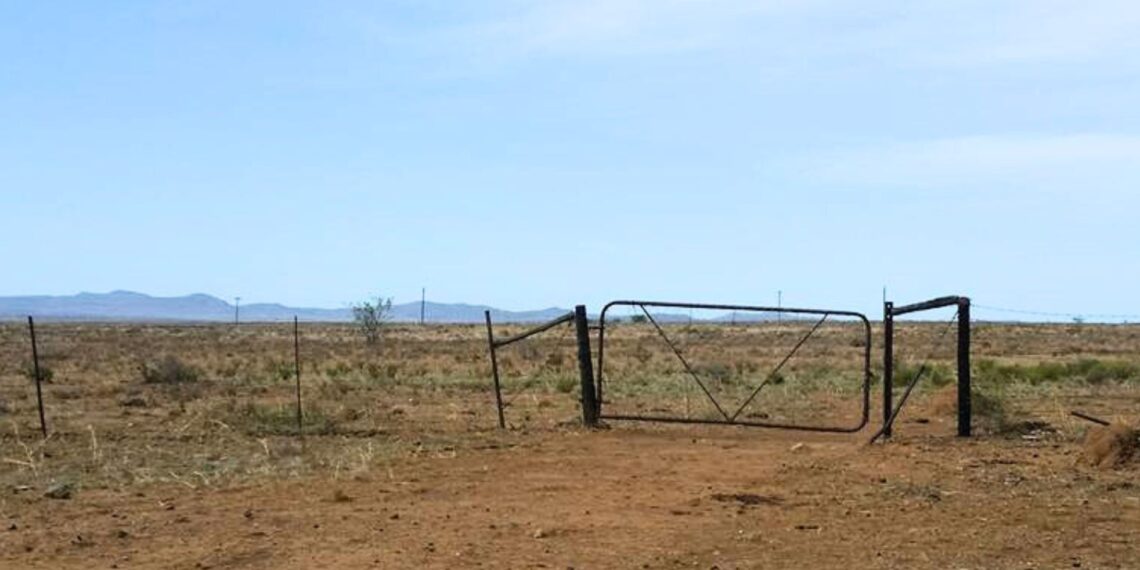
The ruinous legacy of last year’s El Niño still stalks the grain-growing areas of southern Africa, which is in the grip of historic levels of hunger.
The rains this summer have been late to the party in much of the region and the long-range forecasts are clouded by uncertainty, raising the spectre of more crop failures at a time when bountiful harvests are desperately needed in the wake of the disastrous season in 2024.
“Cumulative rainfall from October to early January has varied, with large rainfall deficits in Madagascar, southern and northern Mozambique, Malawi, western South Africa, southern Tanzania and parts of Zambia,” the Famine Early Warning Systems Network (Fews Net) said in its latest report on the region.
“The onset of rainfall in several areas, including eastern Madagascar, southern Mozambique and southern Zambia, was delayed by at least 30 days. Dry spells and high temperatures in December stressed crops, with some regions like Malawi reporting crop wilting and replanting efforts,” the report said.
Regional rainfall patterns have been mixed. Much of the Democratic Republic of Congo, eastern and central Angola, Lesotho, central South Africa, much of Zambia and northern Zimbabwe received slightly below-average rainfall in the first three months of the wet season, but other parts of the region got soaked.
“A number of areas had above average season-to-date rainfall totals, including western Angola, much of Botswana, northern Namibia, northern South Africa, northern Tanzania and southern Zimbabwe,” Fews Net said.
Mixed forecast for coming months
But although all is not doom and gloom, the outlook overall is either grim or unclear.
“The 2024–25 agricultural season presents a mixed outlook for production across the SADC [Southern African Development Community] region. Areas with early-season rainfall deficits such as eastern Madagascar, southern Mozambique, southern Zambia and parts of Zimbabwe have already been impacted by delayed planting, poor germination and reduced soil moisture.
“Conversely, regions with above-average rainfall to date are better positioned for favourable production outcomes, especially for rain-fed crops, provided the rainfall remains consistent.”
Long-range forecasts at present predict above-normal rainfall over much of the southern half of the region from now until the end of March. But this is not set in stone and for many areas, it will simply be too late. And too much rain can also be bad for grain.
Late La Niña
One key player on this stage has been the La Niña weather pattern. Whereas El Niño usually brings drought to southern Africa, La Niña as a rule heralds good rains in a climatic cycle of boom and bust in the fields.
But La Niña, initially forecast to emerge in July last year, only formed in December. And it is forecast to be weak and over by April, if not before.
Climate change caused by fossil fuel usage is exacerbating these trends, and 2024 was the hottest year since records began.
The situation is unfolding against the backdrop of an estimated 30 million people in the region who are already experiencing critical food shortages. Last year’s strong El Niño event swept the region like a sizzling scythe, slashing Zimbabwe’s maize production by more than 60%.
Zambia’s harvest was halved, South Africa’s was 23% lower than the previous season and Malawi, Lesotho and Mozambique also suffered heavy losses.
Hungry people across much of the region have been left waiting in vain for rain. Most of the staple maize crop’s production north of the Limpopo River is by subsistence farmers, small-scale and rain-fed.
It’s not just crops that are at stake but cattle as well, in a region where the animals are often a coveted source of household wealth.
“Livestock-dependent regions, particularly in Namibia, Botswana and western South Africa, face challenges due to poor grazing and water shortages, leading to declining livestock productivity,” Fews Net said. “This impacts meat and milk production, with potential food security implications.”
And the uneven rainfall and uncertain patterns are not the only cause for concern.
Related stories
- Fires, frost, floods: Low insurance uptake threatens farmers
- How climate solutions can address gender inequality
In southern Malawi, a fall armyworm outbreak has been reported. An invasive pest that first appeared in the region less than a decade ago, these critters damage maize plants, sorghum and potatoes.
Far bigger animals pose another and more menacing threat in some areas. Around Malawi’s Kasungu National Park, which straddles Zambia, small-scale farmers on both sides of the border are in a perpetual state of conflict with crop-raiding elephants in the wake of a botched translocation of the pachyderms, which was spearheaded by the International Fund for Animal Welfare.
The economic consequences are far-reaching and include accelerating inflation on one hand, and slowing economic growth on the other – a wretched combination known as “stagflation” when it becomes pronounced.
Malawi, for example, saw inflation pick up to 28.1% in December from 27.0% in November. The International Monetary Fund forecasts that economic growth for 2024 slowed in 2024 to 2.0% from 3.2% in 2023 because of the drought.
South Africa weathered last year’s extreme weather better than neighbouring countries in part because the drought was not as harsh as it was elsewhere. But this was mostly because of the sophistication of its hi-tech, capital-intensive agricultural sector.
Yet South Africa’s economy contracted 0.3% in the third quarter of last year because of a plunge in agricultural output rooted in last season’s drought. And even though inflation has significantly slowed, elevated domestic maize futures prices could rekindle the flames of food inflation.
The outlook for South Africa’s maize crop is better than last season’s, but a lot depends on the weather: El Niño only fully unsheathed its scythe in February last year. A clearer picture will emerge on 27 February when the official Crop Estimates Committee releases its first production forecast for this season’s summer crops including maize.
If South Africa has a decent maize harvest, it is likely to find a lot of demand to the north.
This article was first published in Daily Maverick.
READ NEXT: Book now for our first-ever Mzansi Young Farmers Indaba camp
Sign up for Mzansi Today: Your daily take on the news and happenings from the agriculture value chain