Saturday, October 31, 2026
SUBSCRIBE
22 GLOBAL MEDIA AWARDS
Food For Mzansi
  • News
  • Changemakers
  • Lifestyle
  • Farmer’s Inside Track
  • Food for Thought
No Result
View All Result
  • News
  • Changemakers
  • Lifestyle
  • Farmer’s Inside Track
  • Food for Thought
No Result
View All Result
Food For Mzansi
No Result
View All Result
in News

Protecting what matters: Smart insurance keeps farmers bankable

Extreme weather and seasonal variability are forcing South African producers to rethink risk management. At Nampo Cape, industry experts highlighted the urgent need for farmers to shift from reacting to climate crises to actively protecting their assets, livestock, and data

by Lisakanya Venna
14th September 2026
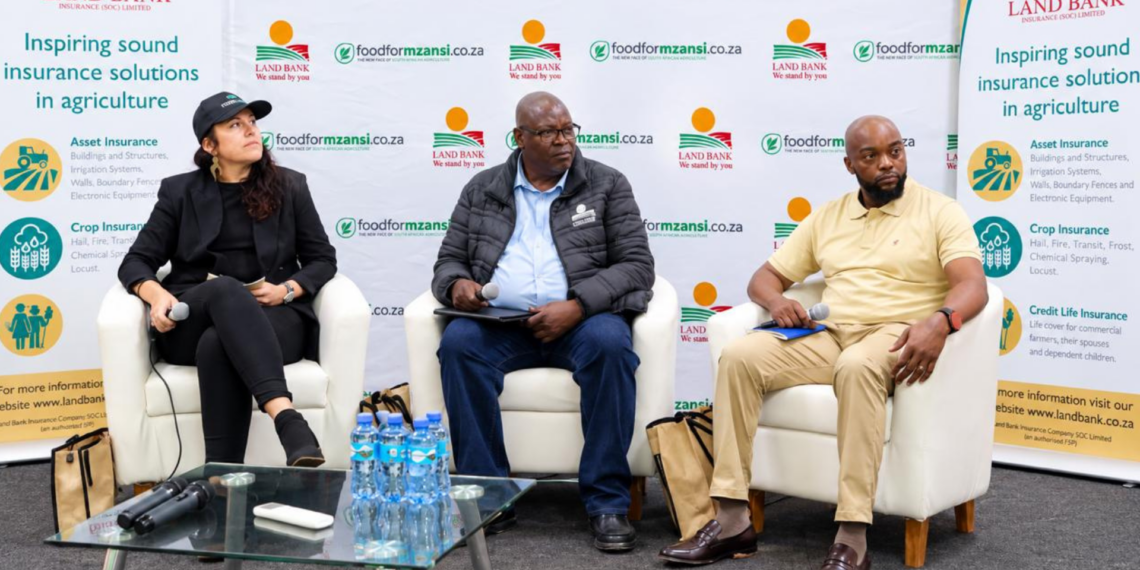
The panel featured (from left to right) TerraClim CEO and founder Dr Tara Southey, Land Bank Insurance executive operations manager Andries Mahlase, and Venshaw Insurance Administrators broker representative Sinethemba Zweni during the final Land Bank Lunchtime Conversation at Nampo Cape 2026. Photo: Supplied/Food For Mzansi

The panel featured (from left to right) TerraClim CEO and founder Dr Tara Southey, Land Bank Insurance executive operations manager Andries Mahlase, and Venshaw Insurance Administrators broker representative Sinethemba Zweni during the final Land Bank Lunchtime Conversation at Nampo Cape 2026. Photo: Supplied/Food For Mzansi

Share on FacebookShare on TwitterShare on WhatsApp

Building sustainable farming enterprises requires shifting from reacting to crises to actively protecting the assets, livestock, and data that keep agricultural businesses bankable.

That was the central message on the final day of the Lunchtime Conversations series, hosted by Food For Mzansi in partnership with Land Bank at Nampo Cape in Bredasdorp.

Industry experts gathered at the Santam Auditorium venue one more time to unpack the topic “Protecting what matters: Assets and livestock for sustainable farming”. The panel explored how climate variability, insurance innovation, and localised data must align to safeguard South African agriculture against growing uncertainties.

Moving beyond reactive insurance

Opening the discussion, Andries Mahlase, executive operations manager at Land Bank Insurance, emphasised that because agriculture is an open-air industry, farmers and production systems remain continuously exposed to the variability of weather, temperature, and rainfall.


Related stories
  • Markets, water and finance key to Western Cape farm growth
  • Leaders tackle finance and farmer support at Nampo Cape
  • New-era farmers get dedicated programme at Nampo Cape
  • Plan your Nampo Cape around these lunchtime conversations

Reflecting on recent production cycles, Mahlase pointed out that high overall output can mask severe operational strains on individual farms. While South Africa achieved a 70-million-tonne production scale in a previous season, which appeared positive on a macro level, individual farmers faced severe challenges due to extreme hail events and flooding.

“Embracing new practices and innovative techniques, we recognise that insurance has its roots in protecting farmers and their livelihoods.

“Today, farmers need practical and accessible insurance instruments that can help them manage the risks and uncertainties they face. As Land Bank Insurance, we are committed to developing solutions that respond to these needs. We are prepared for the events and risks that farmers may face,” Mahlase stated. 

With severe climate patterns looming over production cycles, Mahlase urged producers to take early, deliberate action to safeguard their businesses.
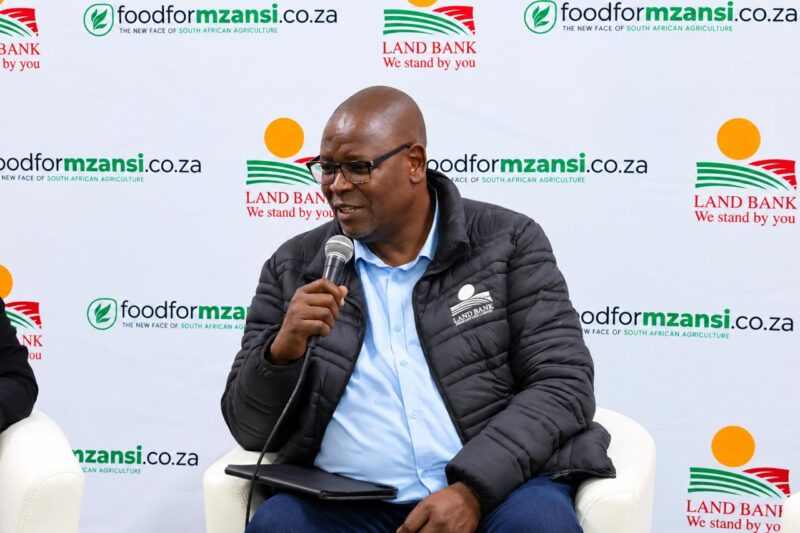
Andries Mahlase, executive operations manager at Land Bank Insurance, discusses practical insurance instruments to help farmers navigate severe weather and market uncertainty. Photo: Supplied/Food For Mzansi

“What are we doing to make sure that we are prepared for that super El Niño?” he asked. “I think it starts with the ability of the farmers embracing technology, embracing new practices and techniques, and that farmers should regard insurance as a serious investment.”

Understanding climate vulnerability

Underpinning the need for specialised protection is the reality of rapid climate shifts. Dr Tara Southey, CEO and founder of TerraClim, highlighted that South Africa’s primary climate change reality is severe seasonal variability, where no two seasons behave the same.

“We are sitting in a scenario where it’s getting hotter, and it’s getting drier,” Southey explained. “We are seeing a scenario of increased seasonal events, increased hours of above 35 degrees, and more hours below seven degrees.”

Southey cautioned against relying on historical annual averages when evaluating risk. Citing the Western Cape as an example, she noted that while the region received very little rainfall in July, heavy rainfall earlier in May meant the annual winter average appeared normal.

To make data genuinely useful on the farm, she urged the industry to slice climate data into hourly resolutions to quantify how often extreme events occur in specific areas.
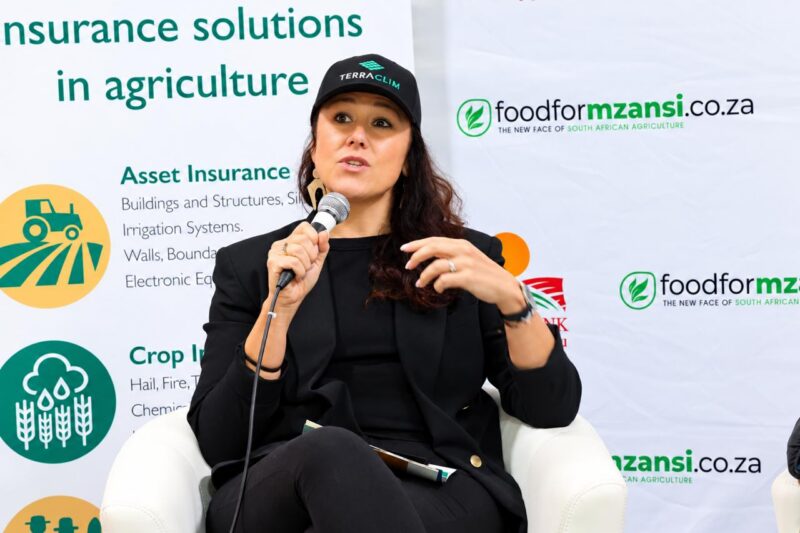
Dr Tara Southey, CEO and founder of TerraClim, outlines why farmers must move away from regional averages to hourly climate data when planning for seasonal extremes. Photo: Supplied/Food For Mzansi

“Moving away from the means, moving away from the averages… it’s really important in the context of climate change to start quantifying extreme events,” Southey added.

“All of these hourly resolutions affect plant physiology, affect pest and disease movement, and understanding that across your whole farm – not just using one weather station – is key to understanding your climate vulnerability.”

Closing the broker gap to lower operational anxiety

From a risk management and brokerage perspective, Sinethemba Zweni, insurance broker representative from Venshaw Insurance Administrators, noted that unpredictable climate patterns create direct financial anxiety for producers by causing operational costs to fluctuate.
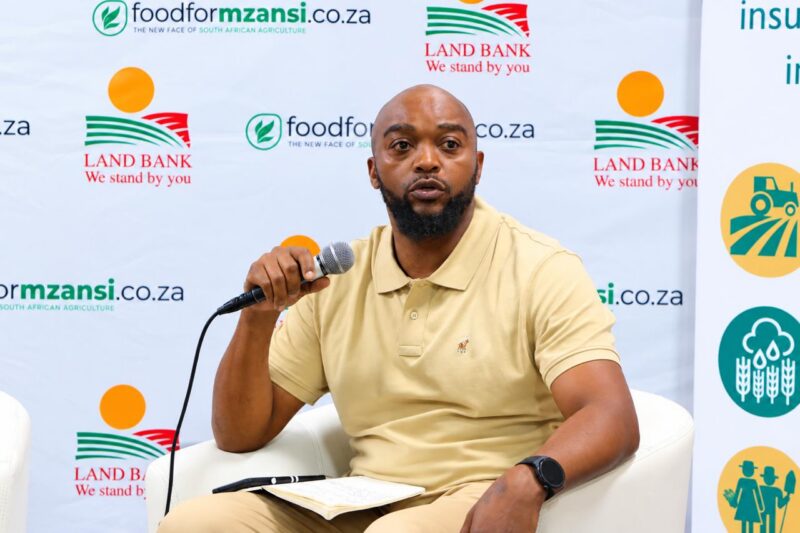
Sinethemba Zweni from Venshaw Insurance Administrators is highlighting the need for insurance brokers to stay closer to producers to understand their evolving risks. Photo: Supplied/Food For Mzansi

“I think generally farmers are very concerned about climate change; it’s unpredictable. When an incident happens, farmers want to know how quickly the insurer can actually sort the matter out. I think those are the main concerns that farmers have at this point,” Zweni said.

While farmers generally recognise the necessity of cover, Zweni highlighted a critical area for improvement across the insurance value chain: closer relationship-building between brokers and producers.

“There is a gap to close, which is that our brokers need to be closer to our clients, understand their needs, and understand their risk so that we can give proper advice,” Zweni added.

READ NEXT: Leaders tackle finance and farmer support at Nampo Cape

Sign-up for the latest agricultural news delivered straight to your inbox every day with Mzansi Today!

Lisakanya Venna

Lisakanya Venna is a junior journalist and content coordinator with varied multimedia experience. As a CPUT journalism alumni, she finds fulfilment in sharing impactful stories and serving as a reliable source of information.

Tags: Agricultural insuranceCommercialising farmerInform meNampo Cape 2026Western Cape
News

Veggie prices plummet: Why your grocery bill might drop this week

by Raylentia Simmons
29th October 2026

Fresh produce markets are sending a clear signal: supply is winning the battle against demand. Potatoes fell over 20%, tomatoes...

Read moreDetails

SA’s sugar industry at a crossroads: The shift to bioethanol

28th October 2026
Maleka engineers hydroponic solutions for emerging farmers

Maleka engineers hydroponic solutions for emerging farmers

28th October 2026
Agda congress: Why production alone won’t save your farm

Agda congress: Why production alone won’t save your farm

28th October 2026
Youth agri programme graduates the first cohort of young farmers

Youth agri programme graduates the first cohort of young farmers

28th October 2026

SA’s sugar industry at a crossroads: The shift to bioethanol

Eastern Cape farmer bets on poultry and grows a diverse business

Nedbank: ‘Transformation must deliver sustainable farmers’

Agda congress: Why production alone won’t save your farm

Municipal failure drives up production costs for poultry farmers

Join Food For Mzansi's WhatsApp channel for the latest updates!

JOIN NOW!
Next Post
Turning soil, turning tides: New era of sustainable farming

SA’s canola boom sparks investment and processing opportunities

THE NEW FACE OF SOUTH AFRICAN AGRICULTURE

With 21 global awards in the first six years of its existence, Food For Mzansi is much more than an agriculture publication. It is a movement, unashamedly saluting the unsung heroes of South African agriculture. We believe in the power of agriculture to promote nation building and social cohesion by telling stories that are often overlooked by broader society.

Early heat lowers Tru-Cape cherry harvest, but brings top quality

Godlimpi calls for innovative sugarcane grower financing

Brotherly hustle: Limpopo duo takes egg business to campus

Nedbank: ‘Transformation must deliver sustainable farmers’

Municipal failure drives up production costs for poultry farmers

Minister launches R1.2b land reform programme to support farmers

  • Awards & Global Impact
  • Our Story
  • Contact Us
  • Cookie Policy
  • Privacy Policy
  • Copyright

Contact us
Office: +27 21 879 1824
News: info@foodformzansi.co.za
Advertising: sales@foodformzansi.co.za

Contact us
Office: +27 21 879 1824
News: info@foodformzansi.co.za
Advertising: sales@foodformzansi.co.za

  • Awards & Global Impact
  • Our Story
  • Contact Us
  • Cookie Policy
  • Privacy Policy
  • Copyright

Chat Options

About this assistant

This feature generates automated answers summarised from Food For Mzansi articles. By using it, you are interacting with an AI system (provided by Google), not a human. AI can make mistakes. Please refer to the source articles for verification and citation purposes.

Our staff do not check or moderate Lerato’s answers in advance, but may review some later. Our journalists continue to write and edit all the articles Lerato uses as sources.

To estimate unique and returning web users, we store a random browser ID in this browser. WhatsApp users are counted by phone number. The same person using both channels may be counted twice.

I'm Lerato, your AI assistant!
No Result
View All Result
  • News
  • Changemakers
  • Lifestyle
  • Farmer’s Inside Track
  • Food for Thought

Copyright © 2026 Food for Mzansi