For more than two decades, farmers alike have championed the cause of having Karoo lamb recognised as a product worthy of geographical indication (GI) protection. Now, with its official registration 18 months behind it, growing market interest may finally help dispel misperceptions that have long surrounded GIs in South Africa.
Professor Johann Kirsten, one of the country’s foremost voices on agricultural policy, hopes the registration and growing market visibility of Karoo lamb will “overcome these wrong perceptions.”
He has written extensively about the topic in a newly released publication from the Food and Agriculture Organisation of the United Nations (FAO), titled Worldwide perspectives on geographical indications: Crossed views between researchers, policy makers and practitioners.
In the book, Kirsten contributes a chapter that offers both a scholarly and firsthand account of the turbulent, often frustrating process that eventually led to the formal GI registration of Karoo lamb. The product was officially recognised in Government Gazette notice 3992 of 27 October 2023 – marking South Africa’s first non-wine GI under the new certification regime.
Yet, despite the celebratory nature of the announcement, Kirsten is quick to highlight the institutional resistance and lack of understanding that marred the journey.
“However, none of the objections have complied with the GI regulations in as far as these objections are based on conjecture and did not reveal any scientic proof or supporting facts as is required,” he writes.
Related stories
- Revive the Karoo: From lamb to landscape, uniting for brighter future
- Karoo lamb: GI status holds global promise amid export hurdles
Kirsten notes how entrenched bureaucratic scepticism delayed the recognition of a product with a demonstrable link to its unique environment and production method.
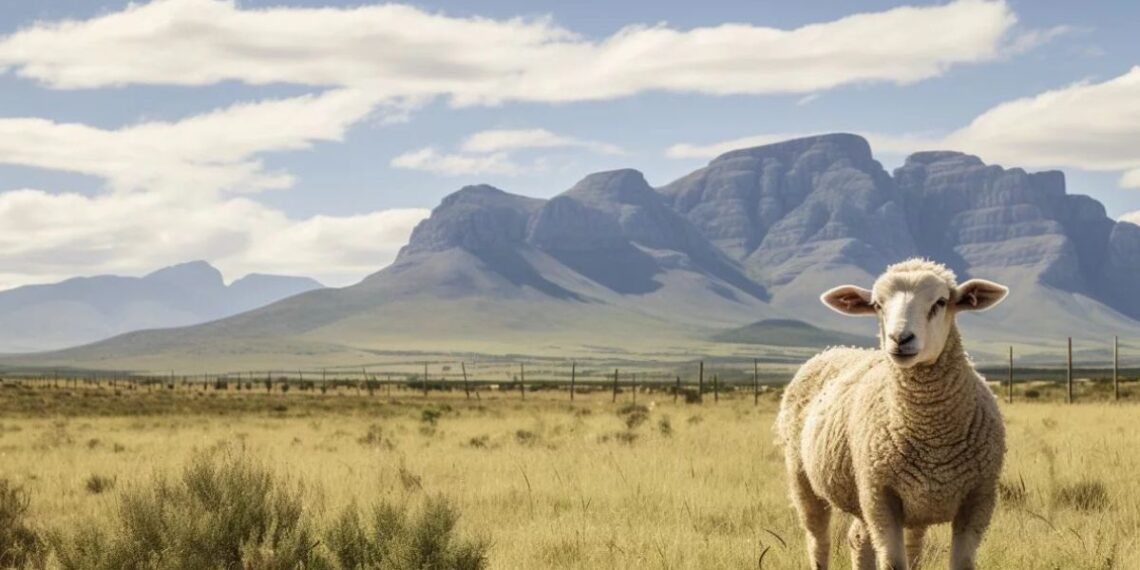
The official definition – unchanged despite years of pushback – remains clear and scientifically grounded: “a lamb produced under free range conditions on Karoo veld and slaughtered in the Karoo.”
This simple yet powerful designation captures the essence of a product whose taste and identity are shaped by the arid landscape, indigenous shrubs, and the traditional, low-input livestock systems used by farmers across the region.

A legacy of research and advocacy
Kirsten has been at the forefront of this campaign for more than 20 years. Currently the director of the Bureau for Economic Research (BER), he previously headed the department of agricultural economics, extension and rural development at the University of Pretoria.
His research focuses broadly on agricultural policy, but in recent years, he has spearheaded efforts to evaluate the economic and legal frameworks required to make GIs viable in the South African context.
The GI status of Karoo lamb is not only the product of advocacy and paperwork. It is the direct result of years of meticulous research into certification schemes, traceability systems, and market development strategies for origin-based foods.
“The establishment and commercialisation of South Africa’s first non-wine geographical indication, namely Karoo lamb, is a direct result of this research,” Kirsten notes.
A turning point in GI policy
Until recently, South Africa’s approach to GIs was regarded by many as overly restrictive and opaque. The original Karoo Lamb application, first lodged in 2009, languished in legal limbo.
What changed in 2023 was the department of agriculture’s decision to modernise the GI registration framework through the publication of Regulation R.3023 in February of that year. This amendment provided greater clarity, shortened timelines, and – critically – ensured that GIs would be accessible to all legitimate producers within a specified region.
“The new approach strongly supports the principle that a registered geographical indication name shall benefit all producers – small and large – of a specific agricultural product produced in that geographical region in South Africa,” the department wrote.
That regulatory breakthrough allowed the Karoo Lamb Consortium to submit an updated application in August 2023. The application was accepted and gazetted without a single formal objection, a quiet but powerful signal that the tide may be turning.
Economic potential and market growth
Although GI registration in itself does not guarantee market success, it does provide a powerful tool for differentiation, one that is increasingly sought after in global food systems where consumers are willing to pay premiums for authenticity and traceability.
In the case of Karoo lamb, the hope is that this official recognition will now serve as a springboard for greater domestic and international demand, especially in premium and export markets. It also offers a model for other regional products seeking similar recognition, from rooibos to Boland honey.
Perhaps most importantly, the Karoo lamb case challenges outdated thinking within the public sector about the feasibility and value of GIs in a South African context. For years, GIs were dismissed as “too European” or irrelevant for local conditions – claims that Kirsten’s work systematically debunks.
READ NEXT: Make magic with braised lamb chops with creamy mushrooms
Sign up for Mzansi Today: Your daily take on the news and happenings from the agriculture value chain