Like South Africa, Nigeria’s electricity problems do not make the grid dependable, leading to an insurmountable number of post-harvest losses to farmers.
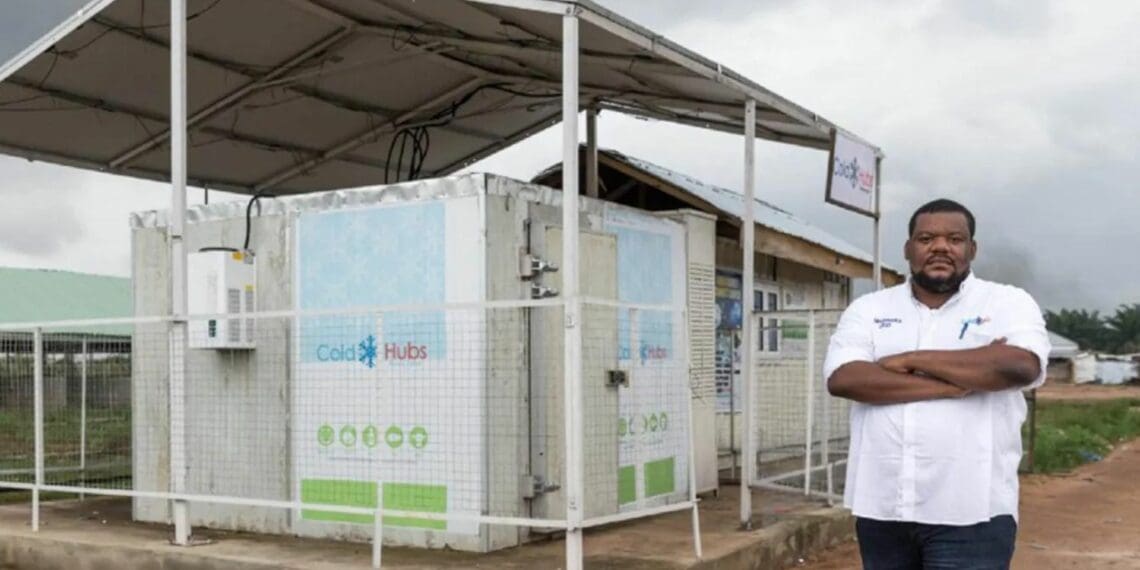
However, a Nigerian-based company is helping smallholder farmers and traders in remote areas preserve their fruits, vegetables, meat and milk. The company called ColdHubs, was founded by Nnaemeka Ikegwuonu – a farmer, innovator and leading social entrepreneur.
Chinedu Hardy Nwadike, ColdHubs’ media officer, says, “For farmers who stay in rural areas, most of their areas do not have electric poles nor cables crossing them, and so you are still in no position to help.”
ColdHubs avails solar-powered cold stations to key food production and consumption centres. With a pay-as-you-store subscription model, the farmer or trader pays a daily flat fee for each crate.
In an article published on FoodforAfrika.com, Ikegwuonu explains that they’re in the process of constructing hubs in other Nigerian states to accommodate large-scale farmers and traders. He also mentions plans to digitalise the booking of slots through an app or USSD (Unstructured Supplementary Service Data) quick codes.
Produce stays fresh for weeks
The article also unpacks some of the challenges that ColdHubs personnel encountered due to the remote nature of the hubs. The personnel would spend 13 to 15 hours on the road to reach the respective areas, however, the company is piloting remote monitoring to address this challenge.
Usman Muhammed, a trader and a beneficiary of the reduction in post-harvest loss based in Kano State, keeps his goods refrigerated with the cold rooms to gradually sell them.
Another trader, Daniel Praise situated in Imo State, shares a similar experience with Muhammed. ColdHubs he explains, allows him to store produce to last more than a week in order to prevent shortage in supply before receiving more stock in the following week.
The article also breaks down the affordability of the cold rooms and it has enabled farmers and traders to prevent up to 80% of produce loss caused by the lack of refrigeration.
This article was originally written by Gaby Ndongo and published on foodforafrika.com. To read the full article, click here.
ALSO READ: Power cuts: Quick fixes closer to farm gate
Sign up for Mzansi Today: Your daily take on the news and happenings from the agriculture value chain.