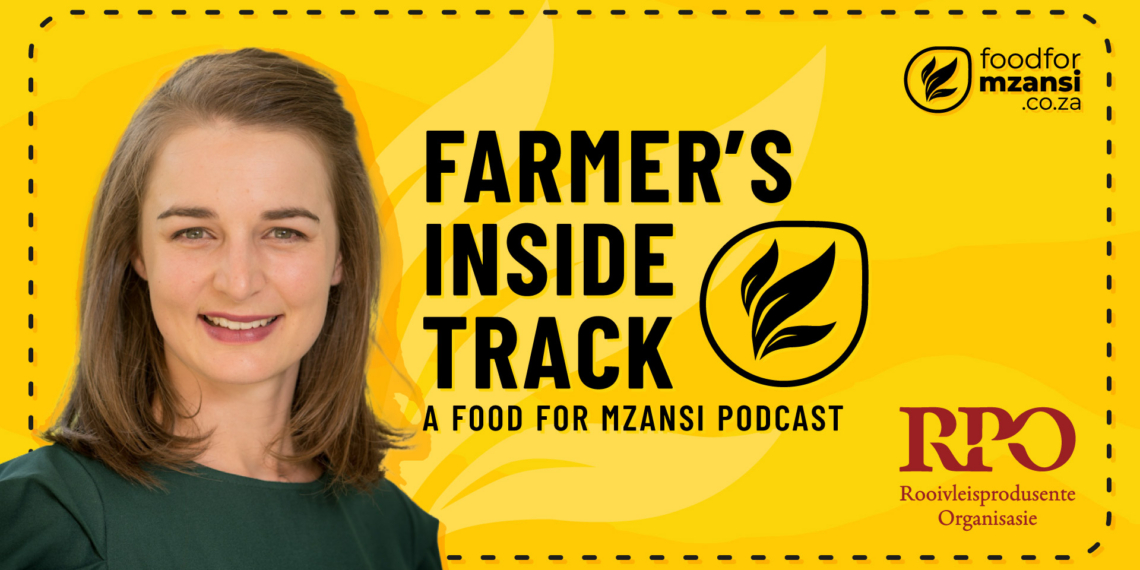
Maximising the fifth quarter – offal, cheeks, and trotters – is a vital strategy for South Africa’s red meat industry. The Red Meat Producers Organisation (RPO) and University of Pretoria researcher Dr Carmen Muller highlight how fully utilising every carcass boosts farm-gate value, delivers high-density nutrition to budget-conscious households, and drives agricultural sustainability.
Through ongoing initiatives, supported by the RPO, the industry continues to highlight the nutritional and economic value of these often-overlooked cuts. By focusing on sound data, the industry is establishing a clear business and health case for fully utilising the entire animal.
In livestock processing, animals are split into four main primal quarters: the forequarters and hindquarters, which yield standard retail cuts. The fifth quarter encompasses everything else, including red offal (liver, kidney, heart, tongue, spleen), white offal (tripe, intestines, sweetbreads), and darker cuts like cheeks and trotters.
According to Muller, the fifth quarter can account for 20% to 35% of the total carcass weight depending on the animal. Failing to find a market or value-added purpose for these parts leaves a significant portion of the slaughtered animal unutilised.
“If we don’t find a proper home for these cuts as food or as a value-added product, we are literally leaving about 30% of the animal out, or leaving what was slaughtered on the table and having no value for it,” Muller explains.
Related stories
- Why the ‘best cut’ of meat isn’t what you think
- The Tshabalalas can still enjoy their family’s favourite red meat
- Meat is safe to eat despite FMD outbreak, assure experts
- Red meat in SA: Culture, heritage, and celebration
Superior nutritional density and protein quality
While offal was historically excluded from formal marketing, Muller highlights that local testing confirms its exceptional nutritional profile. Studies show that cooked lamb kidney is an excellent source of complete protein, yielding roughly 33 grams of protein per 100 grams alongside all nine essential amino acids.
Red offal is also heavily concentrated with zinc and B vitamins, particularly B12 and vitamin A, with just 100 grams of liver supplying close to an adult’s entire daily requirement. Furthermore, organs outperform standard lean cuts in iron content; cooked spleen contains roughly 37 milligrams of bioavailable heme iron per 100 grams, nearly ten times the amount found in ordinary muscle meat.
“The iron in offal, like the iron in all red meat, is heme iron, and our body absorbs heme iron a lot better than iron from any other source,” notes Muller. “If someone’s specifically managing low iron, which is very common in South Africa… these offal cuts genuinely deserve to be part of this conversation.”
Addressing food security on a budget
South Africa faces a double burden of malnutrition, where many households consume sufficient calories from cheap starches but lack essential micronutrients and quality protein. Because prime muscle cuts are often financially out of reach, offal is a highly cost-effective alternative.
A single 90-gram cooked serving of organ meat can supply a quarter to over half of an adult’s daily protein requirement alongside critical minerals.
“Offal isn’t just a nice-to-have or a foodie trend,” says Muller. “For a lot of households, it’s genuinely one of the most practical tools we have for getting real nutrition into a tight food budget.”
Driving resource efficiency and sustainability
From a production standpoint, Muller explains that every animal represents significant investments in land, water, feed, and electricity. She emphasises that utilising the whole carcass maximises the return on these inputs without raising additional livestock.
“Using more of the animal means we get more protein, we get more iron, we get more vitamins out of exactly the same input cost that we had into this animal,” Muller emphasises. “That is about as direct a sustainability win as the industry has available to it.”
This story is part of a special series in partnership with the Red Meat Producers’ Organisation (RPO) – a tribute to the farmers feeding our nation, one meal at a time.

READ NEXT: Got an agribusiness ready to grow? Agda wants to hear your pitch