Following weeks of uncertainty over the blended finance funding scheme, the department of rural development and land reform (DRDLR), together with Land Bank, have signed a memorandum of agreement.
Under the agreement, DRDLR will provide R500 million in grant funding for the remainder of the 2026/27 financial year, to be deployed through the blended finance alongside Land Bank loan finance.
Lifeline to reopen paused Land Bank applications
Earlier in the week, the department of agriculture had to step in and allocate an additional R150 million on top of the annual budget of R325 million allocated to Land Bank for the 2026/27 year.
The high number of funding applications led Land Bank to pause new applications for the blended finance scheme; however, government intervention has guaranteed that the scheme will continue.
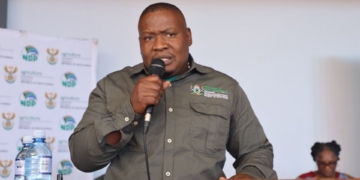
The minister of land reform and rural development, Mzwanele Nyhontso, has welcomed the signing of the agreement, saying that it marks an important step in ensuring that land reform beneficiaries are supported beyond access to land.
Related stories
- Minister and Land Bank CEO tackle farm debt and funding reform
- Strong demand sees Land Bank pause blended finance scheme
- Minister details Land Bank’s success in boosting black farmers
- R14m investment strengthens SA’s livestock disease surveillance
“Land reform cannot succeed on the transfer of land alone. Farmers who receive land must also have the means to work it productively, and for too many emerging and developing farmers the cost of finance has stood between them and a viable agricultural enterprise,” Nyhontsho said.
Farmers in limbo as applications stall
Meanwhile, Loyiso Manga, the founder of Ubuntu Extra Virgin Olive Oil, was in the final stage of his funding application for blended finance before it was paused.
“Ubuntu Extra Virgin Olive Oil has been in the Land Bank process for approximately a year. By the time the blended finance scheme was paused, our transaction had already gone through extensive assessment, due diligence, a farm visit, valuation and the issuing of a Final Indicative Term Sheet on 23 July 2026,” he said.
Manga explained how the pause in their application affected their farming business.
“The consequences are not theoretical. We are at risk of losing the farm, the upcoming harvest opportunity, agricultural jobs and an opportunity to build a significant black-owned agricultural and tourism asset in the Western Cape.
Loyiso Manga
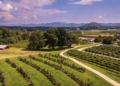
“We were seeking funding to acquire a commercial olive farm in Tulbagh. This would have enabled Ubuntu EVOO to become the first 100% black-owned olive oil brand in Southern Africa and the first black-owned olive oil manufacturer to establish what would effectively become the first black-owned commercial olive estate of this scale in the Western Cape olive industry,” he explained.
Byron Booysen, the managing director at Booysen’s Tunnel Farming Pty Ltd, said they received communication initially with pre-approvals and interest surrounding the application, “But unfortunately, it just never got to the credit committee,” he said.
Nafu urges faster turnaround for pipeline applicants
However, Motsepe Matlala, the president of the National African Farmers Union of South Africa (Nafu), has expressed his dissatisfaction with the slow process of the current blended finance model.
“We recognise that Land Bank has made significant strides since its 2020 default to stabilise its balance sheet, and we appreciate its renewed commitment to agricultural development finance. However, the current blended model is not delivering at the pace our farmers need.
“The process remains too slow, too collateral-driven, and too consultant-dependent for developing farmers, particularly those farming on communal, CPA and restituted land without title deeds,” he said.
Matlala also highlighted what he thinks should happen to ensure funding for farmers is not disturbed.
“First, we must protect farmers in the pipeline. There must be a split for the approved and in-the-pipeline applications so that everyone benefits. No farmer who has been approved should be defunded because of institutional delays.
Motsepe Matlala
“Our farmers are ready to produce. They do not need sympathy; they need a financial system that understands them. Land Bank remains a strategic asset for the country, and we are committed to working with it fairly and constructively to make blended finance work,” he said.
According to Land Bank, the blended finance scheme has demonstrated both its developmental relevance and the significant demand for affordable agricultural finance for qualifying historically disadvantaged producers.
“By the end of 2025/26 financial year, approximately 540 clients and beneficiaries had been supported through the scheme. Strong demand for the scheme has, however, substantially exceeded the grant funding available,” Land Bank said.
Land Bank’s acting chief executive officer, Jabu Mphambo, said the partnership demonstrates the importance of collaboration between government and development finance institutions in addressing structural barriers to agricultural development.
“Access to affordable and appropriate finance remains an important enabler of agricultural transformation. We welcome DLRRD’s support and partnership in the blended finance, which builds on the important support already provided by the department of agriculture and strengthens our collective ability to respond to the significant demand for developmental agricultural finance,” he said.
READ NEXT: NW government boosts Taung lucerne farmers with new packhouse