Putting smallholder farmers at the centre of development was high on the agenda at the recent opening of Bayer’s maize facility in Zambia. The company reaffirmed its commitment to smallholder farmers to enhance their access to agricultural inputs, finance, and agronomic services.
Debra Maloa, head of Bayer’s crop science division in Africa, highlighted the company’s role in driving agricultural prosperity and aligning with the United Nations’ sustainable development goals (SDGs) to alleviate poverty, combat hunger, and promote climate action.
Collaboration with key partners such as the Conservation Farming Unit (CFU) to deliver agronomic support and organisations like One Acre Fund and Apollo to facilitate access to finance and insurance for farmers has yielded success.
Climate change and seed security
According to Maloa, One Acre Fund in Zambia is approaching one million farmers, some of whom access credit, while Bayer’s input provision aims to reach 1.2 million smallholder farmers.
“Not all farmers want to access credit, not all farmers want to access insurance, but what our partners do is enable that to happen for those who need it to drive prosperity.
“The impact that we want to create for smallholder farmers is immense. The quality of input that we provide, the agronomic services, and the access to finance through partners enable farmers to move up the chain,” she said.
Related stories
- New maize seed factory strengthens Zambia’s food security
- Fix CPAs to see real rural development – Setou
A stable and locally sourced seed supply is essential for food security, particularly in the face of climate change. Previously, Zambia relied on importing foundation seeds from South Africa, but local production has significantly improved efficiency.
Mateyo Banda, raw crop production lead at Bayer, highlighted the importance of ensuring a reliable seed supply to mitigate the risks posed by adverse weather conditions.
“If there is adverse weather like we suffer a drought, you don’t want as a country, first of all, to be in a position where you do not have seed, because if you don’t have seed and good seed, it means that food security is what? Challenged.
Mateyo Banda
“So therefore, we take a deliberate decision that especially where we’re producing the foundation seeds, it has to be 100% irrigated fields so that we can increase our energy levels and guarantee that there will be seeds for the subsequent season,” Banda said.
Economic impact and job creation
Beyond improving agricultural productivity, Bayer’s initiative has had a profound impact on employment and economic growth in Zambia.
“Our initial promise to the government [was that] we will employ directly about 280 people during construction and also when we have permission, and these people will be Zambians. We have kept that promise,” Banda said.
In addition to direct employment, the project has expanded smallholder farmer participation, providing them with greater opportunities to benefit from improved agricultural practices.
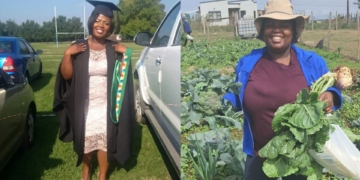
Lisa Sendwe, a crop farmer from the Chirongo district in Zambia, emphasised the critical role of exposure and technical support in improving agricultural practices. She highlighted the importance of staying informed about technological advancements.
“As farmers, there is one reality we should know. If you can’t see what is happening in the world, you will remain behind. You will not know technology is changing every day, just like crops. That’s how technology is changing,” she said.
ALSO READ: Agritourism: Boost profits with hiking trails on farms
Sign up for Mzansi Today: Your daily take on the news and happenings from the agriculture value chain.