Monday, October 12, 2026
SUBSCRIBE
22 GLOBAL MEDIA AWARDS
Food For Mzansi
  • News
  • Changemakers
  • Lifestyle
  • Farmer’s Inside Track
  • Food for Thought
No Result
View All Result
  • News
  • Changemakers
  • Lifestyle
  • Farmer’s Inside Track
  • Food for Thought
No Result
View All Result
Food For Mzansi
No Result
View All Result
in News

Locust outbreaks: Could farmers turn pests to profit?

Locust swarms spell dreaded natural disaster for farmers in large parts of South Africa. But what if the millions of hungry insects could be turned into a resource? Scientists and insect farmers believe there is a way

by Zolani Sinxo
10th December 2021
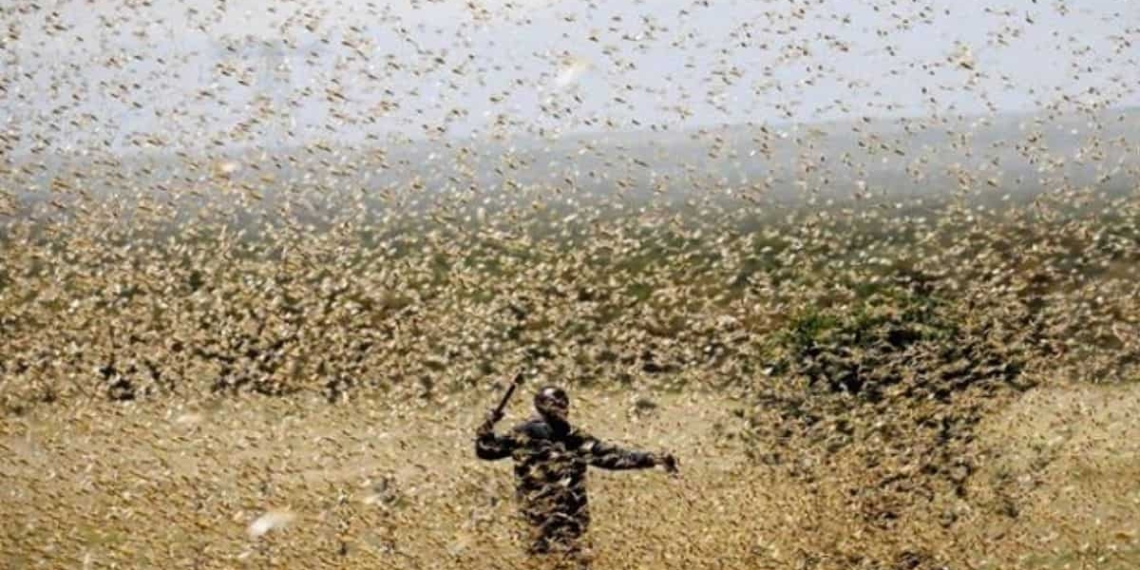
Some northern regions of the country are currently experiencing an outbreak of brown locusts. Photo: Supplied/Food For Mzansi

Some northern regions of the country are currently experiencing an outbreak of brown locusts. Photo: Supplied/Food For Mzansi

Share on FacebookShare on TwitterShare on WhatsApp

While many farmers in the Northern and Eastern Cape feel helpless in the face of locust outbreaks, other farmers and scientists believe that there is an untapped opportunity in these insect swarms that threaten vast areas of grazing and crops.  

According to Lowell Scarr, an insect farmer in the Eastern Cape, farmers could use a locust outbreak to their advantage. Farmers in other parts of the world are already doing this, finding ways of collecting the insects and turning them into a useful source of protein.

He explains that locusts are in fact a rich protein source and can therefore be used as feed. “Although it can be a difficult task to grow them, with enough quantity they can be turned into sustainable, high-protein animal fodder and fertiliser,” Scarr says.  

Economist and insect farmer Lowell Scarr. Photo: Supplied/Food For Mzansi

He points out that this is already being practiced in other parts of the world. 

Farmers in Kenya who have been battling some of the worst locust plagues in decades have started to transform the pests into profit. Farmers harvest the insects and mill them, turning them into protein-rich animal feed and organic fertiliser for farms. 

“It is a bit of a challenge to collect them. But if one can grow them, they can be a solution rather than being a burden,” Scarr said.  

Xolela Mzondi, agricultural research technician from the Agricultural Research Council (ARC), says if locusts are captured without the use of chemicals their biological value is high. “They have a good potential for use in fish, poultry, and even dairy feed.”  

The Northern Cape, Free State, and Eastern Cape provinces of South Africa are the areas most affected by locusts.  The most common is the brown locust which eats grass but will consume any green plants.  According to Mzondi locust eggs can survive for several years in the soil, with the embryos developing at different rates in response to environmental conditions. 

Mzondi says the local insect industry is definitely growing.  

“However, locust farming in South Africa hasn’t been widely explored, as opposed to in many parts of Asia. I supposed you can use them as feed. However, they are currently not favoured in the South African market [unlike] the black soldier flies,” he says Mzondi.   

ALSO READ: Another helping of insect protein? Yes please!

Sign up for Farmer’s Inside Track: Join our exclusive platform for new entrants into farming and agri-business, with newsletters and podcasts.

Zolani Sinxo

Zolani is an award-winning journalist and holds a National Diploma and a B Tech in journalism, he is a journalist at heart with a particular interest in developmental journalism, politics, African development stories, environment, and global and national current affairs. He started to develop an interest in writing and storytelling at a young age after he co-authored a folk tales children’s book in 2005 titled Our Stories, Amabali Ethu. After graduating, Zolani worked at various government institutions where he worked in the marketing and communication departments specialising in media liaison and editorial management. His passion for developmental journalism saw him being a co-founder of a community newspaper in Stellenbosch, Umlambo News. He has also worked for the Group Editors as a journalist for the George Herald and is also the editor of Idinga community newspaper. Zolani loves books, especially on Africa’s politics, history, stories, and biographies of African leaders who have made a significate contribution to the continent’s socio-economic wellbeing.

Tags: Insectsnatural disasters
AgriCareers

Phelisa Ndayi brings soil science and smart tech to Mzansi farmers

by Vateka Halile
8th October 2026

Phelisa Ndayi went from being set back four grades after moving from the Eastern Cape to Johannesburg to becoming an...

Read moreDetails

Agri Skills Transfer: Where agriculture meets opportunity

8th October 2026
Unlocking the economic and nutritional power of the fifth quarter

Unlocking the economic and nutritional power of the fifth quarter

8th October 2026
Prepare your livestock for a drier 2026/27 breeding season

Prepare your livestock for a drier 2026/27 breeding season

8th October 2026
NW government boosts Taung lucerne farmers with new packhouse

NW government boosts Taung lucerne farmers with new packhouse

8th October 2026

Hope restored as Land Bank secures R500m to end funding freeze

This week’s agri events: 05 – 09 October

How SA farmers can crack retail and unlock market access

Rising from storm loss: Sinethemba Gebashe’s egg triumph

From five fish to a commercial farm: Meet the AWSA !Xhariep winners

Join Food For Mzansi's WhatsApp channel for the latest updates!

JOIN NOW!
Next Post
GBV: (From left) Micealah Ford, programme coordinator for Women on Farms Projects, Bronwyn Litkie, founder of the lobbyist group SA Women Fight Back, and Lebogang Sethusha, a labour specialist from Agri SA Labour, had an uncomfortable but critically important discussion on gender-based violence on Mzansi's farms. Photo's: Supplied/Food For Mzansi

GBV in agri: What is our collective responsibility?

THE NEW FACE OF SOUTH AFRICAN AGRICULTURE

With 21 global awards in the first six years of its existence, Food For Mzansi is much more than an agriculture publication. It is a movement, unashamedly saluting the unsung heroes of South African agriculture. We believe in the power of agriculture to promote nation building and social cohesion by telling stories that are often overlooked by broader society.

From five fish to a commercial farm: Meet the AWSA !Xhariep winners

Booberries campaign brings breast health to Checkers shelves

Crucial management habits every livestock farmer must practice

Energy shock, weather risks drive operational costs for SA farmers

Hope restored as Land Bank secures R500m to end funding freeze

Young Lady Grey farmer diversifies from broilers to shisanyama

  • Awards & Global Impact
  • Our Story
  • Contact Us
  • Cookie Policy
  • Privacy Policy
  • Copyright

Contact us
Office: +27 21 879 1824
News: info@foodformzansi.co.za
Advertising: sales@foodformzansi.co.za

Contact us
Office: +27 21 879 1824
News: info@foodformzansi.co.za
Advertising: sales@foodformzansi.co.za

  • Awards & Global Impact
  • Our Story
  • Contact Us
  • Cookie Policy
  • Privacy Policy
  • Copyright

Chat Options

I'm Lerato, your AI assistant!
No Result
View All Result
  • News
  • Changemakers
  • Lifestyle
  • Farmer’s Inside Track
  • Food for Thought

Copyright © 2024 Food for Mzansi