Thursday, October 22, 2026
SUBSCRIBE
22 GLOBAL MEDIA AWARDS
Food For Mzansi
  • News
  • Changemakers
  • Lifestyle
  • Farmer’s Inside Track
  • Food for Thought
No Result
View All Result
  • News
  • Changemakers
  • Lifestyle
  • Farmer’s Inside Track
  • Food for Thought
No Result
View All Result
Food For Mzansi
No Result
View All Result
in Farmer's Inside Track

Podcast: Bump up your biosecurity to keep pigs healthy

We've heard several heartbreaking stories of pig farmers describing the pain of losing their animals to disease. But with the implementation of a few biosecurity measures, losses can be kept to a minimum

by Octavia Avesca Spandiel
6th August 2023
Podcast: Bump up your biosecurity to keep pigs healthy

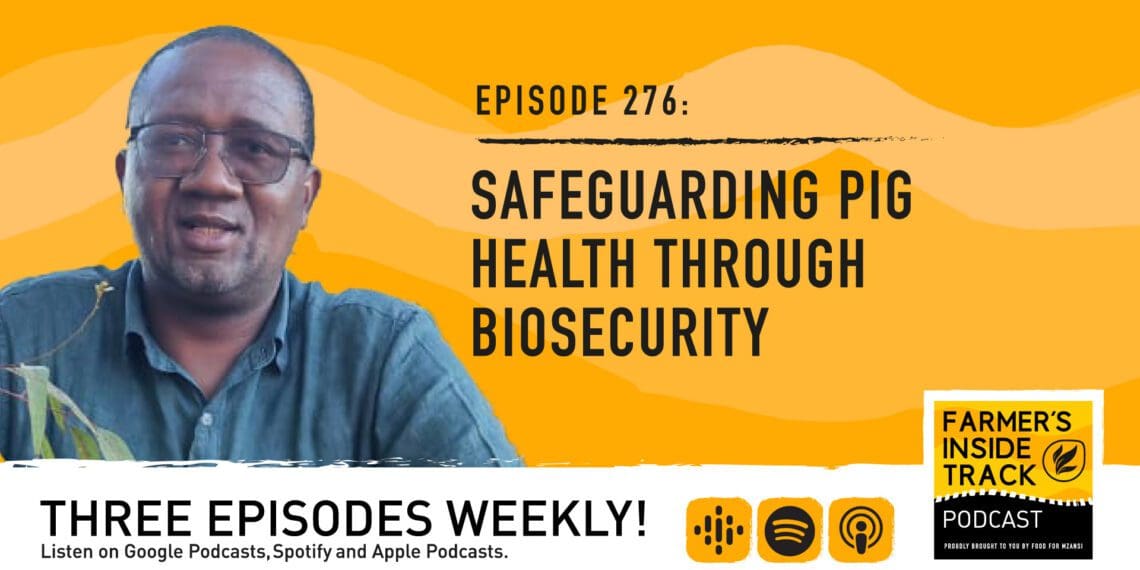
Dr Japhta M Mokoele, senior lecturer in pig herd health in production animal studies at the faculty of veterinary science at the Onderstepoort campus of the University of Pretoria. Photo:Food For Mzansi

Share on FacebookShare on TwitterShare on WhatsApp

When it comes to your pig herd, following some simple biosecurity rules can help keep your pigs healthy and disease-free. Establishing effective internal and external biosecurity measures is key to reducing the probability of your pigs being infected with diseases.

In this episode of Farmer’s Inside Track, Dr Japhta Mokoele, a qualified veterinarian, explains why practising external biosecurity is not enough to protect your pig herd from the spread of pathogens. Internal biosecurity is just as important.

Mokoele is also a senior lecturer in pig herd health and production at the University of Pretoria. He explains that external biosecurity reduces the probability of the introduction of pathogens; you protect the farm from dangers coming from the outside world.

Meanwhile, internal biosecurity reduces the spread of pathogens once they are already on the farm.

External and internal measures

According to Mokoele, when you look at external factors, consider measures such as physical barriers like fences and signage, banning and introduction of certain types of animals and vehicles from the outside, and quarantining new pigs for 30 days and checking if these pigs are sick. 

Internal biosecurity measures to reduce farm infections include managing the pig herd (starting with piglets and moving to bigger pigs), vaccinating new pigs, and cleaning and disinfection to reduce the microbial load.

Mokoele goes into more detail on other measures farmers can take internally and externally.

In this episode, Mokoele also discusses:

  • Working closely with veterinarians;
  • Watching out for weaknesses in your biosecurity system and more.

Want to know more? Listen to the full episode of Farmer’s Inside Track. 

Option 1: Click here to listen on Spotify (all mobile and other devices).

Option 2: Click here to listen on any Apple device. 

Option 3: Click here to listen on Google Podcast.

ALSO READ: Hell on earth as African Swine Fever rips through EC piggeries

Enjoyed reading? Tell us why with a quick 5-min survey!

Sign up for Farmer’s Inside Track: Join our exclusive platform for new entrants into farming and agri-business, with newsletters and podcasts.  

Octavia Avesca Spandiel

Raised by a close-knitted family who loves her deeply, Octavia believes in the philosophy of ‘I am because you are'. This former news and content editor for radio is now living her best life in the agricultural sector as a commercial journalist at Food For Mzansi. Her soft spot for poetry and passion for life, writing and traveling inspires her to write compelling stories. Apart from being an excellent writer, Octavia has an educational background in youth work and loves working with people. 

Tags: Animal BiosecurityCommercialising farmerInform mePig farmingPodcast
Agda conference to tackle finance, market access and agri growth
News

Agda conference to tackle finance, market access and agri growth

by Patricia Tembo
19th October 2026

Farmers and agribusinesses seeking growth, funding, and stronger market connections can engage with industry leaders at the Agda Annual Stakeholder...

Read moreDetails

Reluctant farmer scales EC cabbage enterprise to supply Spar

19th October 2026
Reality check: What SA agri interns really experience on the farm

Reality check: What SA agri interns really experience on the farm

19th October 2026
This week’s agri events: 19 – 23 October

This week’s agri events: 19 – 23 October

19th October 2026

Stop the rot: Four steps to slash post-harvest losses

18th October 2026

Patensie claims Agri’s Got Talent crown for second year running

Land Bank must step up support for farmers, says Aucamp

This week’s agri events: 19 – 23 October

Becoming bankable: How to get your farm ready for finance

FNB puts relationships at the heart of commercial farming

Join Food For Mzansi's WhatsApp channel for the latest updates!

JOIN NOW!
Next Post
This week’s agri events: 7 to 11 August 2023

This week’s agri events: 7 to 11 August 2023

THE NEW FACE OF SOUTH AFRICAN AGRICULTURE

With 21 global awards in the first six years of its existence, Food For Mzansi is much more than an agriculture publication. It is a movement, unashamedly saluting the unsung heroes of South African agriculture. We believe in the power of agriculture to promote nation building and social cohesion by telling stories that are often overlooked by broader society.

Godongwana unveils fuel relief and R10 billion El Niño buffer

Smart irrigation: Precision tools boost crop yields while cutting costs

By-laws vs. livelihoods: Barriers facing WC smallholder farmers

CPAs urged to register for free governance support toolkits

Potatoes and tomatoes plunge while avocado prices soar

Becoming bankable: How to get your farm ready for finance

  • Awards & Global Impact
  • Our Story
  • Contact Us
  • Cookie Policy
  • Privacy Policy
  • Copyright

Contact us
Office: +27 21 879 1824
News: info@foodformzansi.co.za
Advertising: sales@foodformzansi.co.za

Contact us
Office: +27 21 879 1824
News: info@foodformzansi.co.za
Advertising: sales@foodformzansi.co.za

  • Awards & Global Impact
  • Our Story
  • Contact Us
  • Cookie Policy
  • Privacy Policy
  • Copyright

Chat Options

About this assistant

This feature generates automated answers summarised from Food For Mzansi articles. By using it, you are interacting with an AI system (provided by Google), not a human. AI can make mistakes. Please refer to the source articles for verification and citation purposes.

Our staff do not check or moderate Lerato’s answers in advance, but may review some later. Our journalists continue to write and edit all the articles Lerato uses as sources.

To estimate unique and returning web users, we store a random browser ID in this browser. WhatsApp users are counted by phone number. The same person using both channels may be counted twice.

I'm Lerato, your AI assistant!
No Result
View All Result
  • News
  • Changemakers
  • Lifestyle
  • Farmer’s Inside Track
  • Food for Thought

Copyright © 2026 Food for Mzansi