Friday, October 23, 2026
SUBSCRIBE
22 GLOBAL MEDIA AWARDS
Food For Mzansi
  • News
  • Changemakers
  • Lifestyle
  • Farmer’s Inside Track
  • Food for Thought
No Result
View All Result
  • News
  • Changemakers
  • Lifestyle
  • Farmer’s Inside Track
  • Food for Thought
No Result
View All Result
Food For Mzansi
No Result
View All Result
in Farmer's Inside Track

Podcast: Why biotech crops make life easier

More and more farmers are opting for biotech crops given their advantages over conventional farming. They are easier to handle, allow farmers to reduce the use of pesticides and save time. But to make the final decision, farmers are advised to plant a mixture of crops to see if this option works best for them

by Vateka Halile
3rd February 2023
Podcast: Why biotech crops make life easier

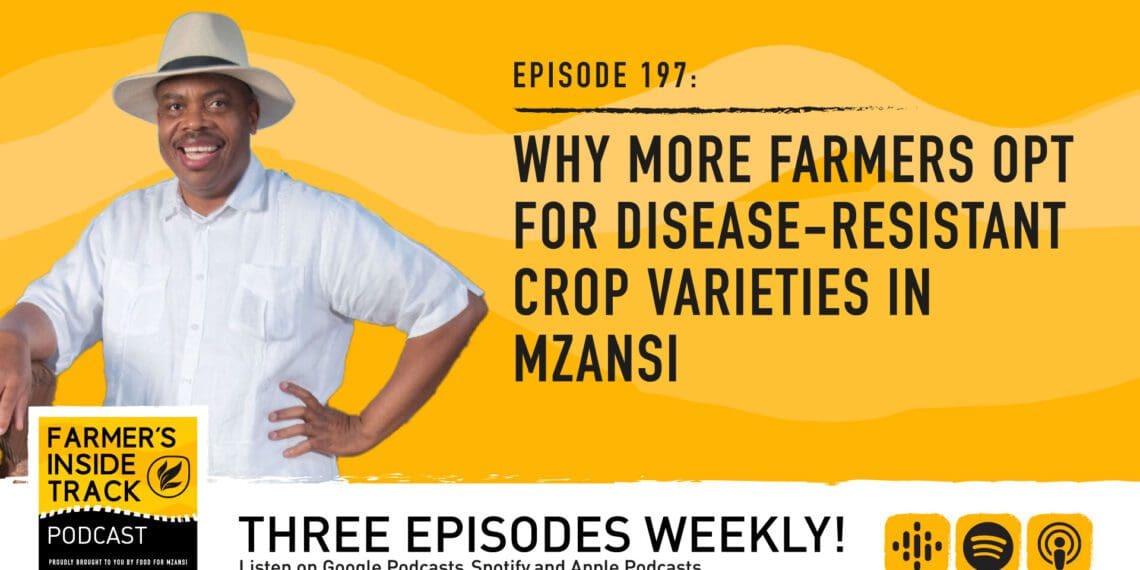
In this episode of Farmer's Inside Track we chat to developing market manager at Corteva Agriscience, Pioneer Seed, Charles Matlou, about biotech crops. Photo: Food For Mzansi

Share on FacebookShare on TwitterShare on WhatsApp

To reduce the number of pesticides they use, more and more farmers in Mzansi are planting biotech, disease-resistant crop types. In order to safeguard beneficial insects and entice away dangerous insects, farmers are building insect refuges in and around their agricultural fields.

In this edition of Farmer’s Inside Track, we discuss the three biotech crops grown in Mzansi – maize, cotton, and soybeans – with Charles Matlou, the developing market manager of Corteva Agriscience Pioneer Seed.

According to Matlou, the sole difference between cultivating biotech crops and farming traditional crops is that biotech crops are easier to handle.

In terms of insect management, he says that using biotech, the BT or insect tolerant one, can control the insects. Spraying is required to control insects while growing conventional crops.

“With weed control, the herbicide-tolerant one allows for easy management. You are easily spraying your weeds to control them. With the conventional one, you will have to use other methods, including chemical which is a bit intensive and maybe even the cultural method – the mechanical way of controlling weeds.”

Save a lot of time

“So, the management of biotech crops is a bit easier, and it saves a lot of time for the farmers when they are planting.”

Matlou suggests that farmers do their own experimentation by planting a mixture of conventional and biotech seeds in about equal proportions.

Farmers may also compare the upfront costs of growing biotech crops with those of conventional crops, as well as the final profits. Matlou says this will push farmers to choose between farming methods.

In the episode, Matlou discusses:

  • A comparison of commercial and small-scale agricultural methods.
  • Considerations for funding biotech farming; and
  • Input costs between conventional and organic farming.

Want to know more? Listen to the full episode of Farmer’s Inside Track. 

Option 1: Click here to listen on Spotify (all mobile and other devices).

Option 2: Click here to listen on any Apple device. 

Option 3: Click here to listen on Google Podcast.

ALSO READ: What farmers need to know about biotech crops

Sign up for Farmer’s Inside Track: Join our exclusive platform for new entrants into farming and agri-business, with newsletters and podcasts.  

Vateka Halile

Vateka Halile grew up in rural areas of Cofimvaba in the Eastern Cape. She was raised in a traditional family setting and found writing to be a source of comfort and escape. Vateka participated in an online citizen journalism course through Food For Mzansi, and her passion for health and medicine-related stories was born. Her dedication to community work and love for social justice and solidarity spaces is evident in her quality time with the community when she isn't working.

Tags: BiotechnologyCorteva Agriscience
News

CPAs urged to register for free governance support toolkits

by Staff Reporter
21st October 2026

With 82% of registered CPAs facing non-compliance issues, Vumelana Advisory Fund has introduced free support toolkits to improve land management...

Read moreDetails

Potatoes and tomatoes plunge while avocado prices soar

20th October 2026
Becoming bankable: How to get your farm ready for finance

Becoming bankable: How to get your farm ready for finance

20th October 2026

Fixing SA’s agricultural visa system to protect seasonal harvests

20th October 2026
‘Beware the dangers of illegal foot-and-mouth vaccines’

SA and Namibia reevaluate livestock trade after FMD outbreak

20th October 2026

Why simple farm records beat complex systems

Farmers urge urgent support for resilient local supply chains

Crowdfunding breathes new life into neglected Limpopo citrus farm

Laastedrift Agri leads with BigBucks Gala success

By-laws vs. livelihoods: Barriers facing WC smallholder farmers

Join Food For Mzansi's WhatsApp channel for the latest updates!

JOIN NOW!
Next Post
Umongikazi ufezekisa iphupha lobomi bonke bakhe phakathi kweenkuku zakhe

Umongikazi uba ngumfama weenkuku

THE NEW FACE OF SOUTH AFRICAN AGRICULTURE

With 21 global awards in the first six years of its existence, Food For Mzansi is much more than an agriculture publication. It is a movement, unashamedly saluting the unsung heroes of South African agriculture. We believe in the power of agriculture to promote nation building and social cohesion by telling stories that are often overlooked by broader society.

Agda pushes for pathways to commercialise emerging farmers

Karoo sheep tallow finds new purpose in Mzansi beauty brand

Why simple farm records beat complex systems

Crowdfunding breathes new life into neglected Limpopo citrus farm

Mogogelo farmers receive packhouse and cold storage facilities

Godongwana unveils fuel relief and R10 billion El Niño buffer

  • Awards & Global Impact
  • Our Story
  • Contact Us
  • Cookie Policy
  • Privacy Policy
  • Copyright

Contact us
Office: +27 21 879 1824
News: info@foodformzansi.co.za
Advertising: sales@foodformzansi.co.za

Contact us
Office: +27 21 879 1824
News: info@foodformzansi.co.za
Advertising: sales@foodformzansi.co.za

  • Awards & Global Impact
  • Our Story
  • Contact Us
  • Cookie Policy
  • Privacy Policy
  • Copyright

Chat Options

About this assistant

This feature generates automated answers summarised from Food For Mzansi articles. By using it, you are interacting with an AI system (provided by Google), not a human. AI can make mistakes. Please refer to the source articles for verification and citation purposes.

Our staff do not check or moderate Lerato’s answers in advance, but may review some later. Our journalists continue to write and edit all the articles Lerato uses as sources.

To estimate unique and returning web users, we store a random browser ID in this browser. WhatsApp users are counted by phone number. The same person using both channels may be counted twice.

I'm Lerato, your AI assistant!
No Result
View All Result
  • News
  • Changemakers
  • Lifestyle
  • Farmer’s Inside Track
  • Food for Thought

Copyright © 2026 Food for Mzansi