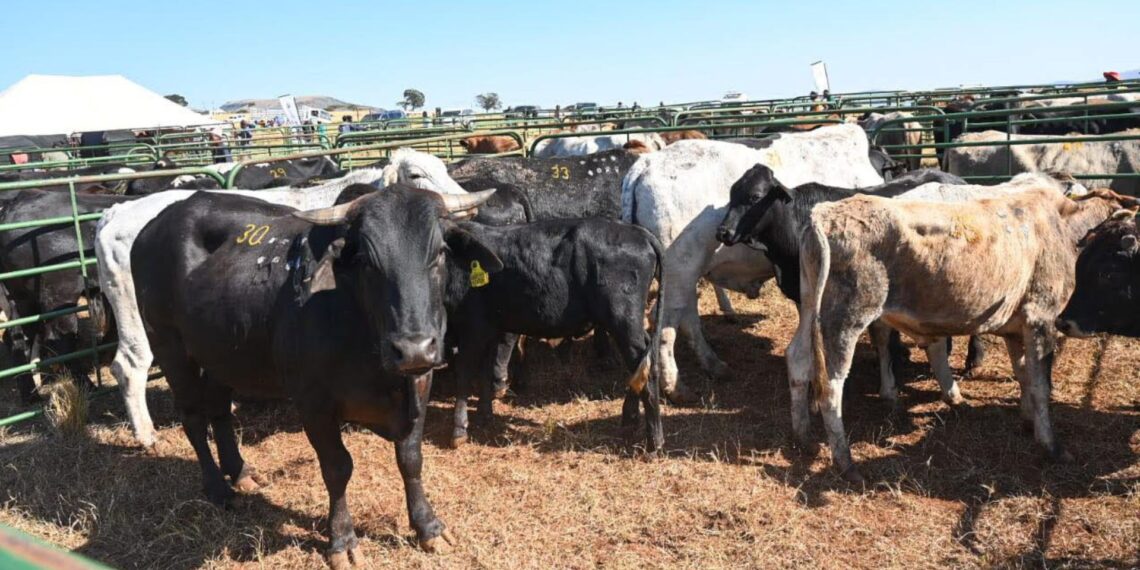
The battle to contain foot-and-mouth disease (FMD) continues to be at the centre of the agricultural sector, where government and relevant stakeholders work towards finding a common ground and curbing the outbreak.
The Agricultural Trade Report by AgriSA has indicated that a concentrated effort is needed to save the livestock industry against the outbreak, as exports have started to suffer greatly.
“Two structural pressures require attention. First, foot-and-mouth disease (FMD) continues to constrain livestock exports, with bovine meat (HS 0201) declining by 56.6% and Middle East destination channels declining between 65 to 95% year on year.
“The annual revenue loss exceeds USD 81 million, and the risk of permanent market loss increases with each quarter of delayed restoration of zone status. Second, the United States, historically a high-value, high-margin market, recorded a 39.9% export decline, the single largest destination contraction in Q1 2026,” the report stated.
Requirements needed to recover trade
According to AgriSA, this contraction likely reflects a combination of Agoa-related uncertainty, inventory normalisation, and evolving supply chain dynamics.
Related stories
- Mixed reactions as court rules on private FMD vaccinations
- SA rolls out FMD vaccines as livestock industry fights back
- No market access, no future: The heavy cost of FMD
- North West ramps up FMD vaccination drive in Marikana
“Three sequenced developments are required for livestock recovery: the FMD zone status restoration through OIE/WOAH verification, requiring 2–3 months disease-free (with vaccination) or 6–12 months (without); secondly, bilateral veterinary certificate re-negotiation with each importing country, including in-person audits for Gulf states.
“Thirdly, commercial re-establishment of buyer relationships, cold-chain contracts, and retail shelf positions; a process that lags certification by 12-24 months.”
The reality check that the report indicated was that FMD outbreaks since 2022 have triggered bilateral veterinary certificate suspensions across the Middle East, Gulf, and Asian markets.
“FMD zone management is not an animal health issue alone, but also a trade infrastructure priority. Accelerated surveillance, ring vaccination protocols, and movement controls in FMD zones are necessary preconditions for market re-opening. Diplomatic engagement with Gulf veterinary authorities should proceed in parallel with epidemiological efforts,” the report stated.
Risk remains, but trade negotiations are key
Agbiz chief economist Wandile Sihlobo explained that the Middle East and Asia remain critical strategic regions with the potential to expand access to a range of agricultural products.
“These are the agricultural export growth regions, in addition to the access we enjoy elsewhere. Securing better tariff access to several of these new markets will require South Africa to negotiate bilateral trade agreements with some countries.
“In the current set-up, where South Africa must engage on trade issues collectively with other SACU [Southern African Customs Union] members, the country has not moved with the necessary urgency to open new markets,” he said.
As per the recent statistics from the department of agriculture, the government have vaccinated just under 4.4 million animals across the country. This is the largest vaccine acquisition programme ever undertaken by the South African state.
“To date, government has already spent R494 million on vaccine procurement and deployment,” agriculture minister John Steenhuisen said.
A small-scale livestock farmer, Alex Mashilo from Limpopo, said he was hopeful that with the efforts from the government, FMD will be contained.
“I think with the information I have received and seen in our area, FMD will be contained. What is needed is for us farmers to follow the right protocols; we are on the edge because this outbreak has the potential to break us as farmers. However, if we do not listen and allow ourselves to be guided, we will be at risk,” he said.
READ NEXT: CGA warns of lower citrus exports after devastating storms