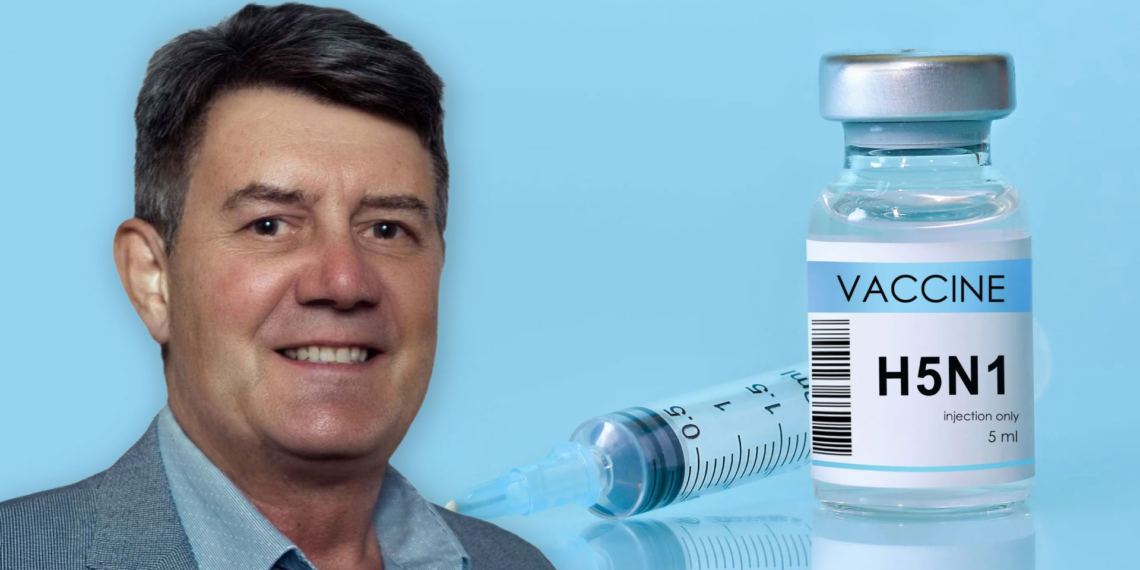
South Africa’s poultry industry has raised concerns over delays in the rollout of avian influenza vaccines, warning that current protocols are limiting uptake and leaving producers vulnerable ahead of the high-risk winter season.
In an exclusive interview with Food For Mzansi, FairPlay general manager Izaak Breitenbach said that while vaccination remains critical to preventing a repeat of the devastating 2023 bird flu outbreak, implementation challenges have stalled meaningful progress.
Patricia Tembo: Why is vaccination against avian influenza so important right now?
Izaak Breitenbach: For a vaccine to work, we need to vaccinate the majority of birds. Only then can we reduce the virus load in the environment and provide reasonable protection for our flocks. Should an outbreak occur, we should not suffer the consequences we experienced in 2023, when losses exceeded R10 billion.
A vaccine only works if the majority of birds are vaccinated. Otherwise, the virus continues to circulate, and flocks remain vulnerable. We also have to recognise that avian influenza is a controlled disease under the department of agriculture or the director of animal health, for good reason: we want to prevent the virus from mutating and creating problems for other animals and humans.
However, there are aspects of the current biosecurity protocols that we find impractical. For example, traditionally, farmworkers have taken samples and vaccinated chickens for many years. Now, the department requires that a veterinarian or paraveterinarian collect all samples.
Related stories
- Strong chicken demand boosts Rainbow profits to R1.1bn
- Mastering poultry feed: Tips to maximise efficiency
- Poultry farmers: A guide to selling to abattoirs
- Brazil’s ambassador clarifies poultry export standards to SA
This is impractical because a veterinarian cannot move from farm to farm efficiently, and in doing so, could inadvertently spread disease. We believe trained farmworkers should continue to take samples under veterinary supervision, with the veterinarian signing off that samples were taken correctly.
A second example involves the culling of long-living birds, like broiler breeders and commercial layers, at the end of their production cycle. The department now requires that vaccinated birds be processed through an abattoir rather than sold live, claiming that the virus could mutate in these birds. Our surveys show that these birds generally survive only two to three weeks after sale, so there is insufficient time for mutation.
With the mass vaccination programme announced last year, what is the current stage of rollout?
We want good control over the vaccination process, including appropriate biosecurity and monitoring protocols. We’re not advocating an “anyone can vaccinate” approach, which could create additional risks.
Our proposals to the department of agriculture are based on a European Food Safety Authority (EFSA) document used in the European Union. We accept this approach, except for a few clauses, and are proposing a high level of biosecurity and monitoring during vaccination.
Currently, ten applications for vaccination have been approved, but only one flock has actually been vaccinated. The remaining nine have approval but have not yet been vaccinated. This doesn’t solve the problem, as we need the majority of birds vaccinated to reach critical protection.
We have also submitted a Section 23 application to elevate the matter to the minister’s desk. The minister appointed a Section 23 Committee, which has been reviewing our application since September last year. In early March, we presented orally to the committee, and on 7 April, we will submit additional information for their decision on whether our proposed protocol is acceptable.
How do the current vaccination hurdles affect production?
Even if companies with approval vaccinate, it only covers ten flocks in South Africa, whereas we have hundreds of flocks that need vaccination. In Europe, outbreaks tend to spread to South Africa during winter. With over 4 000 outbreaks in Europe, we must be extremely careful this winter.
Any outbreak here could cause massive losses. Highly pathogenic avian influenza remains a real threat, and we risk a catastrophic situation similar to 2023. Logistically, even if we started vaccinating all flocks today, critical protection would take about 12 months, so the industry remains exposed.
Where do you see the industry moving forward in terms of vaccination, and what is necessary to prevent an outbreak?
The main hurdle is the Section 23 application. We hope the committee adopts a more accommodating approach to our proposed protocols. Our goal is to allow most companies to vaccinate, reaching critical mass. This would reduce the amount of free virus in the environment if an infection occurs.
Importantly, vaccination prevents mortalities. We don’t get compensated for culled birds, so vaccinated flocks won’t experience the massive losses that caused the R10.3 billion loss in 2023. This is particularly crucial for smaller producers, who otherwise lose every bird and often cannot restart production.
What parallels do you see between the FMD outbreak and avian influenza, in terms of response and prevention?
There are several parallels with foot-and-mouth disease (FMD) in terms of consequences and control measures. One key difference is that with FMD, vaccine shortages hampered progress. For avian influenza, we have three H5 vaccines registered and a sufficient supply, so vaccine availability is not an issue.
Both diseases require compliance with biosecurity and monitoring protocols. In FMD, the department set standards achievable by the red meat industry, facilitating mass vaccination. With chickens, we’re asking the Section 23 Committee to accept the European standards we propose, with a few additional clauses for unique circumstances, like the sale of live birds.
Another difference is funding. The government pays for FMD vaccines, but not for bird flu vaccines, and the reasons for this have not yet been discussed with the department or the minister’s office.
READ NEXT: Sustainable farming: How to balance soil health and income