Thursday, June 4, 2026
SUBSCRIBE
22 GLOBAL MEDIA AWARDS
Food For Mzansi
  • News
  • Changemakers
  • Lifestyle
  • Farmer’s Inside Track
  • Food for Thought
No Result
View All Result
  • News
  • Changemakers
  • Lifestyle
  • Farmer’s Inside Track
  • Food for Thought
No Result
View All Result
Food For Mzansi
No Result
View All Result
in Advertorial

Climate-smart genetics: How to choose the right cattle breed

by Lisakanya Venna
4th June 2026
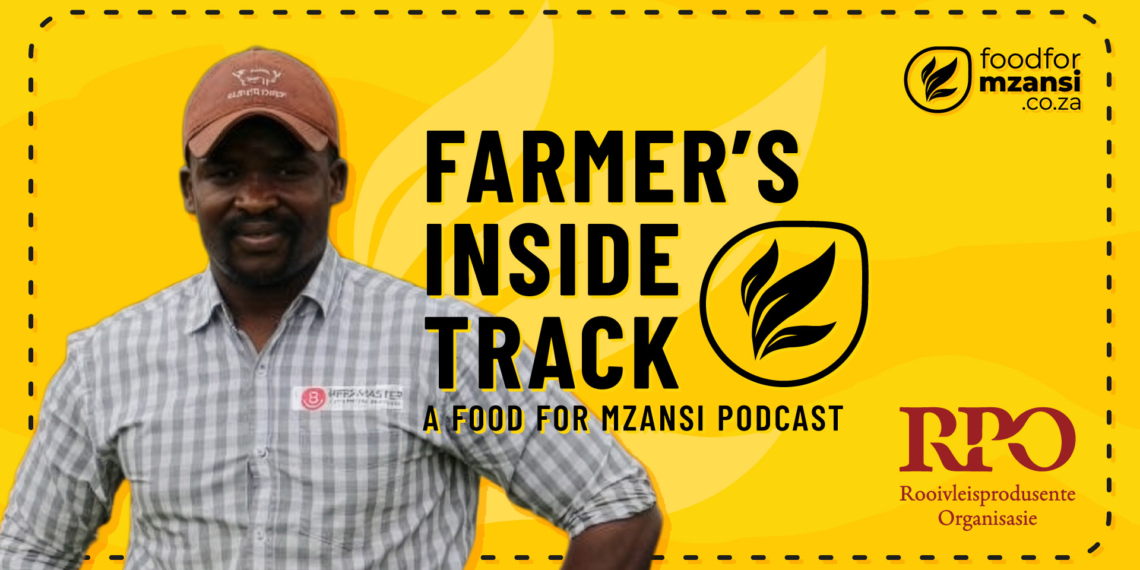
Ndumiso Gule, director of Gule Agri Consulting, highlights the vital role of indigenous genetics in building resilient, low-input farming systems. Photo: Gareth Davies/Food For Mzansi

Ndumiso Gule, director of Gule Agri Consulting, highlights the vital role of indigenous genetics in building resilient, low-input farming systems. Photo: Gareth Davies/Food For Mzansi

Share on FacebookShare on TwitterShare on WhatsApp

Farming in Africa is tough, making climate-smart genetics a necessity. Livestock expert Ndumiso Gule, who works closely with the Red Meat Producers’ Organisation (RPO), explains how matching cattle genetics to your specific regional climate data protects your herd from extreme weather.


True sustainability in livestock farming begins with selecting animals that can thrive in their specific environment. Ndumiso Gule, director of Gule Agri Consulting, joins us to discuss climate-smart genetics. 
He explores how breed selection serves as a primary defence against climate change and why indigenous and adapted genetics are key to a low-input, sustainable future.

In working with the RPO, Gule conducts farmer training sessions and information days, helping producers make informed decisions that align with their specific geographic realities.


Related stories
  • Livestock health: Why biosecurity starts at the farm gate
  • Innovations in red meat industry: Technology shaping the future
  • No market access, no future: The heavy cost of FMD
  • Red meat’s new story: Healing land through grazing

Selecting a suitable breed

In this episode, we explore how matching cattle genetics to climatic data can protect a farming operation from the elements and how the RPO promotes agricultural innovation through heritage and composite breeds.

“When a farmer finds themselves on a farming setup, they need to make a decision on which breed to farm with,” Gule says. “They will look at the environment…if it is in a hot, low-rainfall area and then look at the vegetation, the amount of grass, and things like humidity. 

“They look at average temperatures throughout the year and whether they are likely to get frost or snow in winter. With all that climatic information collected, they can then select the suitable breed for that location.” 

The power of indigenous breeds

When considering why indigenous options, such as Nguni and Afrikaner cattle, remain highly suited to South Africa’s climate, Gule emphasises that survival must come before aesthetic appeal. 

“Africa is harsh; it’s hot, and at times it’s tropical,” says Gule. “Nguni cattle have been occurring in South Africa for the longest of times and are acclimatised. They have faced and seen different challenges, and the Afrikaners are tough animals as well. It is better to have an alive animal than to try to bring in a fancy genetic animal that dies. They survive.” 

Gule highlights how these heritage breeds continue to anchor the modern red meat industry through cross-breeding programmes.

“They continue to play a big role in the beef industry in terms of how they’ve been used to create formidable beef breeds. The Afrikaner is the backbone of the Bonsmara; without the Afrikaner in that cross, the Bonsmara wouldn’t exist today.”

READ NEXT: Eskort expands high-tech pork network with two new hubs


Sign-up for the latest agricultural news delivered straight to your inbox every day with Mzansi Today!

Lisakanya Venna

Lisakanya Venna is a junior journalist and content coordinator with varied multimedia experience. As a CPUT journalism alumni, she finds fulfilment in sharing impactful stories and serving as a reliable source of information.

Tags: Livestock farmingPodcastRed Meat Producers Organization (RPO)
Food for Thought

The new normal: How African agriculture can survive volatile risk

by Loffie Brandt
2nd June 2026

African agriculture has entered a highly unpredictable risk era. It’s no longer just about the weather; geopolitical tensions and skyrocketing...

Read moreDetails
Farmers believe latest petrol price cut is just a drop in the ocean

Diesel shock: The silent threat to South African agriculture

2nd June 2026
Ex-cop beats poisoning disaster to build growing livestock business

Ex-cop beats poisoning disaster to build growing livestock business

1st June 2026
Nestlé Nespray

World Milk Day: Nestlé Nespray champions SA dairy farmers

1st June 2026
Repo rate cut good news for farmers amid declining inflation

Repo rate hike tightens noose on SA’s struggling economy

1st June 2026

Ex-cop beats poisoning disaster to build growing livestock business

High input costs threaten land reform success

Climate-smart genetics: How to choose the right cattle breed

The new normal: How African agriculture can survive volatile risk

Mixed reactions as court rules on private FMD vaccinations

Join Food For Mzansi's WhatsApp channel for the latest updates!

JOIN NOW!
Next Post
Hopa brings hope and market access to EC grassroots farmers

Hopa brings hope and market access to EC grassroots farmers

THE NEW FACE OF SOUTH AFRICAN AGRICULTURE

With 21 global awards in the first six years of its existence, Food For Mzansi is much more than an agriculture publication. It is a movement, unashamedly saluting the unsung heroes of South African agriculture. We believe in the power of agriculture to promote nation building and social cohesion by telling stories that are often overlooked by broader society.

Hopa brings hope and market access to EC grassroots farmers

Climate-smart genetics: How to choose the right cattle breed

Fruits and nuts drive SA’s record agricultural export surge

New Bayer and Khula partnership to boost funding for 50 farmers

Oh, so oatsy! Creative ways to spice up breakfast

Will new black warning labels on food save lives or hurt farming?

  • Awards & Global Impact
  • Our Story
  • Contact Us
  • Cookie Policy
  • Privacy Policy
  • Copyright

Contact us
Office: +27 21 879 1824
News: info@foodformzansi.co.za
Advertising: sales@foodformzansi.co.za

Contact us
Office: +27 21 879 1824
News: info@foodformzansi.co.za
Advertising: sales@foodformzansi.co.za

  • Awards & Global Impact
  • Our Story
  • Contact Us
  • Cookie Policy
  • Privacy Policy
  • Copyright

Chat Options

I'm Lerato, your AI assistant!
No Result
View All Result
  • News
  • Changemakers
  • Lifestyle
  • Farmer’s Inside Track
  • Food for Thought

Copyright © 2024 Food for Mzansi

This website uses cookies. By continuing to use this website you are giving consent to cookies being used. Visit our Privacy and Cookie Policy.