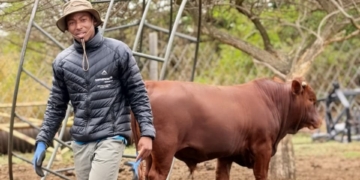
Did you know a common mosquito bite can cause significant economic losses for livestock farmers? Dr Sello Maboe, the technical and marketing manager at Onderstepoort Biological Products (OBP), shared his expertise on three-day stiffness sickness, also known as bovine ephemeral fever, which is caused by mosquitoes and midges.
This viral disease, which primarily affects cattle, is a significant concern for livestock farmers, particularly in regions conducive to the vectors that transmit it.
What is three-day stiffness sickness?
According to Maboe, three-day stiffness sickness is a viral disease affecting cattle and, to a lesser extent, water buffalo. The disease is named for its typical duration and primary symptoms.
“Three-day stiffness sickness is characterised by muscle stiffness in the affected animals, which often resolves on its own within three days,” explains Maboe.
The virus behind this illness is the bovine ephemeral fever virus.
Early signs and symptoms
Recognising the early symptoms of three-day stiffness sickness is crucial for timely intervention. Maboe explains that the animals get a sudden onset of fever, and a farmer will probably only pick them up if they have a thermometer and can measure the temperature.
“The fever is followed by visible muscle stiffness and a reluctance to move. Some of these animals may actually show some shivering, especially the dairy animals. They may lie down a lot and often struggle to get up,” he adds.
The severity of symptoms can vary, ranging from mild lameness to severe forms where animals may experience complications.
Causes and transmission
The bovine ephemeral fever virus is transmitted by mosquitoes and midges. “Notably, cattle-to-cattle transmission does not occur; instead, the disease spreads through the bites of infected insects,” Maboe says.
He elaborates that when infected mosquitoes and midges carry the virus, they can transmit it through their bites when they break through the skin. The transmission does not require a lot of infected blood to transmit the disease to animals.
Impact on health and productivity
Three-day stiffness sickness has significant impacts on the health and productivity of livestock, particularly dairy cattle.
“Sick animals don’t eat or produce milk efficiently, leading to substantial losses in milk production,” he points out.
Related stories
- Farmers: Here’s how to prevent foot rot in cattle
- How to keep your cattle healthy (and happy!) this winter
- Ask the vet: Mfethu, here’s why your sheep are limping
In feedlot settings, reduced weight gain is a major concern. “When the animals are sick, the nutrition is used to repair damaged tissues first before anything is allocated to growth.”
Additionally, sick animals may struggle to access food and water, further impacting their health. Fertility issues are another significant consequence of the disease.
“We’ve seen quite a lot of fertility implications in breeding bulls because the fever tends to interfere with mature semen in a bull,” explains Maboe.
Pregnant animals are also at risk, as the fever can lead to abortions. While the disease does not have a high mortality rate, fatalities do occur, adding to the economic burden on farmers.
Long-term effects and contingency planning
Most animals recover fully from three-day stiffness sickness, but there can be long-term effects, particularly related to fertility.
“Full recovery to fertility is never 100% guaranteed, depending on how severe the infection was,” Maboe says.
Injuries sustained from frequent falls during the illness can also result in long-term issues, especially in heavy animals like breeding bulls.
Having a contingency plan is crucial for livestock farmers to manage potential outbreaks effectively.
“Every farmer should at least have facilities that can provide good nursing care for these animals.”
This includes shelter from adverse weather and the ability to provide adequate food and water. Regularly turning animals to prevent pressure sores and ensuring they are comfortable with proper bedding are important aspects of care.
Preventative measures
Preventing three-day stiffness sickness involves reducing contact between susceptible animals and infected insects.
Maboe emphasises the importance of this strategy, stating, “This can be either keeping animals away from areas where there’s a high population of these insects, such as around standing water.”
Using registered insect repellents on animals is another effective measure. Vaccination is also a critical preventative strategy.
“There are registered effective vaccines in the country. The key thing is to actually use them on time, meaning before the high-risk or wet season starts,” Maboe stresses.
Ensuring good nutrition for livestock is also essential, as it helps strengthen their immune systems and enhances their ability to fight off infections.
Treatment and management
While there is no cure for viral infections like three-day stiffness sickness, supportive therapy and symptomatic treatment can significantly aid recovery.
“We give them supportive therapy and treat them symptomatically,” Maboe explains.
Managing pain is crucial, as it helps animals recover faster and reduces the risk of complications.
“For example, if an animal is limping, chances are they are in pain. If you help manage the pain in these animals with anti-inflammatories, they tend to recover quicker and complicate less.”
In dairy animals, a drop in circulating calcium levels is common. “We give them a calcium supplement, preferably intravenously, but it can also be given orally if their swallowing reflex is intact,” Maboe advises.
ALSO READ: Harvest hell: Late, foreign maize seedlings devastate NC farmers
Sign up for Mzansi Today: Your daily take on the news and happenings from the agriculture value chain.