Saturday, September 5, 2026
SUBSCRIBE
22 GLOBAL MEDIA AWARDS
Food For Mzansi
  • News
  • Changemakers
  • Lifestyle
  • Farmer’s Inside Track
  • Food for Thought
No Result
View All Result
  • News
  • Changemakers
  • Lifestyle
  • Farmer’s Inside Track
  • Food for Thought
No Result
View All Result
Food For Mzansi
No Result
View All Result
in News

R5-million locust fight pays off for Western Cape

In an update on locust outbreaks in the province, Western Cape minister of agriculture Dr Ivan Meyer said that authorities and farmers were gaining ground. But no one is prepared to let down their guard just yet

by Nicole Ludolph
6th April 2022
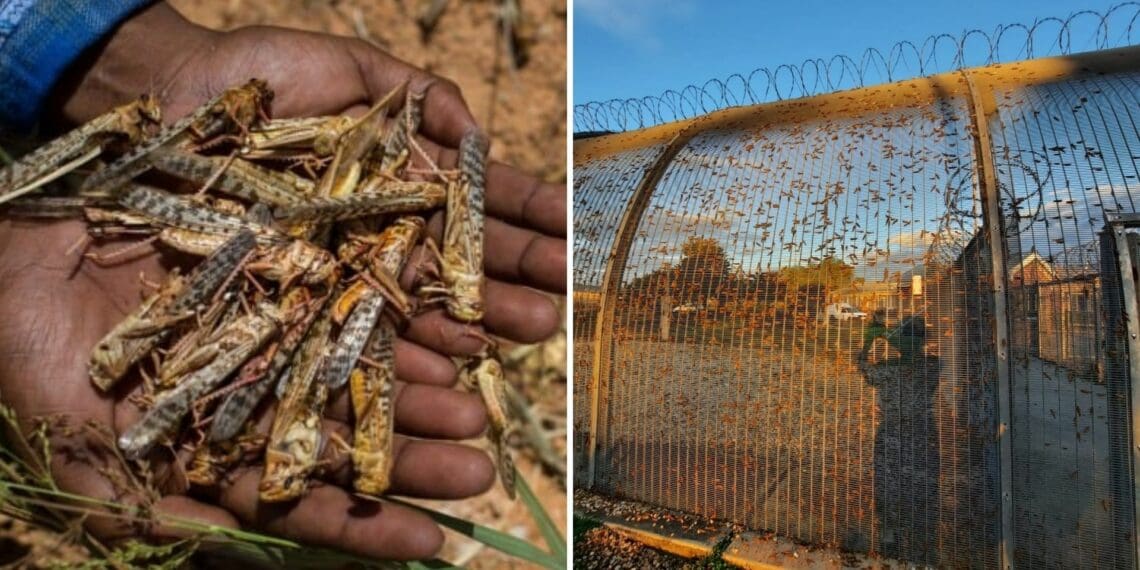
Locust swarms in the Western Cape are diminishing in size and number. Photos: Supplied/Food For Mzansi

Locust swarms in the Western Cape are diminishing in size and number. Photos: Supplied/Food For Mzansi

Share on FacebookShare on TwitterShare on WhatsApp

Locust swarms in the Western Cape are getting fewer and smaller but farmers in the province remain on high alert.

The province has been hard at work to combat infestations in the Central Karoo and Garden Route in recent weeks.

In an update on locust outbreaks in the province, Western Cape minister of agriculture Dr Ivan Meyer said that, while the threat of re-occurrence is likely, no further sightings of locust swarms were reported in the past week in Laingsburg. The number and size of swarms in Murraysburg and Beaufort West were also diminishing.

Dr Ivan Meyer, the Western Cape minister of agriculture. Photo: Supplied/Food For Mzansi
Western Cape minister of agriculture Dr Ivan Meyer. Photo: Supplied/Food For Mzansi

One swarm was sighted in Prince Albert and two swarms in Merweville. Another large swarm, moving in a south-eastern direction, was spotted 30 km east of Beaufort West, and hoppers have been sighted in the Kliprand area of the West Coast.

The Western Cape government has allocated R5 million towards combating the pest but despite the positive trends, Meyer said they were concerned with migrating locusts. “We remain concerned that swarms of locusts have migrated to the Eastern Cape, and we are also aware that eggs are lying dormant and will hatch in ideal weather conditions.”

Meyer’s department and the provincial disaster management centre are currently assessing the full extent of locust-related losses, as well as the outlook ahead.

The assessment report, Meyer said, will provide a basis from which to approach the national disaster management centre, in partnership with the Eastern and Northern Cape, for relief.  

“We have to prevent an impending disaster. Doing so will protect the agricultural sector and livelihoods,” said Meyer.

Farmers frustrated by ‘lack of urgency’

Meanwhile, farmers in the Eastern Cape say authorities show too little urgency in its fight.

Speaking to Food For Mzansi, Peter Cloete, president of Agri Eastern Cape, said the damage caused so far was difficult to quantify. Locusts had reached large citrus farms in the province and, and if not controlled, could result in billions of rand in damages.

“There are hundreds of thousands of hectares that have been eaten. And how do you put a value on grazing land? But it will be billions.”

Cloete acknowledged government’s efforts to curb outbreaks, saying the department of agriculture, land reform and rural development had already spent large amounts of money to make huge inroads. However, he emphasised that more urgency was needed.

President of agri Eastern Cape, Peter Cloete. Photo: Supplied/Food For Mzansi
Agri Eastern Cape president Peter Cloete. Photo: Supplied/Food For Mzansi

“You know what happens [when] you don’t follow through and finish something? You sometimes unravel everything you’ve done.

“Government has spent hundreds of millions of rand on these locusts. They had helicopters flying. They’ve done lots. It’s just that the wheels of government turn slowly. There’s no urgency, and that’s the frustrating part.”

He added that this year’s outbreak has been a learning curve for all the farmers in the region. It highlighted the importance of all industry stakeholders being prepared for outbreaks in future.

“What we seriously need to do is get our ducks in a row and be absolutely 100% ready for the next outbreak. Because a swarm of this size is laying eggs all the time, and if the conditions are correct, they will hatch… “

The Karoo region has seen locusts before, said Cloete, but not on this scale. “Once we get this under control, we need to push through and see that we get the poisons in place. We get them distributed to where they are needed so that we’re ready to go [next time], from day one.”

ALSO READ: Locust spraying halted to find ‘missing’ insecticides

Sign up for Mzansi Today: Your daily take on the news and happenings from the agriculture value chain.

Nicole Ludolph

Born and bred in Cape Town, Nicole Ludolph is always telling a story. After a few years doing this and that, she decided that she might as well get paid for her stories. Nicole began her journalism career writing science articles for learner magazine Science Stars and interning at Getaway Magazine.

Tags: Department of Agriculture Rural Development and Land Reform (DARDLR)Eastern Capelocust outbreak
News

Aucamp outlines strategy for biosecurity, trade, and infrastructure

by Tiisetso Manoko
2nd September 2026

In an exclusive interview with Food For Mzansi, agriculture minister Willie Aucamp outlines his vision to accelerate the AAMP, tackle...

Read moreDetails
Tobias Doyer, CEO of Grain SA. Photo: Supplied/Grain SA Facebook

Rising costs, climate risk push Swartland wheat farmers to the brink

2nd September 2026
Sick spuds: No need to panic as SA’s potatoes are banned in Zim

Potato turning point ahead as onions double in price year-on-year

1st September 2026
Early calf care: Key growth targets every cattle farmer must track

Early calf care: Key growth targets every cattle farmer must track

1st September 2026

How to align your farming cycles with long-term financial success

1st September 2026

Honoured roots: A father’s legacy, a daughter’s farming dream

Former electrical engineer builds farming powerhouse on tribal land

How Tebogo beat post-harvest losses with smart agro-processing

Mamelodi farmers learn how to test soil with just a bottle and spade

Strategic support sparks record-breaking growth at WC grape farm

Join Food For Mzansi's WhatsApp channel for the latest updates!

JOIN NOW!
Next Post
Farmer 101: Fancy growing bananas? Here's how

Banana waste turned into rugs and hair extensions

THE NEW FACE OF SOUTH AFRICAN AGRICULTURE

With 21 global awards in the first six years of its existence, Food For Mzansi is much more than an agriculture publication. It is a movement, unashamedly saluting the unsung heroes of South African agriculture. We believe in the power of agriculture to promote nation building and social cohesion by telling stories that are often overlooked by broader society.

Honoured roots: A father’s legacy, a daughter’s farming dream

Gauteng farmers urged to harness massive urban market

Foot-and-mouth crisis hits SA dairy industry with R1-billion loss

Tough times, hardy cattle: Why Mzansi farmers are choosing Nguni

Dragon fruit thrives in KZN valley despite tough national season

Government hikes sugar import price, but industry warns of gap

  • Awards & Global Impact
  • Our Story
  • Contact Us
  • Cookie Policy
  • Privacy Policy
  • Copyright

Contact us
Office: +27 21 879 1824
News: info@foodformzansi.co.za
Advertising: sales@foodformzansi.co.za

Contact us
Office: +27 21 879 1824
News: info@foodformzansi.co.za
Advertising: sales@foodformzansi.co.za

  • Awards & Global Impact
  • Our Story
  • Contact Us
  • Cookie Policy
  • Privacy Policy
  • Copyright

Chat Options

I'm Lerato, your AI assistant!
No Result
View All Result
  • News
  • Changemakers
  • Lifestyle
  • Farmer’s Inside Track
  • Food for Thought

Copyright © 2024 Food for Mzansi

This website uses cookies. By continuing to use this website you are giving consent to cookies being used. Visit our Privacy and Cookie Policy.