Tuesday, October 20, 2026
SUBSCRIBE
22 GLOBAL MEDIA AWARDS
Food For Mzansi
  • News
  • Changemakers
  • Lifestyle
  • Farmer’s Inside Track
  • Food for Thought
No Result
View All Result
  • News
  • Changemakers
  • Lifestyle
  • Farmer’s Inside Track
  • Food for Thought
No Result
View All Result
Food For Mzansi
No Result
View All Result
in Recipes

RECIPE: Amadumbe gnocchi with an ostrich fillet

by Noluthando Ngcakani
30th April 2020
Nompumelelo Mqwebu's amadumbe gnocchi with an ostrich fillet.

Nompumelelo Mqwebu's amadumbe gnocchi with an ostrich fillet.

Share on FacebookShare on TwitterShare on WhatsApp

The potato of the tropics, or amadumbe as it is locally known, was a passport for ardent food traveller and chef Nompumelelo Mqwebu. The cookbook author has gained international acclaim for her efforts to champion the use of indigenous ingredients in fine dining.  

READ: African food ‘belongs on the global food stage’

Her special amadumbe gnocchi recipe is easy to make, with a local spin to the Italian classic. Gnocchi is traditionally made with the generic white potato, but this chef adds the nutty flavour of amadumbe to give the dish an edgy flair. Make this hearty dish with a rich ostrich fillet for dinner. 

Ingredients: 

For the sauce:  

  • 50g butter  
  • 1 clove garlic (chop and paste)  
  • 50g flour  
  • 750ml milk  
  • ¼ teaspoon nutmeg  
  • Salt and pepper to taste  
  • 20g gorgonzola cheese 

For the gnocchi  

  • 800g amadumbe  
  • Salted water, to cover amadumbe  
  • 300g flour and extra to dust  
  • 1 egg 

For the meat: 

  • 250–300g of ostrich fillet per person 

Garnish:  

  • Basil leaves 

Method:  

For the sauce (roux):  

  1. In a medium-sized, thick-base saucepan, melt the butter on a low heat.  
  2. Add garlic, then slowly whisk in the flour until the roux has a cookie smell.  
  3. Slowly whisk in the milk while cooking.  
  4. Season the sauce with nutmeg, salt and pepper and stir.  
  5. Add gorgonzola cheese and cook for 5 minutes. 

For the gnocchi:  

  1. In a large pot, add water and boil amadumbe with skin on until soft, for about 15–20 minutes.  
  2. Drain, peel and mash while still warm, using a potato ricer or a fork, and then squeeze them through a sieve.  
  3. On a floured countertop, mix amadumbe, seasoning and flour, forming a mound.  
  4. Make a well in the centre and crack the egg into it. First, use a fork to combine everything, then use your fingertips to bring it all together to form a dough.  
  5. Avoid too much flour and over-kneading. Shape into a wide, but long, rectangle.  
  6. Cut the dough lengthwise into 10 pieces. Roll each piece with spread fingers into an even rope of 25 cm.  
  7. Cut each piece into 2.5cm sections using a sharp knife or pastry cutter. Keep in a cool dry area, preferably overnight.  
  8. Gently shake away excess flour before cooking.  
  9. In a large pot of salted boiling water, cook the gnocchi for 2–4 minutes.  
  10. They will float to the top when cooked.  
  11. Remove with a slotted spoon and toss in the sauce in a large saucepan for 2 minutes. 

For the ostrich fillet:  

  1. Preheat oven to 200°C.  
  2. Lightly smear the fillet with oil and sear on a hot grill.  
  3. Move off the heat and season with pepper.  
  4. Add a small knob of salted butter and place in the oven, letting the fillet cook to your preferred state of readiness. 
  5. Serve on a plate with gnocchi and garnish with basil leaves. 
Noluthando Ngcakani

With roots in the Northern Cape, this Kimberley Diamond has had a passion for telling human interest stories since she could speak her first words. A foodie by heart, she began her journalistic career as an intern at the SABC where she discovered her love for telling agricultural, community and nature related stories. Not a stranger to a challenge Ngcakani will go above and beyond to tell your truth.

Tags: African CuisineChristina Martin School of Food and WineCookbookDurbanFine DiningGautengIllinoisKwaZulu-NatalMargateMorningsideNompumelelo MqwebuSandtonTaste of ChicagoThrough the Eyes of African ChefUmlaziUnited States of America
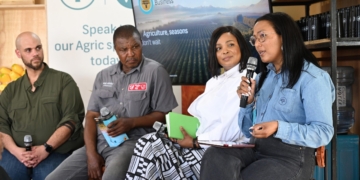
The panellists at FNB Business’s “Farming together” discussion at the Royal Show explored how market access, mentorship, financial discipline and strong commercial relationships can help farmers build sustainable businesses. Featured from the left are Bertram July (FNB’s distribution sales lead), commercial farmer Shakes Shabalala; Sandy Gumede (co-founder of Zulu Girl Wines), and Janis Robson (FNB’s head of development and SME business development). Photo: Food For Mzansi
News

FNB puts relationships at the heart of commercial farming

by Staff Reporter
17th October 2026

From buying a farm with cattle to building a wine brand from scratch, entrepreneurs shared how strong relationships, market access...

Read moreDetails
Agri Skills Transfer students gain hands-on experience at the institution’s Cullinan Farm Training Centre, where agricultural theory meets the realities of commercial production. Photo: Supplied/Food For Mzansi

Build your future in agriculture with Agri Skills Transfer

17th October 2026
Durbanville Hills tastes sweet success at Michelangelo Awards

Promising early conditions predicted for 2027 SA wine harvest

17th October 2026

Reclaiming the kraal: Cultural heritage sparks a farming dream

16th October 2026

How animal welfare and human rights shape food security

16th October 2026

Laastedrift Agri leads with BigBucks Gala success

Farmers urge urgent support for resilient local supply chains

Build your future in agriculture with Agri Skills Transfer

Reluctant farmer scales EC cabbage enterprise to supply Spar

AgriSETA sets the stage for the SAAA’s big night

Join Food For Mzansi's WhatsApp channel for the latest updates!

JOIN NOW!
Next Post
Indigenous foods should be celebrated in gourmet cooking believes Nompumelelo Mqwebu.

African food ‘belongs on the global food stage’

THE NEW FACE OF SOUTH AFRICAN AGRICULTURE

With 21 global awards in the first six years of its existence, Food For Mzansi is much more than an agriculture publication. It is a movement, unashamedly saluting the unsung heroes of South African agriculture. We believe in the power of agriculture to promote nation building and social cohesion by telling stories that are often overlooked by broader society.

Fixing SA’s agricultural visa system to protect seasonal harvests

SA and Namibia reevaluate livestock trade after FMD outbreak

Agda conference to tackle finance, market access and agri growth

Reluctant farmer scales EC cabbage enterprise to supply Spar

Reality check: What SA agri interns really experience on the farm

This week’s agri events: 19 – 23 October

  • Awards & Global Impact
  • Our Story
  • Contact Us
  • Cookie Policy
  • Privacy Policy
  • Copyright

Contact us
Office: +27 21 879 1824
News: info@foodformzansi.co.za
Advertising: sales@foodformzansi.co.za

Contact us
Office: +27 21 879 1824
News: info@foodformzansi.co.za
Advertising: sales@foodformzansi.co.za

  • Awards & Global Impact
  • Our Story
  • Contact Us
  • Cookie Policy
  • Privacy Policy
  • Copyright

Chat Options

About this assistant

This feature generates automated answers summarised from Food For Mzansi articles. By using it, you are interacting with an AI system (provided by Google), not a human. AI can make mistakes. Please refer to the source articles for verification and citation purposes.

Our staff do not check or moderate Lerato’s answers in advance, but may review some later. Our journalists continue to write and edit all the articles Lerato uses as sources.

To estimate unique and returning web users, we store a random browser ID in this browser. WhatsApp users are counted by phone number. The same person using both channels may be counted twice.

I'm Lerato, your AI assistant!
No Result
View All Result
  • News
  • Changemakers
  • Lifestyle
  • Farmer’s Inside Track
  • Food for Thought

Copyright © 2026 Food for Mzansi