Fruit South Africa is on a mission to ensure a fully transformed industry by 2038. CEO Fhumulani Ratshitanga outlines the strategic priorities of Fruit SA, emphasising sustainable transformation as a cornerstone alongside market access and governmental relations.
Transformation is a strategic pillar of Fruit South Africa, alongside market access, strengthened relations with the government, information management, and communication.
Fruit South Africa is a non-profit company and an umbrella body for these fresh fruit associations: Berries ZA, the Citrus Growers Association of Southern Africa (CGA), the Fresh Produce Exporters Forum (FPEF), Hortgro (representing the pome- and stonefruit growers), the South African Table Grape Industry (SATI) and Subtrop (representing the avocado, litchi, and mango growers).
A large portion of the South African population still resides in rural areas. Therefore, when considering the economy of the local agriculture sector, prioritising sustainable transformation just makes sense.
Sustainable transformation
It’s all about economic development that empowers new-era farmers sustainably, to advance to commercial status with relative profitability and far-reaching economic benefits.

But transformation efforts cannot be deemed sustainable or be taken seriously if they are not accompanied by measured, attainable targets, and if they don’t result in economic development. For the fresh fruit industry of SA, this is a key focus area of transformation.
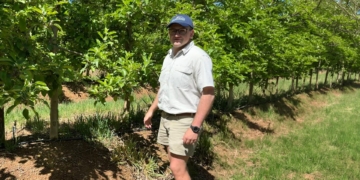
Thus, the industry hardly shies away from showcasing notable progress in this context. In a showcase initiated to do just that in February, Fruit SA invited a delegation of government officials and stakeholders in agriculture to Siyazama Klipland Farm in De Doorns and Dwarsberg Farm in Ceres, to witness first-hand the fruits of sustainable transformation initiatives.
This serves as a notable motivation for the owners of these enterprises to continue their work. Importantly, it also reminds the government of the critical importance of continued investment in transformation initiatives of this calibre, and that transformation is a process, not an event.
Last year Fruit SA extended the same invitation to visit Batlhako Temo Farm in Brits.
ALSO READ: A decade of excellence: Fruit SA marks 10th birthday in style
Initiatives bearing fruit
The industry goal is to have a fully transformed sector by 2038 with black economic empowerment (BEE) growers contributing 30% of fruit production, 30% of exports, and constituting 15% of ownership across the value chain.
In 2021 the number of fruit farm hectares under black ownership increased from 24 435 to 32 521 in 2022, whilst the number of hectares under fruit production by black growers increased from 16 077 to 16 346 in 2022 (up 1.7%).
As for production, a 55.2% increase was recorded in the volume of fruit produced by black growers, from 362 893 tonnes in 2021 to 563 384 in 2022. Black growers also achieved a 25% increase in exports, from 183 526 tonnes in 2021 to 229 439 in 2022.
Government support crucial
A leading southern hemisphere exporter, the South African fresh fruit industry ships 60% of its fruit to more than 100 destinations around the world. This R62 billion export-oriented industry supplies nearly 325K on-farm jobs that sustain 1.2 million dependents.
Against a backdrop of a 23% national unemployment rate, these are substantial numbers. Consistent investment and support from the government are, therefore, crucial for the viability of the industry.
In South Africa, sustainable transformation is a lever for significant economic growth and remains largely untapped. But, working with government and other stakeholders, the industry hopes for many more showcases of transformation initiatives where the economic results speak for themselves.
- Fhumulani Ratshitanga is the CEO of Fruit SA. The views and opinions expressed in this article are those of the author and do not necessarily reflect the views or positions of Food For Mzansi.
READ NEXT: In pictures: Father-son duo launch unique wine boutique at CT airport
Sign up for Mzansi Today: Your daily take on the news and happenings from the agriculture value chain.