The difference between a thriving livestock enterprise and one plagued by chronic disease often comes down to a single eight-hour window. In the livestock industry, this post-calving period is increasingly recognised as the “Golden Hour”, a brief biological runway where a producer’s quick intervention permanently unlocks a calf’s immune structure, growth velocity, and ultimate market value.
Across South Africa, forward-thinking producers are shifting away from passive management during calving, treating these first few hours not just as a natural process, but as a critical business pivot.
To bridge the gap between field reality and agricultural science, local producers combine institutional data with modern frontline practices. The benchmarks outlined below translate trusted regional frameworks, including the Dairying in KwaZulu-Natal manual by T.J. Dugmore, alongside active field strategies from agricultural consultant Mampuru Madiga into a clear, time-delimited survival guide.
Mastering this chronological timeline is one of the most cost-effective ways to cut herd mortality and secure long-term profitability. Here is how to manage the first 24 hours from the exact moment of delivery.
Related stories
- Prevent calf abortions through proper cattle vaccinations
- Strategic breeding: How Chianina genetics can boost a beef herd
Phase 1: Immediate post-birth interventions (Minutes 1 to 30)
Step 1: Clear the airways
To ensure immediate respiration, the stockman must physically clear fetal membranes and fluid away from the newborn calf’s nose and mouth as soon as it is delivered.
Step 2: Initiate bonding and drying
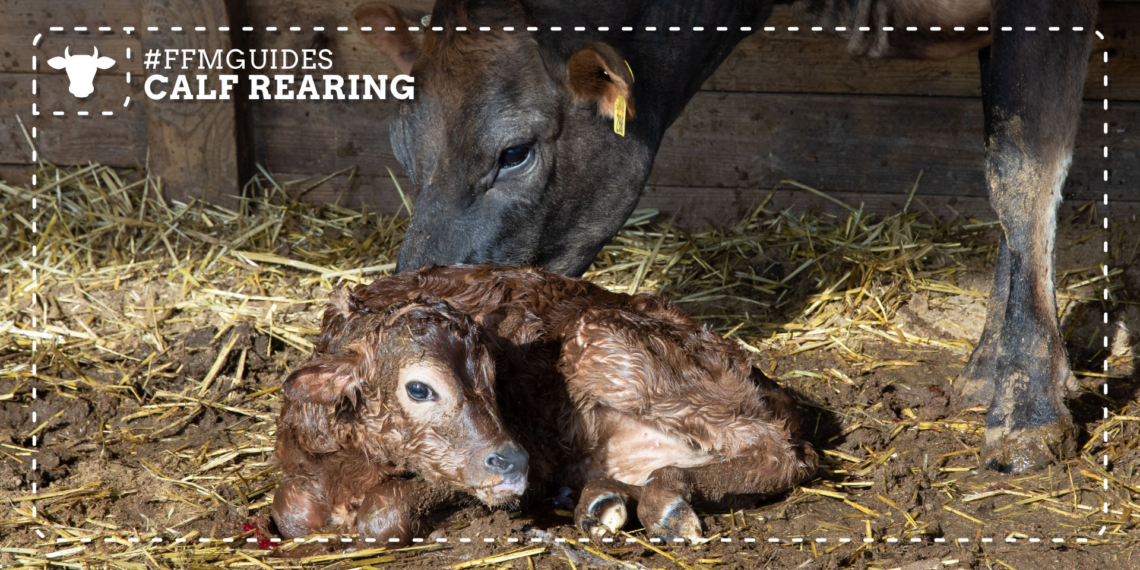
The cow should be allowed to lick the calf dry immediately. This establishes the maternal bond and prevents rapid heat loss caused by the evaporation of fetal fluids. If a cow rejects the calf or is physically unable to dry it, the handler must step in immediately to provide a vigorous rubdown with a clean, dry towel.
To block environmental pathogens from migrating into the body cavity, the navel must be disinfected immediately after birth using a veterinary-approved antiseptic dip or spray (such as 7% tincture of iodine).
Step 4: Confirm physical conformation
Verify promptly that the cow accepts the calf, has milk ready, and grants easy access to the udder. Madiga stresses checking that all four teats are fully functional and free of anatomical defects. He specifically warns against “bottle teats” (abnormally thick, pendulous teats), which prevent a newborn from latching effectively.
Step 5: Monitor the standing reflex
A healthy newborn should naturally exhibit a strong suckling drive, attempt to stand, and navigate toward the udder shortly after birth. Monitoring this initial physical drive serves as a primary indicator of a calf’s baseline vitality.


Phase 2: The critical absorption window (Hours 0 to 2)
The primary goal of passive immunity relies on getting high-quality colostrum into the calf as close to the moment of birth as possible.
In his field evaluations, Madiga warns that a newborn’s digestive tract is highly receptive and non-selective; it will eagerly welcome both protective antibodies (immunoglobulins) and negative environmental hazards.
If a calf is delayed and ingests ambient bacteria, viruses, or manure particles during these first two hours instead of clean colostrum, its system becomes compromised, often leading to severe calf scours, systemic infection, or early mortality.
Phase 3: Targeted assistance window (Hours 2 to 4)
Identify at-risk calves
Close monitoring must be prioritised for high-risk profiles. Institutional guides and expert observations target:
- Calves born from difficult or prolonged calvings (dystocia).
- Structurally weak or cold-stressed newborns.
- Offspring from first-calving heifers.
- Dairy breeds with low-hanging udders, particularly during wet, cold, or high-disease-risk seasons.
Execute physical assistance
If a calf is slow to rise, struggles to reach the udder, or fails to find a teat within the first two hours, physical intervention is mandatory.
Madiga maps out immediate assistance protocols:
- Physically support the calf to a stable standing position.
- Clear blocked teats by stripping out thick waxy plugs manually.
- Guide the calf’s mouth directly to a functional teat.
“If a calf does not receive an adequate volume of colostrum within the first four hours of life, it will be left with little to no maternal immunity, driving up overall herd mortality,” warns the Dairying in KwaZulu-Natal guide.

Phase 4: The diminishing return line (Hours 6 to 8)
The physiological capacity for macromolecule absorption diminishes rapidly as the intestinal lining matures. Institutional guidelines set a definitive rule for the stockman: the calf must secure its baseline feed of colostrum within a maximum window of 6 to 8 hours post-birth.
Missing this window brings the calf to complete “gut closure”, a permanent structural shift where specialised enterocytes can no longer absorb immunoglobulins into the bloodstream.
Furthermore, Madiga’s field research highlights an often-overlooked long-term consequence: early colostrum intake permanently sets the metabolic pace and physical capacity for the milk volumes a calf requires to grow efficiently later in life.
Phase 5: Complete 24-hour feeding standards
The volume target
Department of agriculture guidelines dictate that whole milk and colostrum feeding levels must be calculated strictly against body mass, targeting 8% to 10% (roughly 1/10th) of the calf’s total birth weight across its first 24 hours.
Dairy configuration benchmarks
To translate this weight rule into practical dairy management, a standard newborn Holstein calf weighing 40 kg requires 4.0 litres of high-quality colostrum per day. This is optimally distributed into four separate 1-litre feedings across the 24-hour cycle.
Emergency contingency protocol
If a cow rejects her offspring, is orphaned, or fails to produce sufficient colostrum, emergency hand rearing using stored frozen colostrum or high-quality commercial replacers is mandatory.
Madiga notes that if severe calving injuries or physical defects prevent normal feeding, an animal health technician or private veterinarian must be consulted without delay.
Don’t miss these articles focused on calf rearing: