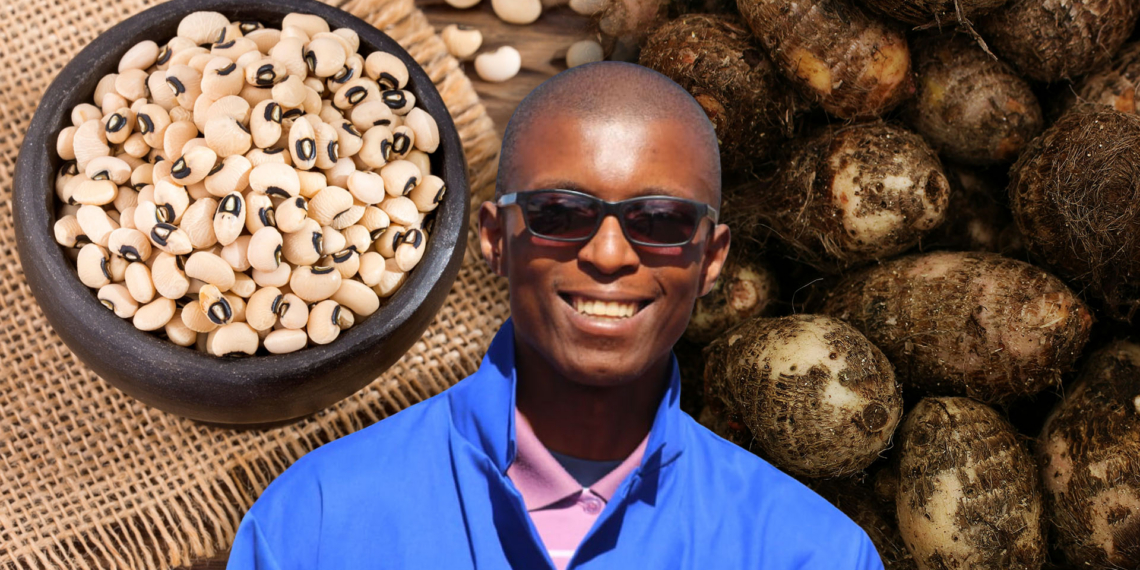
From the protein-packed cowpea to flood-hardy amadumbe, native African crops are proving to be agricultural game-changers. As global supply chains wobble, Dr Matelele Lehlogonolo, a scientist in the department of agriculture, says turning to resilient indigenous species protects both farm yields and household nutrition.
Global agriculture is facing one of the most challenging periods in modern history. A combination of geopolitical tensions, climate instability, and economic pressures has created what experts describe as a “perfect storm” for food production and food security.
The ripple effects of conflicts in strategic regions, disruptions to fertiliser and fuel supply chains, rising food prices, and increasingly unpredictable weather patterns are being felt across continents. Farmers are battling escalating production costs while consumers face higher food prices and growing uncertainty about future food availability.
Global food crisis demands local solutions
The recent disruptions in the Middle East, particularly around critical trade routes such as the Strait of Hormuz, have highlighted the vulnerability of global food systems. Fertilisers, fuel, and agricultural inputs move through these routes, and any disruption immediately increases production costs worldwide. At the same time, humanitarian agencies warn that millions more people could face hunger as global food systems become increasingly fragile.
Climate change is adding another layer of complexity. The current La Niña phenomenon is causing severe droughts in some regions while triggering devastating floods in others. Southern Africa has experienced recurring climate shocks over the past decade, and scientists are already warning about the possibility of a strong El Niño event in late 2026, which could significantly affect agricultural production across the region.
As these crises converge, many countries are rethinking their food systems. Rather than relying heavily on global supply chains, governments and agricultural stakeholders are focusing on regional resilience, local seed systems, and crops that can withstand environmental and economic shocks.
For South Africa, this global uncertainty presents an important question: Are we placing too much reliance on a narrow range of crops while overlooking resilient indigenous and underutilised alternatives?
The answer may lie in neglected and underutilised species (NUS) such as cowpea, amadumbe, cassava, and mungbean.
Why neglected crops deserve renewed attention
For decades, South African agriculture has largely focused on major commercial crops such as maize, wheat, soybeans, and sunflower. While these crops remain essential, dependence on a limited number of species increases vulnerability to climate change, pests, diseases, and market disruptions.
Neglected and underutilised crops have historically received little research investment, limited extension support, and minimal commercial attention. Yet many of these crops have evolved under harsh African conditions and possess characteristics that make them highly valuable in today’s uncertain agricultural environment.
These crops offer three critical advantages:
- Climate resilience
- Nutritional diversity
- Reduced dependence on external inputs
At a time when fertiliser prices are volatile, and weather patterns are becoming increasingly unpredictable, these advantages could become transformative.
Related stories
- Farmer 101: Climate-resilient crops to consider
- Why SA should embrace landrace seeds during global uncertainty
- Sorghum: Forgotten grain rises as climate-smart crop choice
- Intercropping of indigenous veggies ideal for small-scale farmers
Cowpea: The drought-tolerant protein powerhouse
Cowpea is often referred to as the “poor man’s meat” because of its high protein content. However, this humble crop is increasingly being recognised as a climate-smart crop for the future.
Cowpea thrives in hot and dry environments where many conventional crops struggle. It requires relatively little water, can fix atmospheric nitrogen, and improves soil fertility naturally.
For smallholder farmers in Limpopo, KwaZulu-Natal, Mpumalanga, and the North West, cowpea offers an affordable and resilient option for maintaining productivity during drought periods.
Beyond the farm, cowpea contributes significantly to household nutrition. Its grains provide protein, fibre, vitamins, and minerals, making it particularly important for vulnerable communities facing rising food prices.
As fertiliser costs continue to rise due to global geopolitical tensions, cowpea’s ability to improve soil fertility naturally becomes even more valuable.
Amadumbe: The forgotten climate-smart crop
Amadumbe, also known as taro, has been cultivated in parts of South Africa for generations, particularly in KwaZulu-Natal and Mpumalanga provinces.
Despite its long history, amadumbe remains largely underutilised in commercial agriculture.
This crop possesses remarkable adaptability. It can tolerate waterlogged conditions better than many staple crops, making it particularly useful in areas experiencing increased flooding due to climate change.
Its corms are rich in carbohydrates and easy to digest, while the leaves provide valuable vitamins and minerals.
As extreme rainfall events become more common in parts of Southern Africa, amadumbe may offer farmers a practical adaptation strategy. Fields that become unsuitable for conventional crops during wet years could potentially support amadumbe production.
Furthermore, increasing consumer interest in indigenous foods creates opportunities for value-added products and local market development.
Cassava: Insurance against drought
Cassava is one of the most drought-tolerant food crops in the world. Often called a “survival crop,” it can continue producing under conditions that would severely reduce maize yields.
This characteristic makes cassava particularly attractive for South Africa’s drier provinces and regions vulnerable to prolonged dry spells.
Unlike many crops that require immediate harvesting, cassava roots can remain in the ground for extended periods, effectively serving as a living food reserve. This provides households with a valuable buffer during times of food shortages or market instability.
Cassava also requires relatively low levels of fertiliser and can perform well on marginal soils.
As fertiliser supply chains face increasing global uncertainty, cassava could help reduce farmers’ dependence on costly imported inputs while enhancing food security.
Mungbean: A small crop with enormous potential
Although less familiar to many South Africans, mungbean is gaining attention globally because of its nutritional value and adaptability.
Mungbean matures quickly, often within two to three months, allowing farmers to fit it into multiple cropping systems or use it as a catch crop.
The crop tolerates drought relatively well and contributes to soil fertility through nitrogen fixation.
Nutritionally, mungbean is rich in protein, vitamins, antioxidants, and dietary fibre. Its growing popularity in health-conscious markets creates opportunities for farmers seeking access to niche and premium-value markets.
In a future where diversified farming systems become increasingly important, mungbean could play a valuable role in both food security and income generation.
Building resilient farming systems
The value of these crops extends beyond individual farms.
Collectively, cowpea, amadumbe, cassava, and mungbean contribute to agricultural diversification, which is increasingly recognised as one of the most effective strategies for building resilience against climate and market shocks.
Diversified farming systems are generally better able to withstand droughts, floods, pest outbreaks, and economic disruptions because farmers are not dependent on a single crop.
These crops also align closely with agroecological principles by:
- Enhancing biodiversity
- Improving soil health
- Reducing reliance on synthetic inputs
- Supporting sustainable production systems
- Strengthening local food systems
As South Africa seeks pathways toward more sustainable and resilient agriculture, neglected and underutilised crops offer practical solutions that are already adapted to local conditions.
The role of seed systems and on-farm conservation
Realising the potential of these crops requires investment.
Farmers need access to quality seed, improved varieties, extension services, and markets. Strengthening farmer-managed seed systems, community seed banks, and on-farm conservation initiatives will be critical.
Across South Africa, several initiatives are already promoting the conservation and multiplication of plant genetic resources for food and agriculture. These efforts can help ensure that valuable crop diversity is not lost and that farmers maintain access to locally adapted planting material.
Participatory breeding programmes involving researchers and farmers can further improve the productivity, resilience, and market appeal of these crops while preserving their unique genetic characteristics.
Turning crisis into opportunity
The current global food crisis serves as a warning that business-as-usual approaches may no longer be sufficient.
South Africa cannot control geopolitical conflicts, global fertiliser markets, or extreme weather events. However, it can strengthen its resilience by investing in crops that have quietly sustained communities for generations.
Cowpea, amadumbe, cassava, and mungbean may not dominate supermarket shelves today, but they possess many of the characteristics needed for tomorrow’s agriculture: resilience, adaptability, nutritional value, and sustainability.
In a world facing increasing uncertainty, the future of food security may not depend solely on introducing new technologies or importing solutions from elsewhere. It may also depend on rediscovering and investing in crops that have been hiding in plain sight all along.
As climate pressures intensify and global supply chains become increasingly fragile, South Africa’s neglected and underutilised crops could move from the margins of agriculture to the centre of the country’s food security strategy.
- The views and opinions expressed in this article are those of the author and do not necessarily reflect the views or positions of Food For Mzansi.
READ NEXT: 15 000 jobs shed: Why the SA agri sector is feeling the pinch