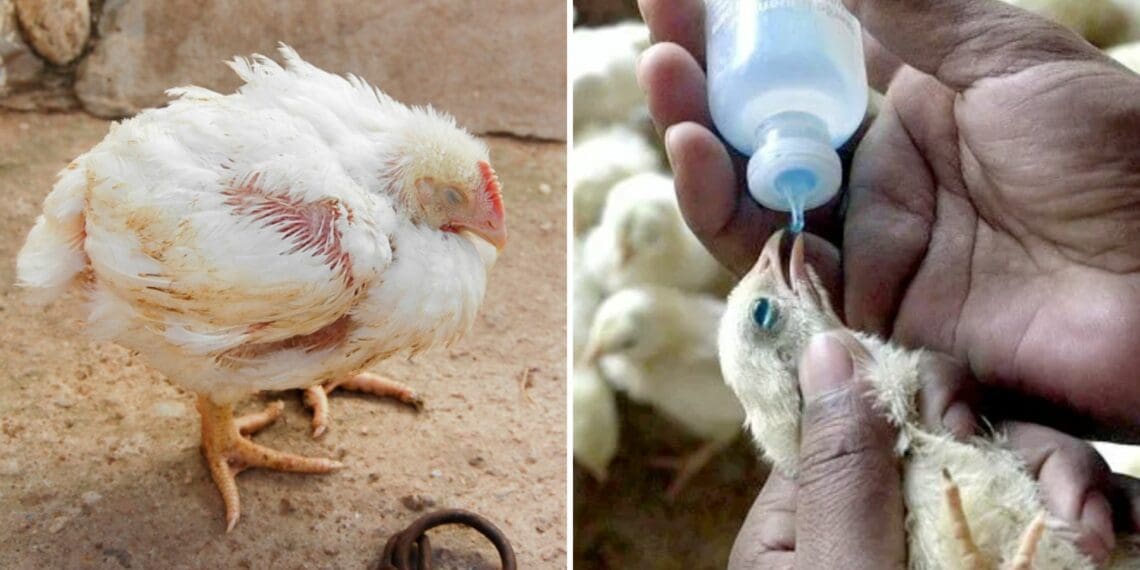
In a major policy turn intended to safeguard national food security and rescue agricultural livelihoods, the department of agriculture has officially revised South Africa’s bird flu defence strategy to permit the use of vaccines.
The decision follows a formal objection lodged by the South African Poultry Association (SAPA) under Section 23 of the Animal Diseases Act, which pointed out a critical administrative failure within the department’s directorate of animal health to provide affordable, practical alternatives.
Acting on the recommendations of an independent investigation committee, the department of agriculture stepped in to amend the Animal Diseases Regulations (R.2026 of 1986), shifting the state’s approach from a reactive “stamping-out” model to a managed vaccination defence plan.
The department of agriculture’s directive highlights a long-awaited commitment to direct support for the R65-billion domestic poultry industry, which represents the country’s largest agricultural employer with nearly 58 000 workers across the value chain.
Related stories
- Govt and industry unite for phase 2 of Poultry Master Plan
- State delays choke SA’s multi-billion rand poultry export potential
- Poultry industry on edge as winter bird flu threat looms
- Brazil cleared of bird flu, SA reopens poultry imports
“Our poultry farmers need direct support, and we are changing policy to give them a legal mechanism to protect their livelihoods.
“The old regulations forced the industry to destroy flocks unnecessarily, which harmed agricultural businesses and raised food prices for consumers. By changing this policy, we are giving producers the legal right to use verified scientific tools to protect their farms, protect agricultural jobs, and secure affordable food for the public,” the department said.
Strengthening the poultry industry
Welcoming the policy overhaul, SAPA described the decision as a monumental turning point resulting from sustained industry advocacy for science-based solutions.
Izaak Breitenbach, CEO of the broiler organisation of SAPA, expressed strong appreciation for the agriculture minister’s decisive intervention but noted that the tool must be used as part of a broader strategy.
“SAPA appreciates the minister’s willingness to engage with the industry’s concerns and to act decisively in support of South African poultry producers.
“Vaccination is not a silver bullet, but it is an essential tool that has been successfully incorporated into avian influenza control programmes in many countries. Combined with robust biosecurity and surveillance measures, it will significantly strengthen our ability to manage disease risks while maintaining production and food security,” he said.
What the policy shift means for the poultry industry
The formalisation of an HPAI vaccination framework under the Animal Diseases Act will directly change how poultry operations run across South Africa:
- Integrated defence system: Farmers will use a combination of vaccination, biosecurity, and testing, which stops the requirement for widespread bird culling and lowers financial losses.
- Standardised legal framework: The department will amend regulations or issue a Section 9 control measure to establish clear, uniform outbreak management rules, eliminating past enforcement confusion that delayed disease eradication.
- Inclusive protection measures: The new rules will balance disease control requirements so that both large commercial operations and smallholder farmers have the space, in line with the new regulations, to efficiently and effectively deal with HPAI outbreaks on their farms.
- Enhanced state surveillance: The department’s role will be to set up and run national surveillance systems for HPAI and laboratory testing, and to ensure that farming entities adhere to regulations during outbreaks on their farms.
- Trade stability: The department will also focus on maintaining international trade standards to ensure market access.
The strategic shift directly addresses long-standing vulnerabilities exposed during the catastrophic 2023 avian flu outbreaks, the worst in South African history, which involved both the global H5N1 strain and the unique domestic H7N6 strain.
The lingering trauma of those outbreaks had left the industry operating below full capacity, with weekly slaughter numbers idling at 21.5 million birds despite a capacity of 22.5 million.
A boost for all farmers
KwaZulu-Natal poultry farmer Bongeka Vilakazi said access to these scientific tools is essential for survival during the colder months when transmission risks escalate.
“Bird flu vaccines are very important for chickens, especially since it is winter. Chickens get affected by bird flu more in winter since it’s cold. Birds should be vaccinated to decrease the infection of bird flu.”
Vilakazi highlighted that the new framework creates equitable protection across the farming landscape, ensuring that complex administrative requirements do not leave independent operations behind.
“Whether you are a small-scale or large-scale farmer, it’s very important to get access to the vaccines to make sure you have a safe and healthy flock. If all farmers practise a safe and healthy vaccine routine on their farm, it will definitely boost the business and reduce future loss,” she said.
READ NEXT: KZN farmers brave the cold for vital growth insights