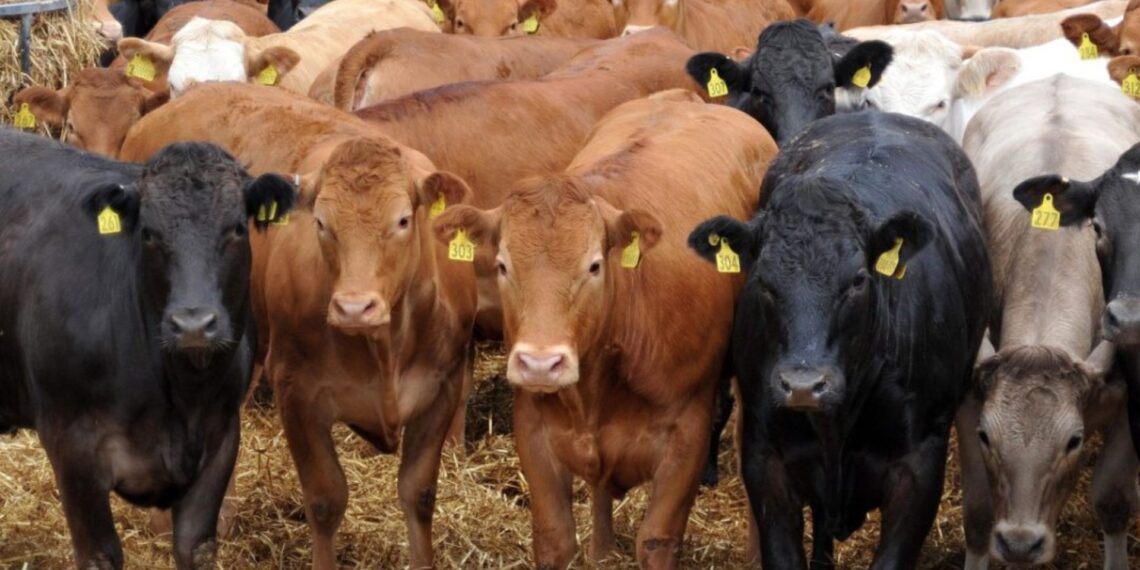
South Africa is facing a strange situation with its beef supply. Even though there is more than enough beef to go around for everyone, experts say you won’t see prices dropping at the shops any time soon.
Despite producing more than enough red meat to feed the nation, with a projected 36 000-tonne surplus, a foot-and-mouth disease (FMD) outbreak has disrupted the supply chain, and high domestic prices are causing shoppers to buy less.
On top of local problems, global issues like trade disputes and international conflicts are also playing a part. So while cattle farmers are producing more beef, getting it to the consumer’s plate at an affordable price is proving to be a real challenge.
According to the latest Red Meat Industry Report by Red Meat Industry Services (RMIS), South Africa’s beef production volumes are expected to decrease by 20 000 tonnes year-on-year to 764 000 tonnes by the end of 2025. This is while domestic consumption volumes are expected to reduce to 728 000 tonnes.
Related stories
- South African red meat keeps rural economies alive and growing
- Meat prices are braaiing our budgets. Here’s why
- Safer herd, better meat: A guide to dehorning cattle
“A 36 thousand tonne production surplus is still expected. The growth in production over the past five years (2020-2024) has been steady, with production increasing by 38.9 thousand tonnes and local consumption by 36.9 thousand tonnes,” the report stated.
Why your braai is getting more expensive
The pressure on the beef industry goes far beyond supply and demand. Farmers are finding it harder to make a profit due to rising costs. The main indicator of a healthy industry, the beef-to-maize price ratio, has been under strain.
Historically, a ratio above 14 is considered sustainable, and above 15 points to strong profitability.
A turning point could be on the horizon, however. “The beef to maize price ratio is expected to increase in 2025, supported by higher weaner prices and, to a large extent,t lower expected feed prices,” the report said.
However, the journey to that point has been tough. The price of yellow maize, a major part of what cattle eat, has jumped by about 8.77% each year over the last five years.
In contrast, the price farmers get for their A-grade beef has only gone up by about 3.81% per year. To make things worse, the price for young calves has dropped. This is because feeding costs are so high, a lot of live cattle are being brought in from other countries, and the recent drought forced farmers to sell off some of their herds.
Meanwhile, industry experts like Wandile Sihlobo point out that the livestock industry remains challenging. “One of the interventions South Africa must undertake is the widespread vaccination of cattle against foot-and-mouth disease, as it occurs more frequently.
“However, this also requires that the country focus on reviving its domestic vaccination manufacturing capability, which was one of the casualties of state capture,” Sihlobo said.
READ NEXT: From backyard to 650 ha: Malete’s farm feeds more than families