For producers looking to diversify, opportunity does not always require competing in saturated mainstream commodity markets. South Africa offers several emerging and underutilised crops where growing demand, specialised production, and significant gaps between local supply and consumption create high-value entry points.
Insights from farmers, researchers, and industry specialists consulted by Food For Mzansi point to six commodities worth exploring.
1. Hemp: Build the market before planting
South Africa’s emerging hemp sector offers diverse opportunities across grain, fibre, flowers, and industrial materials. However, Ayanda Bam, executive director at Zageta Solutions, advises farmers to secure their intended market before placing seed in the ground.
Hemp requires specialised genetics, local processing infrastructure, regulatory permits, and reliable off-takers. For producers willing to navigate a developing regulatory landscape, a demand-driven strategy makes hemp a viable option for farm diversification.
- Key takeaway: Secure off-take agreements and processing permits before planting.
- Resource guide: Hemp farming: How to master planning, permits and precision
Related stories
- eFama wants farmers to produce for demand, not hope
- Innovation key to keeping SA table grapes globally competitive
- Professionalism pays: How Jantjies built a thriving lucerne business
- Traditional seed saving: SA’s key to climate resilience
2. Indigenous flowers: A specialised export opportunity
Western Cape producer Roland Trout sees indigenous flora as a premium opportunity to combine farm diversification with the rising global demand for sustainably grown blooms. Proteas, fynbos, watsonia, and agapanthus serve both vibrant domestic florists and lucrative international buyers.
South Africa exported more than R1.7 billion worth of cut flowers in 2021. Trout notes that well-managed protea orchards can generate over R100 000/ha annually. However, growers should start with trial plots to test local microclimates before expanding.
- Key takeaway: High earning potential per hectare, but requires careful market development.
- Resource guide: Indigenous flowers: A new path to profit for SA farmers
3. Dry beans: A clear domestic supply gap
Dry beans offer one of the clearest market deficits in South African agriculture. Lucia Ndlala, a plant-breeding PhD candidate and researcher at the Agricultural Research Council (ARC), highlights the crop’s suitability for both emerging smallholders and established commercial operations.
South Africa produces approximately 70 400 tonnes of dry beans annually against a domestic consumption of roughly 114 000 tonnes. This means local farms currently meet only 61% of national demand. Filling this gap requires selecting suitable cultivars, proper soil preparation, and rigorous disease management.
- Key takeaway: Instant domestic demand with a 39% supply shortfall.
- Resource guide: A guide to sustainable dry bean farming
4. Sorghum: An underutilised climate-smart crop
Agronomist and PhD researcher Hamond Motsi describes sorghum as a resilient crop with exceptional nutritional, cultural, and economic potential. While 130 000 to 150 000 ha are cultivated annually in South Africa, significant scope remains for expansion into grain, forage, and sweet sorghum value chains.
Sorghum’s superior drought tolerance and lower input costs compared to maize make it an ideal candidate for regions facing water stress and rising fertiliser expenses. Additionally, expanding consumer demand for gluten-free health foods opens new commercial avenues outside traditional brewing and porridge markets.
- Key takeaway: Excellent heat tolerance with lower production costs than maize.
- Resource guide: Getting started with sorghum farming
5. Essential oils: Competing on quality, not volume
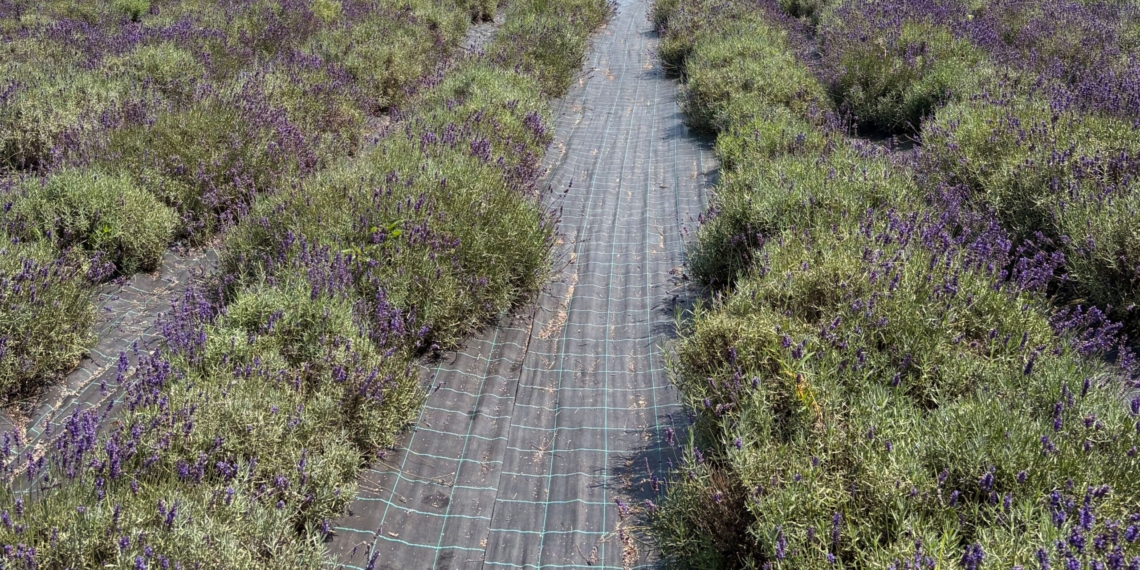
Essential oils offer another specialised, high-value avenue for farm diversification. Karen Swanepoel, CEO of the Southern African Essential Oil Producers Association (SAEOPA), notes that South Africa’s industry is small but steadily expanding, with commercial opportunities across eucalyptus, citrus, tea tree, buchu, rosemary, lavender, and rose geranium.
Rather than competing with massive global producers on volume, South African growers can compete on oil quality, purity, and origin authenticity. Organic certification further opens pathways to premium export markets.
Essential oil crops also create intercropping possibilities, while steam distillation generates secondary revenues through hydrosols (floral waters). However, producers cultivating indigenous species must navigate environmental permits and Access and Benefit-Sharing (ABS) regulations.
“The primary opportunity lies in producing high-quality, fully traceable oils for specific off-take markets rather than simply chasing raw biomass volumes,” Swanepoel emphasises.
- Key takeaway: Focus on oil purity, organic certification, and secondary hydrosol products.
- Resource guide: Tap into South Africa’s growing essential oils industry
6. Pecans: A long-term niche investment
Pecan production is not a short-term cash crop, but experienced producer Richard Ball views it as a multi-generational legacy investment.
Unlike perishable fruit or vegetables, pecan nuts can be dried, stored, and marketed strategically when prices are favourable. However, pecan farming demands suitable deep soils, precise orchard planning, and long-term financial patience, as trees require 12 to 15 years to reach full commercial production.
- Key takeaway: Storable commodity with strong long-term financial returns.
- Resource guide: A beginner’s guide to pecan farming
The opportunity is in doing the homework
Niche farming is not simply about producing something rare. The real commercial opportunity lies where clear market demand exists, local supply is constrained, and a functional value chain supports new entrants.
Before planting, producers must thoroughly evaluate buyers, crop requirements, processing logistics, regulatory hurdles, and startup capital. For those willing to start small, validate local growing conditions, and align production with market demand, these seven commodities offer strong routes for farm diversification.
READ NEXT: BFAP outlook: Declining prices, high costs test SA farming sector