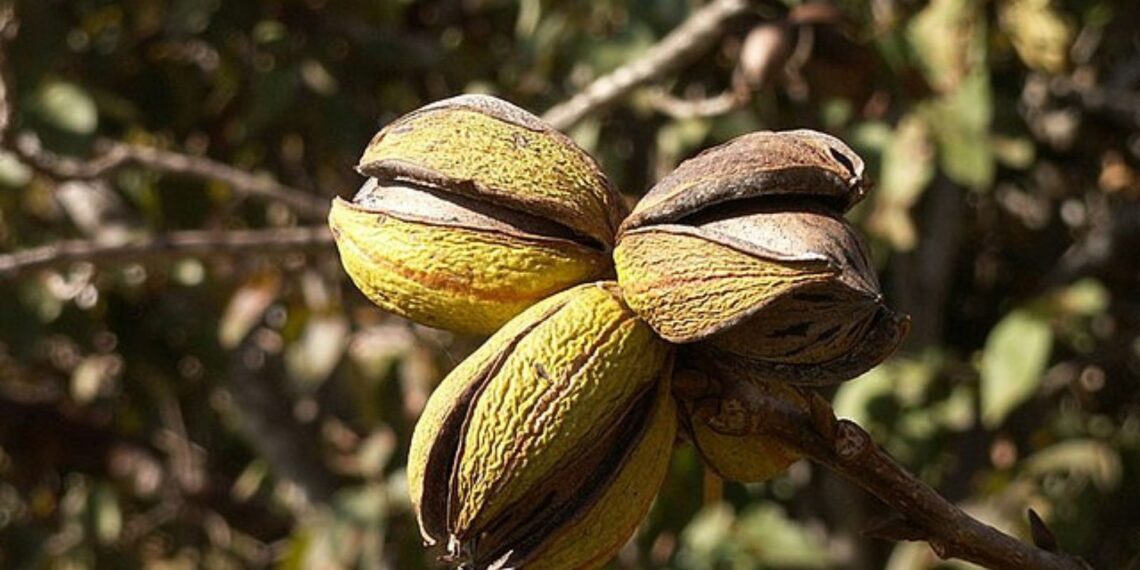
Pecan farming presents a long-term agricultural investment opportunity. It requires careful planning, site selection, and management practices to ensure sustainability and profitability. As a deep-rooted, perennial crop, pecan trees demand a significant upfront commitment of time, capital, and agronomic knowledge.
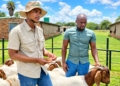
Pecan farming is more than just an agricultural practice — it’s a long-term commitment, a legacy, and a philosophy for seasoned farmer Richard Ball. With close to two decades of hands-on experience, Ball offers invaluable insights into what it takes to succeed in growing pecan trees.
1. Start with the right spacing
According to Ball, one of the most common mistakes new farmers make is planting pecan trees too close together.
“When [the trees are planted too] close, eventually you get funguses, you get bugs. They’re all fighting for the sun or sunlight.” He advises a spacing of 10m x 10m, allowing each tree enough room to thrive for decades.
According to an online guide by the South African Pecan Nut Producers Association (Sappa), the primary consideration when planning the initial layout of a pecan orchard should be future sunlight management. The guide explains that this is crucial because overcrowded orchards often lead to alternate bearing, where yields fluctuate and quality drops during the high-yield years.
“Pecan trees only produce on the leaf surface in the canopy where direct sunlight can penetrate. If trees are left to overcrowd completely, only the rooftop of the orchard will produce, which will reduce your bearing surface considerably.”

The guide indicates that a soil depth of no less than 90 to 100cm is advisable for commercial cultivation. A typical spacing pattern of 10m x 10m is often used, allowing for the planting of approximately 100 trees per hectare.
Related stories
- Patience pays off for Limpopo pecan nut farmer
- Siphelele cracks success code in macadamia farming
- Groundnut farming: Key tips for success
2. Tree farming vs cash crops
Ball’s advice on tree crops is to prioritise long-term thinking over short-term profit. Unlike quick-turnover crops like spinach or maize, pecan trees are not about fast money — they’re about building generational wealth.
“When you’re planting a nut tree, you are planting a legacy. Most farmers, that’s what they want. They want a legacy,” Ball says.
3. Harvesting: Time is on your side
Ball highlights the instability of fresh produce markets, especially for perishable crops, where market demand can be unpredictable and volatile. By contrast, nuts offer flexibility.
This flexibility, he says, is a key advantage of nuts over vegetables like spinach, which must be sold immediately after harvest. “A nice thing about a pecan nut or a macadamia nut, when they’re sitting there drying, you’ve got months. You pick spinach, you have to sell it now.”
He also explains that during the early years of production, the yield is typically modest and often shared with family and friends. As the trees mature, however, they begin to produce enough for broader markets. At that stage, farmers can sell to marketeers, street vendors, or even crack and package the nuts themselves.
Ball advises sourcing certified, disease-free seedlings or trees from registered growers to have trees producing from as early as two years. Pecan trees reach full production 12 to 15 years after planting.

4. Integrated pest management
Ball acknowledges that pests such as the stink bug can pose challenges in pecan orchards, but he urges farmers not to become overwhelmed by these issues.
He advises a practical, localised approach: if a problem appears on the leaves, farmers should take a sample to their local agricultural co-operative, where experts can provide specific guidance.
Ball recounts his experiences dealing with grasshopper outbreaks, which he manages using natural deterrents rather than chemical interventions. Integrating poultry into the orchard ecosystem, he advises, can be very effective against pests. “Putting chickens and ducks between trees, they go around eating the grasshoppers and the bugs,” he says.
According to Sappa’s pecan crop protection guide, the stink bug complex consists of several different stink bug species, forming an opportunistic group of insects that can cause significant damage to pecan kernels. “Thorough scouting should be done before insecticides are applied.”
The guide highlights several common pests that are typically associated with pecan tree cultivation. These include the yellow pecan aphid, Australian bug (commonly known as wit wolluis), bark borer, leafhopper, African bollworm, and chafer beetle. Beneficial insects include spiders, praying mantis, ladybirds and lacewings.
This approach not only helps control pests but also supports a more balanced and sustainable farming system.
5. Sustainability and livestock integration
Ball explains that integrating livestock into nut orchards is part of a closed-loop system, which reflects the principles of syntropic farming. Trees, animals, and soil work together in a mutually supportive cycle.
“I’ve got the sheep to graze the grass around the trees, and then I collect their fertiliser. I don’t want to put any chemicals into the ground,” he explains.
To ensure harmony between livestock and trees, Ball uses indigenous sheep, known as Pedi sheep. This breed is particularly suited to orchard environments because they graze on grass without damaging the tree bark, an issue commonly seen with other breeds. Soil health remains a key focus as well. Ball notes that the presence of earthworms in the soil is a clear sign of success.
“My sheep are growing, my trees are growing. That means the system is right. There are no chemicals, so the earthworms and my trees are happy.”
READ NEXT: Maize: Choosing the right varieties for local conditions
Sign up for Mzansi Today: Your daily take on the news and happenings from the agriculture value chain.