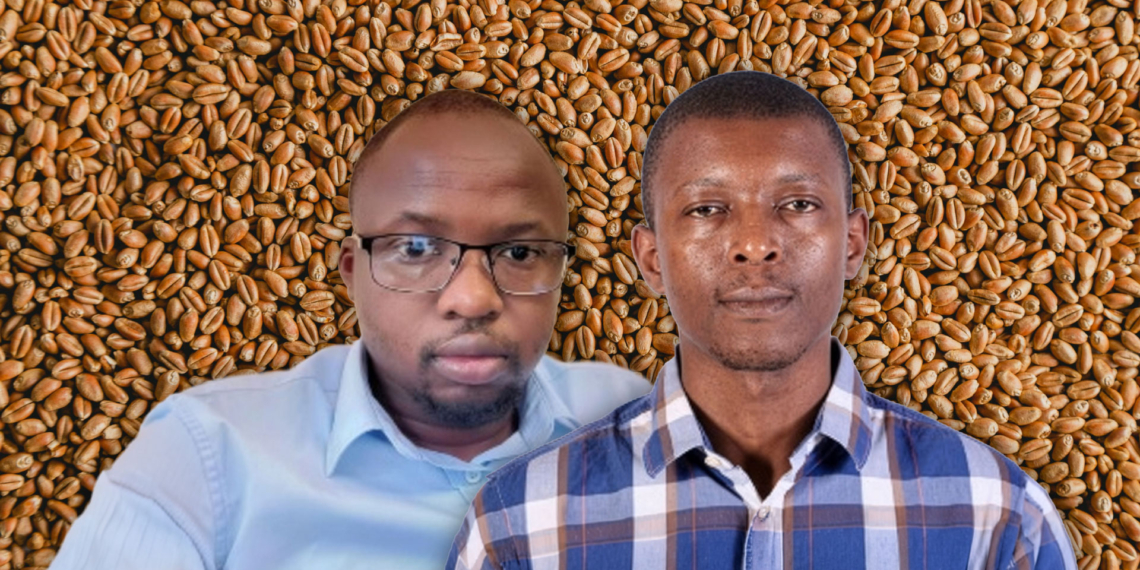
Seed sovereignty shouldn’t just exist in international treaty documents, say scientists Dr Lehlogonolo Matelele and Sithembiso Fakude from the department of agriculture. They break down how household storage, community networks, and active field cultivation form an unbreakable chain for food security.
Throughout South Africa’s rural landscapes, from the sweeping plains of the Free State to the fertile valleys of Mpumalanga, a quiet revolution is taking root, one seed at a time.
For generations, farmers have been the custodians of agricultural biodiversity, carefully selecting, saving, and sharing seeds that feed their families and sustain their communities. Yet, in recent decades, this age-old practice has been steadily eroded by the rise of commercial seed systems, climate pressures, and changing agricultural policies.
At the heart of this transformation lies an urgent question: who controls the seed, and therefore, the future of food?
Why Farmers’ Rights matter
The concept of Farmers’ Rights, as recognised under the Food and Agriculture Organisation International Treaty on Plant Genetic Resources for Food and Agriculture (ITPGRFA), affirms that farmers have the right to save, use, exchange, and sell farm-saved seeds, as well as to participate in decision-making and benefit-sharing.
However, for many smallholder farmers in provinces like the Free State, Northern Cape, KwaZulu-Natal, Limpopo and Mpumalanga, these rights often remain more theoretical than real.
This is where on-farm conservation of Plant Genetic Resources for Food and Agriculture (PGRFA), together with community seed banks and household seed banking, emerges not merely as a set of agricultural practices, but as a powerful, interconnected system of resilience, knowledge, and empowerment. These complementary approaches are enabling farmers to reclaim control over their seeds, revive indigenous crops, strengthen their capacity to adapt to climate change, and ultimately bring Farmers’ Rights to life on the ground.
Farmers’ Rights are more than a legal concept; they are about dignity, autonomy, and survival. For generations, smallholder farmers have been custodians of biodiversity, selecting and conserving seeds adapted to local climates, soils, and cultural preferences.
Yet today, these rights are under pressure. The spread of commercial hybrid and patented seeds, climate change, and shifting agricultural policies have reduced farmers’ control over what they grow and how they farm. Reviving farmer-managed seed systems is therefore not just about conservation; it is about restoring power.
Understanding the building blocks of Farmers’ Rights
Farmers’ Rights are not abstract legal ideas; they are lived realities shaped by access, knowledge, and control. In practical terms, these rights include:
- The ability to save and reuse seeds
- The freedom to exchange and share planting material
- Recognition of indigenous knowledge systems
- Participation in policy-making processes
- Fair access to benefits arising from the use of genetic resources
In provinces like the Free State, North West, Eastern Cape, Northern Cape, KwaZulu-Natal, Limpopo and Mpumalanga, where smallholder and emerging farmers play a crucial role in food production, realising these rights depends heavily on localised, farmer-led systems.
Related stories
- Fighting hunger starts in the backyard with a single seed
- Why SA should embrace landrace seeds during global uncertainty
- High-quality seeds, high stakes for smallholder farmers
- Seed banking: How smallholders protect SA’s crop heritage
On-farm conservation: Keeping diversity alive in the field
On-farm conservation refers to the continued cultivation and management of traditional and locally adapted crops within farmers’ fields. Unlike gene banks, which store seeds in controlled environments, on-farm conservation keeps crops evolving in response to local conditions.
This dynamic process offers several benefits:
- Adaptation to climate change: Farmers continuously select seeds that perform well under drought, pests, and changing weather.
- Preservation of diversity: A wide range of local varieties is maintained, reducing reliance on uniform crops.
- Knowledge continuity: Traditional farming practices and cultural values are passed down through generations.
By keeping seeds in the hands of farmers, on-farm conservation reinforces their right to manage and improve their own genetic resources.
In the Free State, KwaZulu-Natal, and Northern provinces, farmers are increasingly reintroducing sorghum, cowpeas, and traditional maize landraces, while in Mpumalanga and Limpopo provinces, crops like bambara, groundnuts, finger millet, and pumpkins are gaining renewed attention.
How on-farm conservation of PGRFA strengthens Farmers’ Rights:
- Seed sovereignty: Farmers maintain control over their planting material.
- Climate resilience: Locally adapted crops are more tolerant to drought and pests.
- Cultural preservation: Indigenous knowledge and food traditions are sustained.
- Reduced dependency: Less reliance on expensive commercial seed systems.
By saving and replanting their own seeds, farmers actively exercise their right to use and manage PGRFA, one of the core pillars of Farmers’ Rights.
Community seed banks: Collective power in action
While individual farmers play a critical role, collective efforts amplify impact. Community seed banks are locally governed systems where farmers collectively store, manage, multiply and share seeds. These banks act as living repositories of biodiversity and knowledge.
Their contribution to Farmers’ Rights:
- Access and availability: Farmers can obtain diverse, locally adapted seeds.
- Seed exchange networks: Strengthen the right to share and exchange seeds.
- Knowledge sharing: Traditional practices are documented and passed on.
- Collective governance: Farmers participate in decision-making processes.
Community seed banks also create a platform for farmers, especially women and youth, to engage in leadership roles, strengthening social equity and inclusion.
Household seed banks: The foundation of food security
At the most local level, household seed banks, often managed by women, play a critical role in preserving seeds for the next planting season. These are simple, low-cost systems where seeds are stored, selected, and improved year after year.
Though often overlooked, this practice is fundamental:
- Food security at home: Families are less dependent on external seed sources.
- Cultural preservation: Traditional crops and culinary heritage are safeguarded.
- Resilience in uncertainty: Even in times of crisis, households retain control over their planting materials.
Each jar of stored seed represents a small but powerful act of independence, an expression of Farmers’ Rights in daily life.
Why household seed banks matter for Farmers’ Rights:
- Autonomy: Farmers make independent decisions about what to plant.
- Continuity: Ensures seed availability even in times of crisis.
- Empowerment of women: Recognises their central role in seed management.
- Biodiversity conservation: Maintains a wide range of crop varieties at the grassroots level.
Household seed banks are often the first line of defence against food insecurity, especially during droughts or economic shocks.
Linking the three systems
When on-farm conservation, community seed banks, and household seed banks work together, they form a robust, interconnected system that amplifies Farmers’ Rights (figure 1).

Figure 1: Linking on-farm conservation, community seed banks and household seed banks
This integrated system bridges the gap between formal conservation efforts and lived agricultural realities.
The SA context: Challenges and opportunities
South Africa has made progress in recognising the importance of conserving plant genetic resources. However, gaps remain in fully realising Farmers’ Rights. Table 1 below shows the key challenges and opportunities with reference to Farmers’ Rights:
Table 1: key challenges and opportunities with reference to Farmers’ Rights
| Key Challenges | Opportunities |
| Limited policy support for farmer-managed seed systems | Increasing recognition of agroecology and local knowledge |
| Regulatory barriers to seed sharing and exchange | Expansion of on-farm conservation projects, household seed banks and community seed initiatives across provinces |
| Dominance of commercial seed markets | Partnerships between farmers, NGOs, and research institutions |
By supporting these grassroots systems, South Africa can align conservation goals with social justice and rural development.
Planting the future: From rights to reality
Realising Farmers’ Rights requires more than policy declarations; it demands practical support for the systems that farmers already use and trust.
This includes:
- Recognising and protecting farmers’ seed practices
- Investing in on-farm, community seed banks, household seed banks and training
- Creating enabling policies that support seed exchange
- Valuing indigenous knowledge as a national asset
Ultimately, the future of agriculture in South Africa depends not only on innovation but on inclusion, ensuring that farmers remain at the centre of the seed system.
Conclusion
From the fields where seeds are selected to the homes where they are carefully stored and the community spaces where they are exchanged, South Africa’s farmers are doing more than farming; they are leading a quiet revolution. By conserving and sharing their own seed, they are reclaiming power over their food systems, safeguarding biodiversity, and building resilience in the face of a changing climate.
On-farm conservation, household seed banks, and community seed banks are not side initiatives; they are the backbone of true seed sovereignty.
With the right support, progressive policies, targeted funding, and farmer-centred extension services, these systems can redefine the future of agriculture in South Africa. They bring Farmers’ Rights out of policy documents and into daily practice, where they matter most.
If we are serious about food security, climate resilience, and inclusive agricultural growth, then the path forward is clear: invest in farmers and the seeds they steward. Because when farmers control their seeds, they are not just producing food; they are reclaiming dignity, strengthening communities, and shaping the future of our nation’s agriculture.
- The views and opinions expressed in this article are those of the author and do not necessarily reflect the views or positions of Food For Mzansi.
READ NEXT: How seaweed biotechnology boosts crop yields naturally