 For new era poultry farmer Ellen Mokau (35) collaboration is the key to unlocking incredible power within the agricultural sector.
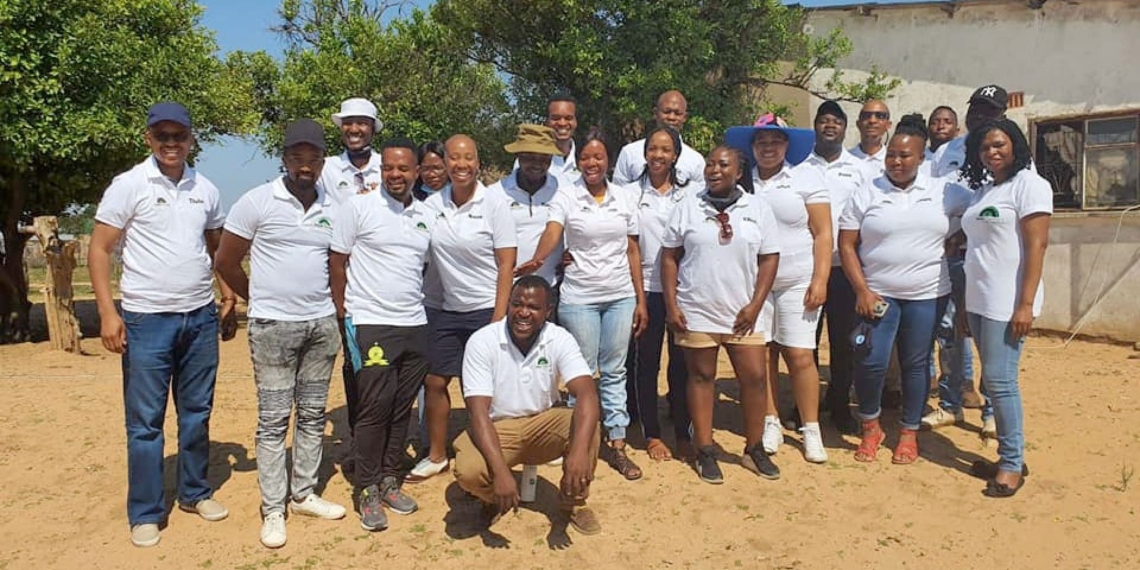
Through an “unusual” stokvel, Mokau has brought together 30 small-scale poultry and vegetable producers from across the country and formed a cooperative she calls Isondo Farmers.
The group has members aged between 30 and 40 with roots in various provinces, including KwaZulu-Natal, Gauteng, Limpopo and Mpumalanga.
Her own passions for agriculture first began in the Pretoria township of Shoshanguve Block R, where her father was a subsistence poultry farmer.

“Poultry is such an easily accessible business,” she says.
“Chicken is economically cheaper and accessible compared to other meats. We eat chicken and eggs weekly. I mean, what is a Sunday lunch spread without a juicy drumstick?” she remarks.
Mokau was inspired by the self-help concept of the South African stokvel.
Harnessing the power of social media she conscripted struggling small-scale producers who had challenges making their mark in the sector during the national lockdown.
“I thought of a model where I could bring small-scale farmers together for a common purpose. We share costs and profits while building our own value chain in poultry farming,” Mokau explains.
“We were brought together by necessity. As small-scale producers it is hard for us to gain access to markets. We established the stokvel to help each other with the sharing of resources,” she adds.
Historically, stokvels are designed to respond to the problems of poverty and income insecurity. They have now become a form of social security in many communities in townships and rural villages.
‘You don’t need big farmlands to do poultry farming.’
“When you think about it, on a typical weekend eKasi, there is always a mama who is getting ready to attend ‘kitchen party.’ Growing up in the township as a child you understood the importance of these gatherings in a community. They were a lifeline for many.”
In a matter of months, the 30-somethings were able to invest R200 000 into their poultry stokvel.
“We have managed to purchase about 2 500 chicks since then and we are growing. Lack of government assistance will not cloud our vision to fight food insecurity in our rural communities or build the legacy we want for our children.”
Poultry dreams started young
In her teens, Mokau admits, she had an interest in agriculture but never imagined that she would follow in her father’s poultry farming footsteps.
While attending the Amogelang Secondary School in Soshanguve Block P, teachers who knew of her father’s pursuit would often nag her to continue his legacy. “I just never took it seriously until now,” she admits.
“Our elders were fully invested in poultry farming, but we sort of lost touch with it. If we had held onto their practices from way back when, we probably wouldn’t be crying about hunger or anything like that,” Mokau says.
A year after matriculating in 2002 she enrolled in the University of Johannesburg where she studied chemical engineering.

“When you grow up you change careers many, many times, so I decided to study chem engineering. The drive for farming had always been in the back of my mind but I only acted on it in 2018.”
She went on to pursue poultry education through online courses, books and as many resources as she could get her hands on. A year later she was ready and started a poultry venture in her grandmother’s backyard in Shoshanguve, amid the national lockdown.
“I started with 200 chickens, raised them and sold them to people,” she says. Demand grew and she needed more capacity to expand her reach.
“My parents rejected me immediately, saying that they were too old to be delivering chickens around the township.”
She would later turn to social media where she recruited the 30 members in the Isondo Cooperative.
“These were backyard farmers like me, and the response was quite great, I must admit. By August 20 of us raised R10 000 each and that tallied to R200 000. The idea is to grow the whole poultry value chain in our respective townships and one day even establish a hatchery and an abattoir.”
‘Growing up in the township as a child you understood the importance of these gatherings in a community. They were a lifeline for many.’
Instead of township dwellers and villagers travelling far to access healthier foods, she believes that these foods should be brought to them.
“We want to teach people how the model came about, especially in disadvantaged areas. We want to inspire them to start their own co-op stokvels instead of just saving money for December groceries. Townships need something more productive and more sustainable to survive.”
Excuses are the crutches of the uncommitted
Agriculture is a man’s world, Mokau says. “Being a woman in this industry is still taboo. As a female engineer, I am used to this behavior in the workspace, I am committed to changing the perception of doubters.
“We all have those bad days where we feel sorry for ourselves and want to quit. I have managed to find a network of powerhouse women who will rescue me from the dark hole; who lifted me up,” she says.

Women take up majority of leadership roles in the Isondo co-op.
Issues of land and funding are equally a thorn in the side of the female small-scale producer, Mokau says. This she, says firmly, “should never be a hinderance in achieving your dreams”.
“You don’t need big farmlands to do poultry farming, even if you have chickens in your backyard, that’s food to eat.”
She advises young up-and-coming farmers to “never give up.”
“You don’t have land? You don’t have funding? You don’t have a bakkie to start the business?” she asks.
“Well start with what you have and talk to your farming peers, you will be surprised with the outcomes. There are many farmers who are willing to help, and showing an interest in knowing goes a long way.”