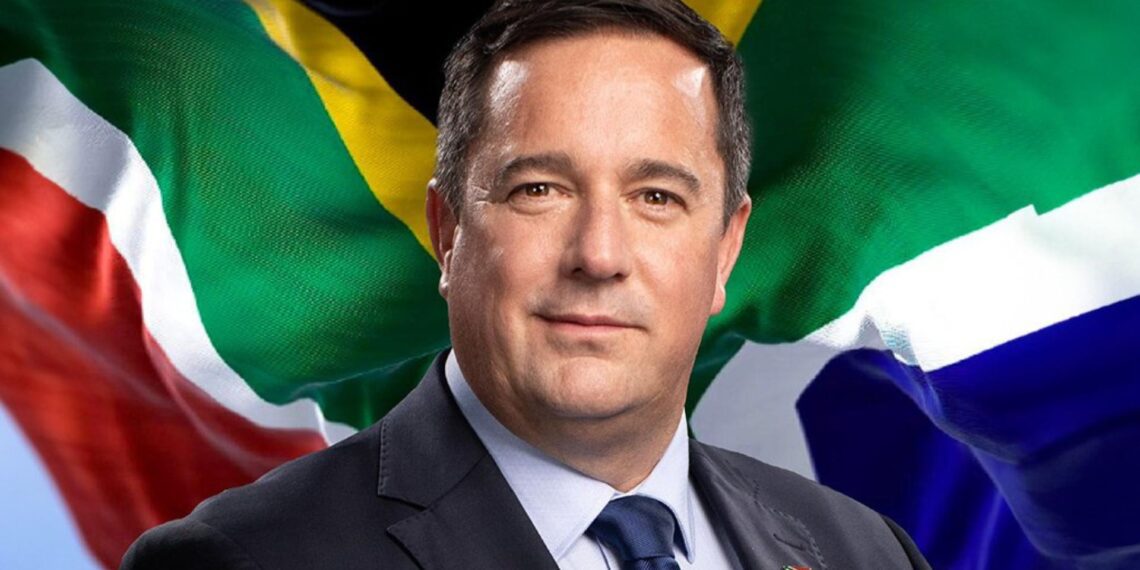
Farmers and organised agriculture have been abuzz with mixed reactions to the surprising appointment of John Steenhuisen as the new agriculture minister, following president Cyril Ramaphosa’s cabinet announcement last night.
Agri SA chief executive officer Johann Kotzé said the organisation is committed to playing its role in supporting the new government of national unity by actively engaging with all stakeholders to foster a cohesive and collaborative approach to addressing the sector’s challenges.
“We are dedicated to working with government to enhance the competitiveness of South African agriculture on a global scale, increasing exports, and opening new markets. This, in turn, could lead to the development of rural communities and contribute significantly to the reduction of poverty and unemployment in our country,” he said.
Kotzé expressed his gratitude to Thoko Didiza, the outgoing minister of agriculture, land reform and rural development, for her continued support and understanding of the agricultural sector.
“Her efforts in maintaining strong relationships with organised agriculture have been invaluable. Under her guidance, we have seen significant advancements and a strengthened collaboration between the government and the agricultural community.”

DA’s agricultural strategy and alignment with ANC
Steenhuisen is one of the DA-nominated ministers approved by Ramaphosa in the negotiated government of national unity. Agbiz chief economist Wandile Sihlobo notes that the DA’s agricultural approach is no different from what the ANC has in its policies.
“For example, in the 2024 manifesto, the DA states that the party will ‘empower South Africans through land ownership by protecting private ownership of land as outlined in section 25 of the Constitution.’
“The DA adds that they will ‘utilise government-owned land and prioritise the use of land owned by the government, specifically focusing on the vast tracts currently held by the [former] department of agriculture, forestry and fisheries and the department of public works and infrastructure.
“The DA government will focus on underutilised state-owned land for land reform projects, including housing, farming, and providing land access for South Africans.”
Related stories
- Agriculture seeks renewal: Agri SA calls for focus on AAMP
- Shocker: Ramaphosa names DA leader as agriculture minister
Furthermore, the DA says it aims to enhance post-settlement support through bolstering provincial institutional capacity and creating specialised units within departments for pre- and post-settlement assistance.
They pledged to prioritise land reform in the budget, with increased funding aimed at improving post-settlement support for beneficiaries, aligning closely with national development strategies and government-led initiatives like the blended finance instrument.

Sihlobo also notes that the ANC, DA, and IFP leaders are closely aligned on agriculture and thus deserve the support of all stakeholders in the sector. He highlights that the IFP’s position on agriculture and land reform is aligned with the ideas of the ANC and DA, promoting significant state support for new entrants into the agriculture industry.
“This work is already being implemented through the blended finance instrument that the department … is rolling out in partnership with financial institutions,” he said.
Sihlobo strongly suggested that government officials and industry stakeholders should rally behind Steenhuisen as the new agriculture minister, regardless of their political affiliations.
“The ANC has governed with the National Development Plan’s vision, recently embodied in the Agriculture and Agro-processing Master Plan. The goal is to foster an inclusive and competitive agricultural economy. The missing piece is adequate engagement of provincial and local government officials, crucial for implementing such a plan focused on private sector collaboration,” he said.

Mixed reaction from farmers
Meanwhile, Free State grain farmer Phaladi Matsole described Steenhuisen’s appointment as good news for farmers, farmworkers, and the markets, as he will bring in changes that aim to balance labour and food production productivity.
“We are also watching with interest how he will make the AgriBEE policy a reality in terms of its existence and impact,” he said.
Malose Mokgotho, president of the South African Agricultural Graduates Organisation (Saaga), expressed disappointment with Steenhuisen’s appointment, believing he would not listen to the cries and frustrations of unemployed graduates.
“We have to register our unhappiness at Mr Steenhuisen’s appointment; I’s a bitter pill to swallow. We do not think graduates will be heard by a leader from the Democratic Alliance,” he said.
Kgomotso Itumeleng, provincial chairperson of Youth in Agriculture and Rural Development (Yard) in the Northern Cape, said they cannot express happiness or dissatisfaction; they only want to see farmers receiving services.
“It is not about who the minister is; what we want to see are programs being implemented and young farmers and their enterprises being able to penetrate the markets,” he said.
TLU SA’s optimism and call for collaboration
Meanwhile, TLU SA chief executive Bennie van Zyl welcomed and congratulate Steenhuisen, adding that they hoped his term would bring about positive change and a renewed focus on the critical issues facing the country.
“We will actively collaborate with him to ensure the effective functioning of the agricultural environment from our side,” he said.
Van Zyl said the extent to which the two new departments – agriculture and land reform and rural development – will collaborate is crucial, given that South Africans need to eat. He emphasised that agriculture should receive preference for sustainable food production.
“The agricultural sector remains a cornerstone of South Africa’s economy and a critical component to ensure food security, job creation, and sustainable development.
“TLU SA appeals to the new cabinet to reconcile the diverse policy environments and views of the past around the right principles and ensure that the necessary confidence is gained for investments so that the economy can grow,” he said.
READ NEXT: New minister must resolve urgent land dispute, court orders