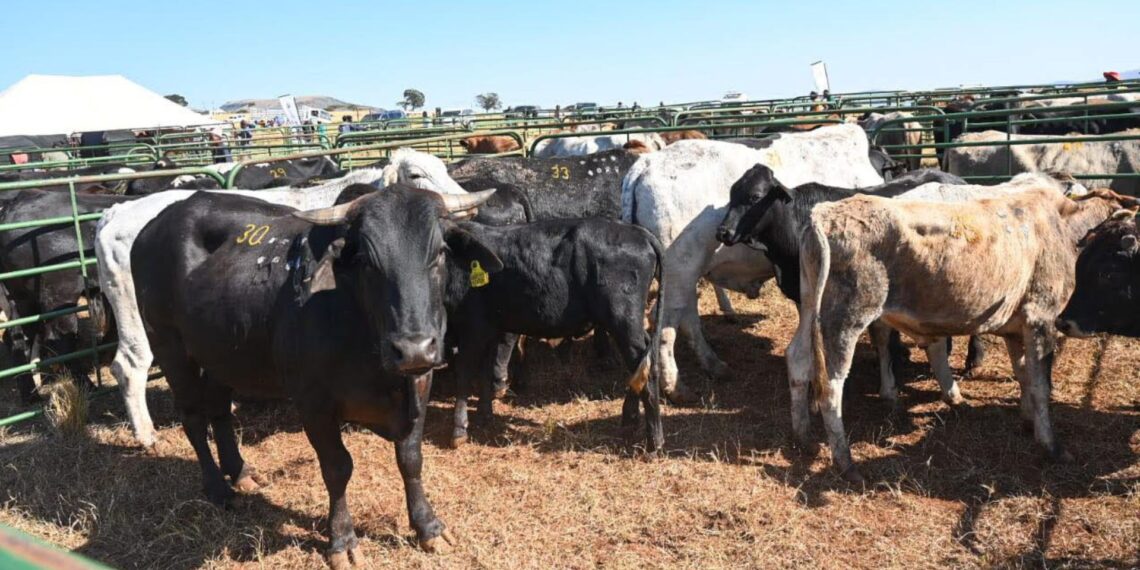
Agriculture minister John Steenhuisen warned this afternoon that the country’s foot-and-mouth disease (FMD) outbreak is a matter of great concern – not only to government and industry, but most crucially to farmers, affected by both the disease and the burden of strict control measures aimed at containing it.
He addressed the media in Cape Town to give an update on the impact of FMD on the sector and critical measures the government is taking to combat the outbreak.
“I am pleased to report that the outbreaks which afflicted the Eastern Cape in 2024 have not resurfaced in 2025. The last outbreak in the Eastern Cape occurred in September 2024.
“Following extensive surveillance in and around the affected areas, the disease management area (DMA) was lifted on 4 July 2025. The affected farms in the Humansdorp and East London areas remain under quarantine, following the lifting of restrictions, and are undergoing final testing to confirm the absence of the FMD virus. The results to date are encouraging.
“Farmers adhered to quarantine conditions despite the hardship this imposed. Agri Eastern Cape supported government in monitoring livestock movements into and out of the affected areas, and veterinary services officials worked tirelessly to meet regulatory requirements. This success story was made possible through dedication and partnership,” he said.
Related stories
- FMD failures spark alarm at Pretoria crisis talks
- KZN farmers sell livestock after four-year FMD ban
- FMD: Research shows water disinfection could protect livestock
- RMIS launches crisis centre to tackle FMD
Monitoring livestock movements
The minister said he is pleased with the situation in provinces like Limpopo, the Northern Cape and Western Cape; however, more vigilance is needed to ensure that the status quo does not change.
“By late May 2025, additional outbreaks were reported in Gauteng, North West, western Mpumalanga and Free State. Investigations suggest both farm-to-farm spread and ‘pinpoint’ introductions associated with livestock movements, where isolation protocols were not observed as contributors to the spread of the disease.
“Current numbers are as follows: Gauteng: 54 outbreaks; North West: 26; Mpumalanga: 9; and Free State: 8.”
The minister explained that due to the increase in cases and the threat it poses to the sector, he called over 400 stakeholders in July to chart a way forward on how to better deal with the issue and be proactive than reactive.
“Measures proposed include revising control zones, expanding capacity for sampling and diagnostics, and increasing access to vaccines. In the short term, additional vaccine doses will be imported from Botswana while South Africa scales up its own production. A mid-scale vaccine facility with a capacity of 150 000 to 200 000 doses per year is on track for commissioning in March 2026.”
Steenhuisen said following the meeting, key minimum measures identified include the following:
- Unifying FMD protocols under a national plan;
- Rebuilding vaccine production capacity and training skilled staff;
- Deploying rapid tests in the field and reducing lab turnaround times;
- Expanding animal identification systems to regional benchmarks;
- Strengthening research on local strains and post-vaccination immunity;
- Securing sustainable funding across the value chain; and
- Reassessing outdated or unsupported policies, such as fifth-quarter disposal.
Task team to tackle FMD
The minister announced the industry-government task team on animal prevention, management and control.
Government will be represented by:
- Dr Emily Mogajane – Chief director of biosecurity coordination (chairperson and convener)
- Dr Botlhe Modisane – Chief director of animal health and production, DoA
- Dr Nomsa Mnisi – Director of biosecurity support services, DoA
- Dr Themba Sikhakhane – Chief director of veterinary services, KwaZulu-Natal
- Dr Bheki Cele – Chief director of veterinary services, Mpumalanga
- Dr Wynton Rabolao – Director of veterinary services, Gauteng
- Dr Baratang Lubisi – Research team manager, ARC
- Dr Moses Mabunda – Director of veterinary services, Limpopo
- Dr Marietta Swanepoel – Deputy director: secretariat support
- Dr Oseke Ngoveni – State secretariat support
- Additional provincial veterinarians will be included as required.
The Red Meat Industry Services has nominated the following veterinarians to represent the industry:
- Prof. Dietmar Holm – University of Pretoria, Bovine herd health (academic/beef)
- Dr Dirk Verwoerd – Specialist in infectious diseases of intensive production systems, with emphasis on vaccine development, surveillance, and diagnostics
- Dr Jacque Marais – Dairy industry
- Dr Anthony Davis – Milk processors
- Dr Adriaan Olivier – Ostrich industry
- Dr Amanda Botes – Specialist in FMD and African Swine Fever (ASF) diagnostics and molecular epidemiology
- Dr Mark Chimes – Dairy, chairperson of the Brucellosis and Tuberculosis Steering Committee
- Dr Pieter Evans – Specialist in eradication of PRRS and ASF outbreak management
- Dr Shaun Morris – Feedlot specialist
- Dr Baty Dungu – Member of the World Organisation for Animal Health (WOAH) Scientific Commission, African Union Pan African Veterinary Vaccine Centre (AU PANVAC) Steering Committee, and African Union – InterAfrican Bureau for Animal Resources (AU-IBAR) expert panel on animal health and disease control
- Dr Danie Odendaal – Ruminant veterinarian specialist
- Dr Gerhard Neethling – Export and abattoir specialist
- Dr Francois Maree – Specialist in vaccine design, testing, and diagnostics
- Dr Livio Heath – Diagnostics, epidemiology, and international trade relations
“I must stress that compliance with legislation and biosecurity protocols is not optional. Reports of farmers moving cattle showing clinical signs of the disease, or treating them privately without reporting, are deeply concerning and irresponsible. These actions not only contravene legal directives but risk entrenching FMD as endemic in South Africa.
“Biosecurity is everyone’s responsibility. Only through collective discipline and cooperation can we turn the tide and secure the future of South Africa’s livestock industry,” Steenhuisen said.
READ NEXT: Minister vows to fast-track land reform, axe bad CPAs