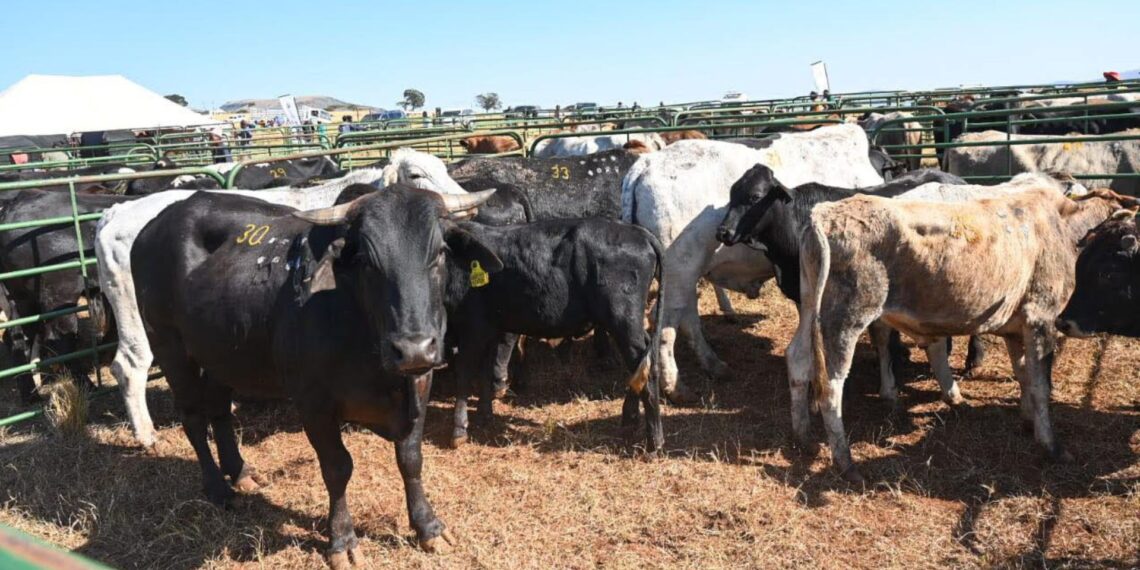
After a four-year FMD restriction on the sale and movement of cloven-hoofed animals and their products in the Zululand area has been eased, a live animal auction took place at Dlebe area in uLundi, Zululand District Municipality.
The restrictions were forced by the outbreak of the foot-and-mouth disease (FMD) in 2021. The staging of the piloted auction was officially declared by the KwaZulu-Natal MEC for agriculture and rural development, Thembeni kaMadlopha-Mthethwa, as authorised by the latest government gazette number 6319, released on 13 June 2025, under the Animal Diseases Act, 1984 (Act No. 35 of 1984).
Addressing hundreds of community members attending the auction sale, KaMadlopha-Mthethwa said her department has taken an important stride towards overcoming the challenges facing the industry.
Moving in the right direction
“This auction is particularly critical as it takes place amidst the ongoing challenges posed by the foot-and-mouth disease in other districts. FMD has far-reaching economic implications, negatively affecting both small-scale and commercial farmers.
Related stories
- FMD battle intensifies with free vaccine rollout
- R72 million vaccine plan bolsters FMD response
- Steenhuisen forms rapid response team for FMD outbreak
“As the MEC for agriculture and rural development in KwaZulu-Natal, it’s my obligation and responsibility to ensure that we run the agricultural sector effectively. This means taking care of the farmers, whether they’re running privately-owned farms or communal livestock, we have to intervene if there are problems,” she said.
A total of 160 communal animals from 18 diptanks in the district went under the hammer. The outbreak of the FMD caused frustrations among commercial, small-scale farmers and communal farmers.
KaMadlopha-Mthethwa stated that staging the auction in the Zululand area, where there was FMD, proves there are no clinical cases of the disease in the region.
“This proves that the province is gradually winning the war against FMD, and the veterinary services’ work on the ground is yielding results. Although it’s a huge challenge due to lack of infrastructure, the livestock industry has responded well by strengthening its biosecurity measures to prevent the rapid spread of the disease.
“As part of containment efforts, veterinary personnel were increased on the ground, new disease management areas were declared, the affected areas were isolated, and efforts were made until the disease was eradicated. Furthermore, assistance was received from the police and Road Traffic Management Operations, as well as traditional leaders,” she said.

Registered sellers only
KaMadlopha-Mthethwa urged farmers and the general communities to adhere to the strict protocols of the FMD as set out in the latest government gazette. “We had to ease pressure, as they haven’t sold their livestock since 2022 after the outbreak of the disease. This is the first auction of its kind in Zululand, aimed at assisting communities facing challenges in selling due to the disease.
“This auction is specifically for registered sellers whose cattle have been identified. We expect buyers to adhere to government regulations and guidelines related to the auction, as well as livestock management during the disease period. This includes taking the cattle to a designated facility, dipping and keeping them isolated for 28 days or six weeks before slaughter at the abattoir,” she said.
Currently, the department’s veterinary services are working to contain the outbreak by using all available resources to strictly control the movement of cloven-hoofed animals.
“I can assure you that all these dip tanks have dipping chemicals, although some are still being repaired in terms of infrastructure. Every year, we spend about R45 million on dip tank medication,” KaMadlopha-Mthethwa said.
READ NEXT: Wesgro hails China’s zero-tariff trade boost for Africa