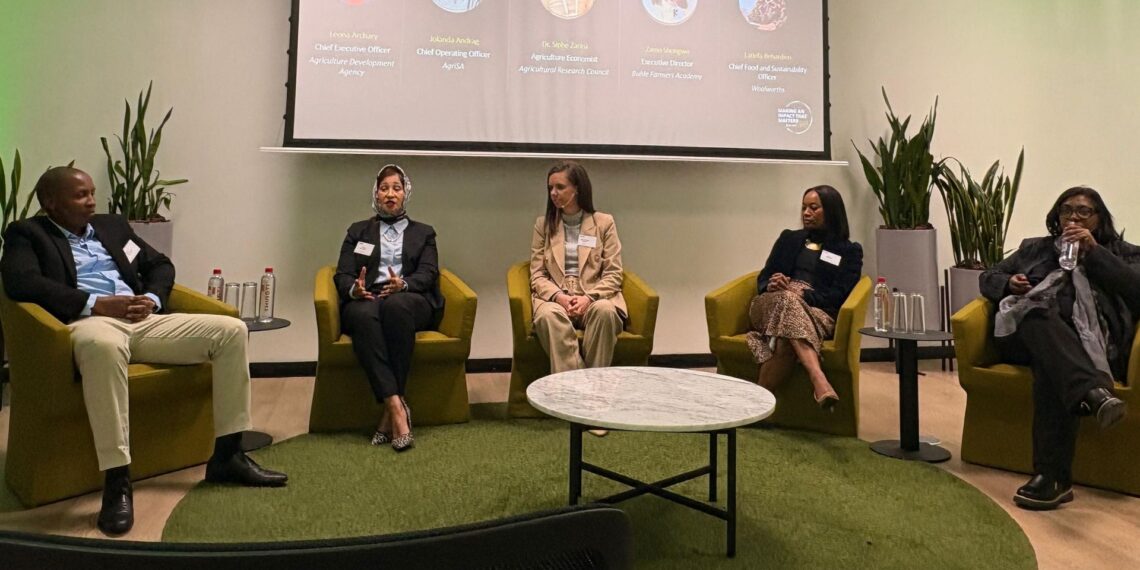
The urgent need for a united, inclusive approach to agriculture and food security took centre stage at a recent Deloitte Africa-hosted dialogue in Johannesburg.
Keynote speaker Leona Archary, CEO of the Agricultural Development Agency (Agda), delivered a candid yet hopeful assessment of the sector’s trajectory.
Archary acknowledged that while many challenges facing the sector are not new, they remain unresolved. “We’ve not yet arrived,” she said, noting that South Africa continues to grapple with a complex set of issues, chief among them land reform, environmental sustainability, and persistent hunger in rural communities.
She highlighted the paradox of South Africa being a net exporter of food while millions remain food insecure. “We cannot have nearly 20% of South African households having inadequate access to food, with rural areas being disproportionately affected.”
Related stories
- Indigenous crops hold key to sustainable agriculture in SA
- Former Soweto DJ finds rhythm in sustainable farming
Inclusive farming strategies
Central to Archary’s message was the urgent need to support and integrate the smallholder farming sector. With approximately 2.5 million small-scale farmers in the country, she emphasised, “The growth and empowerment of our smallholder farming sector is not just a matter of social justice. It is essential for long-term sustainability.”
Small-scale farmers, she said, possess deep knowledge of local ecosystems and often practise more sustainable, biodiverse farming methods. “They understand the soil intimately because it represents a valuable resource, I believe, that we must nurture.”
Despite their potential, she pointed out that smallholders are often overlooked.
Archary identified three critical imperatives for the sector’s future: climate adaptation, market access, and skills development. She stressed these must be addressed through an “inclusive approach that grows our sector by embracing farmers of all scales”.
“South Africa obviously is warming at twice the global average. The devastating droughts or the floods that we’ve been seeing have demonstrated the fragility of our food systems.”
Leona Archary
She praised ongoing efforts, including precision irrigation in the Western Cape, drought-resistant crops in Limpopo, and conservation agriculture in the Eastern Cape. However, she noted, “We’re not building a grant-based agriculture system yet. If you want to build agriculture as a business and a sustainable opportunity for our communities and new farmers, then we have to change our thinking on that.”
Throughout her address, Archary underscored that collaboration must move beyond rhetoric. “Collaboration, not just as a buzzword, but as actionable strategy, is the only way forward.”
READ NEXT: SA soybean industry fights back after drought
Sector growth, innovation, and climate-smart solutions
Jolanda Andrag, COO at AgriSA, highlighted how the country’s agricultural output has doubled over the past 30 years. “In each of the three subjects, livestock economy and agriculture, it plays out consistently. That’s the first thing. Over the past 30 years, we’ve managed to double agricultural output,” said Andrag.
She acknowledged South African farmers’ responsiveness to global demands. “From a sustainability point of view and a climate adaptation point of view, our farmers have been adapting. We are focusing on sustainability.”
Andrag also noted the role of research in the sector’s development and said “43% of industry money goes to research. That shows you how proactive this industry has been in putting certain practices in place and researching what works in the South African environment.”
Meanwhile, Zamo Shongwe, executive director at Buhle’s Farmers’ Academy, offered insight into the power of farmer collaboration. “We find that our farmers are networking between themselves into groups. Access to information plays a vital role.”
Dr Siphe Zantsi, agricultural economist at the Agricultural Research Council (ARC), shared the institution’s efforts to develop climate-resilient crops. “As the ARC, I think we have a big role. Most of our work on climate change is on breeding new cultivars that are resistant to drought.”
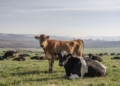
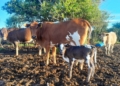
He spoke of changing livestock strategies in response to climate stress. He noted that farmers now, during the drought, were relying more on small stock, goats and sheep, because they are affected less by climate change than large livestock.
“I think cattle drink about 45 to 60 litres a day. You compare that to a sheep or a goat, and find that goats are very resilient to food shortage because they get droughts,” Zantsi said.
READ NEXT: NSPCA exposes horror at state-funded Daybreak poultry farms
Sign up for Mzansi Today: Your daily take on the news and happenings from the agriculture value chain.