Across Africa, the loss of soils due to erosion is one of the most persistent environmental issues, greatly impacting food production and contributing to rising food insecurity. The degradation of soil poses a significant threat to sustainability on the continent and protecting the soil is strongly linked to a number of the UN’s sustainable development goals.
World Soil Day on 5 December highlighted the critical significance underlines the importance of this fragile yet essential natural resource. While the challenge is substantial, action at ground level can yield positive outcomes.
Man-induced gullies
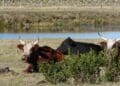
Social erosion has occurred over many millennia but the delicate natural ecosystems of plants and vegetation normally help protect the soils naturally. However, man-induced environmental changes elevate the risk of soil erosion. Over-grazing by cattle, particularly on common land, degrades land and land cover increasing the risk gullies will form in periods of high rainfall. The formation of these gullies (often known as dongas in South Africa), and small valleys carved by water erosion is a particular challenge. With significant rain over a very small period on degraded land, part of a farmer’s field can simply disappear.
Although the impacts may initially seem minor, over time these effects accumulate significantly. In Kenya, gully erosion losses were estimated equivalent to the country’s total agricultural exports. UN reports estimate that up to a quarter of sub-Saharan Africa’s land is severely affected by gully erosion. In Africa, growing populations and the increased demand for land combined with the impact of climate change mean the risks of serious degradation with gully formation are increasing. The effects will likely affect the poorest subsistence farmers who have access to the fewest alternative resources.
Addressing the challenges
The need to protect and safeguard soil from degradation has been understood for thousands of years. In the first millennium, farmers in the Aksum Empire in Ethiopia used methods such as terracing and tree planting which are continued today. However addressing gullies has proven to be more challenging requiring modern, often large engineering intervention. Once gullies are established, controlling and re-creating productive farmland needs large-scale investments and may take decades, leaving farmers feeling powerless to take effective action.
Although small-scale methods of gully treatment are possible, farmers understandably are cautious about suggested solutions from external experts. Numerous well-intentioned development projects have failed due to their oversight of farmers’ needs and consequently fail.
A collaborative initiative funded by the UK government involving scientists from Ethiopia, Sweden, and the United Kingdom researchers from Stellenbosch Business School took a novel approach. By combining soil science and biology with an understanding of the economic and social dynamics of social scientists, they worked closely with communities in the Halaba region in Southern Ethiopia, integrating research from diverse fields to address the challenge of social erosion.
LISTEN: Podcast: AECI Plant Heath shares tips for healthy soil
The importance of early intervention
The aim was to persuade farmers that early intervention could prevent worsening gullies and make existing gullies productive again. The scientists ran small field experiments with the cooperation and help of local communities. These showed scientifically that simple interventions such as treating the head (or top) of the gully early could prevent its spread. Farmer demonstration days were used to discuss the results of these experiments with farmers in the community. Through interviews and the collection of other data, the social scientists were also able to show that these efforts had a significant impact on knowledge and understanding in the community of the measures, important for making the case to the government that scaling up these types of small interventions can make a real difference.
The joint challenges of climate, environmental and demographic change can sometimes seem insurmountable when we observe the terrible devastation caused by social erosion. Yet integrated science drawing on scientific, economic and other expertise can be used to show that simple methods can work, empowering farmers to act. In turn, this evidence can guide policymakers in deciding the viability of scaling up such methods. This ground-up approach, founded on scientific evidence, provides a source of hope in confronting the challenges of social erosion in Africa and across the world.
- Prof Euan Phimister is head of research at Stellenbosch Business School.
ALSO READ: Conservation agriculture plans enhance soil quality in E. Cape
Sign up for Mzansi Today: Your daily take on the news and happenings from the agriculture value chain.