Friday, July 10, 2026
SUBSCRIBE
22 GLOBAL MEDIA AWARDS
Food For Mzansi
  • News
  • Changemakers
  • Lifestyle
  • Farmer’s Inside Track
  • Food for Thought
No Result
View All Result
  • News
  • Changemakers
  • Lifestyle
  • Farmer’s Inside Track
  • Food for Thought
No Result
View All Result
Food For Mzansi
No Result
View All Result
in Advertorial

Choose the right dripline for vineyard and orchard success

by Patricia Tembo
10th July 2026
Choosing the right dripline system for vineyards and orchards requires growers to consider soil type, crop needs, water quality, terrain, dripper design and long-term durability to ensure uniform irrigation, reduce clogging and protect productivity, profitability and resource efficiency over the life of the crop. Design: Gareth Davies/Food For Mzansi

Choosing the right dripline system for vineyards and orchards requires growers to consider soil type, crop needs, water quality, terrain, dripper design and long-term durability to ensure uniform irrigation, reduce clogging and protect productivity, profitability and resource efficiency over the life of the crop. Design: Gareth Davies/Food For Mzansi

Share on FacebookShare on TwitterShare on WhatsApp
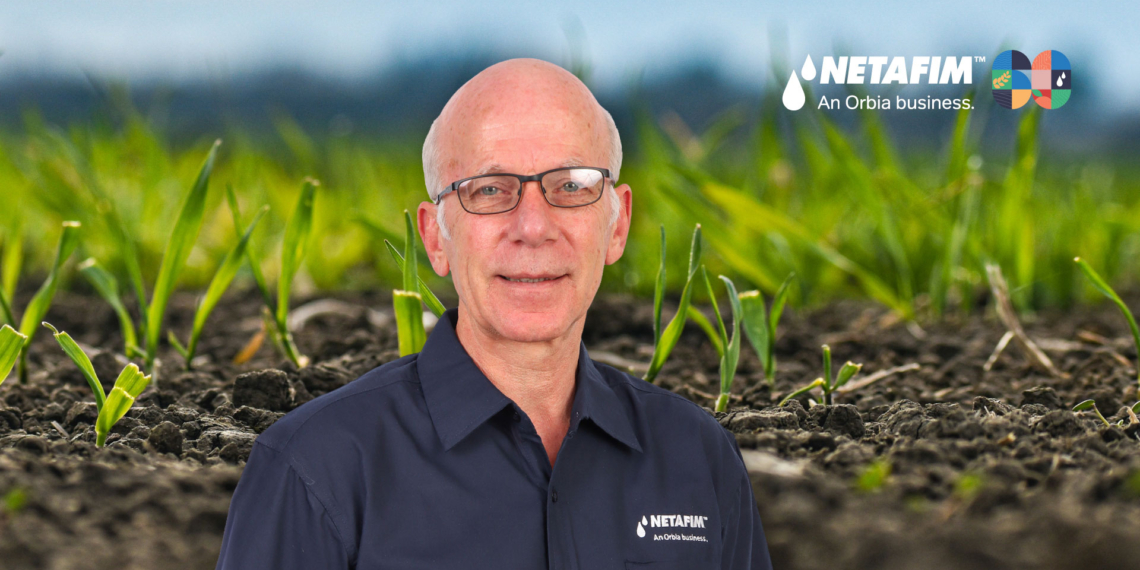
Not prioritising product quality and product suitability when investing in an irrigation system can cost a lot in the long run. Netafim Southern & East Africa’s Willem Smit advises prioritising product durability, operational quality and relevance,  and technical supplier support to secure lasting productivity and profitability. 

Selecting the right dripline is one of the most important decisions vineyard and orchard growers can make.

According to Willem Smit, national sales manager for Netafim in South Africa, successful irrigation starts with understanding the unique conditions of each farm and selecting a dripline designed to deliver consistent performance over many years.

“Drip irrigation is not a one-size-fits-all solution,” says Smit. “Every orchard and vineyard has different soil conditions, crop requirements and field characteristics, so these factors should guide the irrigation design.” 

Before selecting a dripline, growers should evaluate several key factors, including soil type, crop type, field topography, irrigation water quality, system hydraulics, installation method, expected system lifespan, and long-term return on investment.

Surface and subsurface installations each have advantages depending on the production system, while water quality influences filtration requirements and the risk of emitter blockages.


Related stories
  • How irrigation automation benefits farms of all sizes
  • Netafim’s precision irrigation helps farmers grow more with less

Why dripper design matters

The design of the dripper plays a significant role in achieving uniform irrigation.

Pressure-compensating (PC) drippers maintain a consistent flow rate across long rows and uneven terrain, ensuring every vine or tree receives the intended amount of water.

“Uniform irrigation is essential in permanent crops because differences in water and nutrient application can directly affect plant growth, fruit quality and ultimately yield,” explains Smit.

Drippers with wide flow paths, large internal filtration areas and self-flushing mechanisms also offer greater resistance to clogging, which is particularly important where water quality is poor.

Since vineyards and orchards are long-term investments, growers should also consider dripline durability, including dripper design and dripline wall thickness.

Key technical specifications include dripper flow rate, emitter spacing, wall thickness, operating pressure range, filtration requirements and the internal flow path of the dripper.

These factors determine how efficiently water reaches the crop’s root zone and can influence irrigation performance, maintenance requirements and crop productivity.

Matching irrigation to the soil

Choosing the correct dripper flow rate and spacing along the dripline should always be based on agronomic requirements.

“Soil type determines how water spreads underground,” he says. “The irrigation system should create a continuous wetting pattern that matches the crop’s root zone.”

In sandy soils, where water drains quickly, closer emitter spacing with lower dripper flow rates generally provides better water distribution in the soil. Clay soils allow water to spread further sideways, making wider spacing and higher flow rates more suitable. 

Crop spacing, root development and peak seasonal water demand should also be considered during system design. 

Looking beyond the product

Choosing the right dripline also means choosing the right supplier.

Smit advises growers to look for proven product performance, published product specifications, supplier reputation and strong technical support. Services such as hydraulic design, agronomic advice, water quality interpretation, soil profile pit inspections, product training and after-sales support can significantly improve long-term irrigation success.

He further advises to consider the benefit of local dripline manufacturing as the capability of a supplier to manufacture a range of driplines locally creates better control over supply timelines and greater flexibility to supply the required dripper flow rates and spacing combinations. 

Investing for the long term

Water scarcity, poor water quality, uneven terrain and changing weather patterns remain significant challenges for vineyard and orchard growers.

Modern drip irrigation technology helps address these pressures through precise water and nutrient delivery made possible by advanced dripper and dripline characteristics. Smit reminds growers to have a long-term mindset when making decisions. 

 “Long-term performance, reliability and uniformity have a direct impact on yield, maintenance costs and resource efficiency.”

For permanent crops, growers should prioritise driplines and drip irrigation systems that deliver a long service life, consistent irrigation performance and savings in water, fertiliser and energy.

A well-designed drip irrigation system is ultimately an investment in long-term productivity, sustainability and profitability. 

READ NEXT: How to choose the right drip irrigation system for seasonal crops

Sign-up to Farmer's Inside Track for the best farming tips, news and advice to thrive!

Patricia Tembo

Patricia Tembo is motivated by her passion for sustainable agriculture. Registered with the South African Council for Natural Scientific Professions (SACNASP), she uses her academic background in agriculture to provide credibility and technical depth to her journalism. When not in immersed in the world of agriculture, she is engaged in outdoor activities and her creative pursuits.

Tags: Drip irrigationNetafimTeach mevineyards
Global trade: Agbiz chief economist Wandile Sihlobo. Photo: Supplied/Food For Mzansi
News

Global food prices ease as grain and sugar costs fall

by Staff Reporter
9th July 2026

Global food prices have slightly eased in June 2026, after an uptick over the past few months driven by concerns...

Read moreDetails
Simphiwe Hlubi: Why multi-stream income is the future of farming

Simphiwe Hlubi: Why multi-stream income is the future of farming

8th July 2026
In Alexandra township in Johannesburg urban farmers are boosting food supplies with home and community gardens. Photo: Supplied/Blessings Masuku

Urban farming helps Joburg’s poorest, but needs investment

8th July 2026
Sabio BeeCon 2026 creates a buzz for North West beekeepers

Sabio BeeCon 2026 creates a buzz for North West beekeepers

8th July 2026
Effective calf management starts before calving and continues long after birth, with healthy cows, quality colostrum, clean environments and close daily monitoring forming the foundation for stronger, more productive animals. Photo: Pexels

How to improve calf survival with better colostrum management

7th July 2026

Fort Cox student is proving communal farming can thrive

Choose the right dripline for vineyard and orchard success

Willie Aucamp’s toughest battle isn’t on the farm

Why citrus deserves special treatment in US-SA tariff talks

Is your farm’s data safe? The hidden cyber risks in agriculture

Join Food For Mzansi's WhatsApp channel for the latest updates!

JOIN NOW!
Next Post
Fort Cox student Uzusakhe Mbebe on his family's communal farm near Komani, where he is applying regenerative farming principles while building a commercial livestock enterprise. Photo: Supplied/Food For Mzansi

Fort Cox student is proving communal farming can thrive

THE NEW FACE OF SOUTH AFRICAN AGRICULTURE

With 21 global awards in the first six years of its existence, Food For Mzansi is much more than an agriculture publication. It is a movement, unashamedly saluting the unsung heroes of South African agriculture. We believe in the power of agriculture to promote nation building and social cohesion by telling stories that are often overlooked by broader society.

Fort Cox student is proving communal farming can thrive

Choose the right dripline for vineyard and orchard success

SA holds its own in fiercely competitive fruit markets

Ecovado shines: From village dream to retail shelves

What a rural chilli farm says about possibility and hope

How Thanda helped one KZN family beat the cost-of-living crisis

  • Awards & Global Impact
  • Our Story
  • Contact Us
  • Cookie Policy
  • Privacy Policy
  • Copyright

Contact us
Office: +27 21 879 1824
News: info@foodformzansi.co.za
Advertising: sales@foodformzansi.co.za

Contact us
Office: +27 21 879 1824
News: info@foodformzansi.co.za
Advertising: sales@foodformzansi.co.za

  • Awards & Global Impact
  • Our Story
  • Contact Us
  • Cookie Policy
  • Privacy Policy
  • Copyright

Chat Options

I'm Lerato, your AI assistant!
No Result
View All Result
  • News
  • Changemakers
  • Lifestyle
  • Farmer’s Inside Track
  • Food for Thought

Copyright © 2024 Food for Mzansi

This website uses cookies. By continuing to use this website you are giving consent to cookies being used. Visit our Privacy and Cookie Policy.