Wednesday, June 10, 2026
SUBSCRIBE
22 GLOBAL MEDIA AWARDS
Food For Mzansi
  • News
  • Changemakers
  • Lifestyle
  • Farmer’s Inside Track
  • Food for Thought
No Result
View All Result
  • News
  • Changemakers
  • Lifestyle
  • Farmer’s Inside Track
  • Food for Thought
No Result
View All Result
Food For Mzansi
No Result
View All Result
in Food for Thought

New fodder radish varieties can boost dairy production

by Patrick Rakau
24th June 2021
Fodder Radish

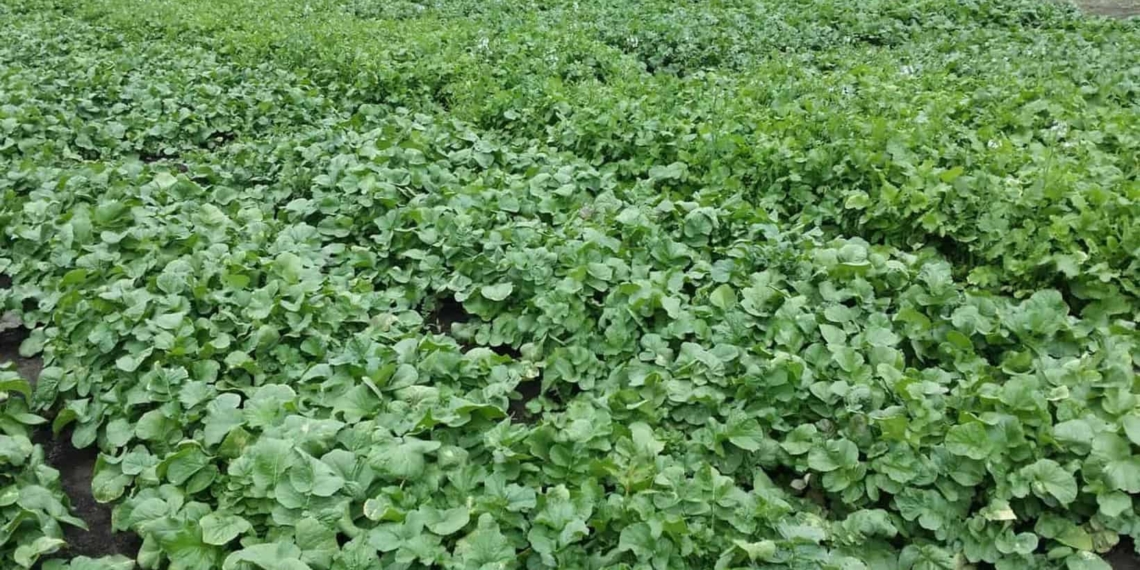
Fodder radish is an annual tuber crop with the shortest cycle among other vegetables and it belongs to Brassicaceae plant family. Photo: Supplied/Food For Mzansi

Share on FacebookShare on TwitterShare on WhatsApp
Patrick Rakau, a PhD candidate in crop science at the University of KwaZulu-Natal.
South African dairy farmers should start planting fodder radish to support and improve our milk production during the dry winter and spring. Locally bred varieties are perfect for our needs, and will improve milk production in the country, argues Patrick Rakau, a PhD candidate in crop science at the University of KwaZulu-Natal.

Fodder radish is an annual tuber crop with the shortest cycle among other vegetables and it belongs to Brassicaceae plant family. Despite it being used widely across the world as a supplement for livestock during winter, fodder radish is relatively underutilised in South Africa. 

This underutilisation is very unfortunate because considering the strides that have been made towards the developing cultivars that were selected for flowering late in the dry season under the South Africa conditions. 

To give a short history, the Agricultural Research Council (ARC) has been breeding and evaluating forages at Cedara Research Station in Pietermaritzburg for the past 70 years. Since 1993, this forage breeding and evaluation unit has been awarded Plant Breeders Rights (PBR) for 62 new forage cultivars of different forage species. Among the species that are targeted as the focus of breeding programmes at the ARC-API Cedara is fodder radish, often referred to as Japanese radish. 

fodder radish 3
Recent work at the Agricultural Research Council looked at fodder radish with a longer growth duration and bulb quality retention. Photo: Supplied/Food For Mzansi

In the late 90s, several conventional fodder radish cultivars such as Samurai, Star 1650 and Star 1654 were released. These were followed by some soft-leaved fodder radish cultivars, like Sterling and Geisha and Lomo, a cultivar that was characterised by a red root. 

While these varieties did well in the market, their full market potential was limited by the fact that they tend to go reproductive (flowering stage) early in spring and the bulbs start bolting (rotting) too soon. Efforts were later directed towards developing varieties with a large dual-purpose type with hairless, soft leaves and large, aboveground roots. Some of the leaves could be used even for human consumption.

Recent work looked at fodder radish with a longer growth duration and bulb quality retention. To achieve the latter, the ARC joined forces with a New Zealand Company called PGG Wrightson Seeds (PGGW). The ARC Cedara team top-crossed their radish cultivars Geisha and Sterling onto a very late-flowering fodder radish line supplied by PGGW and after about eight consecutive years of selection of individual plants displaying desirable traits and culling of those showing undesirable traits, a new variety was produced. This was called Endurance and is now inscribed in the South African Variety List.

Among the many good traits, Endurance only starts flowering approximately six weeks later than the above-mentioned varieties. This gives the farmer an extended grazing by over half the yield of conventional cultivars. Late flowering, hairless, biennial type traits in the newly bred cultivar and large productive bulb type are solutions to most dairy farmers for spring feeding.

Fodder radish is suitable for regions that receive more than 350mm per annum and thus could be planted in most parts of South Africa. It requires well-drained, fertile soils and is established in January or February. Dryland sowing rate is 3kg to 5kg per hectare and under irrigation 5kg to 7kg per hectare.  

Other desirable features of Endurance include minimal ripening required, large bulb size that give a very high % of aboveground biomass that is highly palatable, drought and heat tolerant. Leaf retention, bulb keeping ability and yield potential is high and the leaves are smooth.

These are the reasons why we need to start planting fodder radish to support and improve our milk production during the dry winter and spring. This will improve milk production in the country. 

ALSO READ: Genomic testing can help farmers pick most productive herd

Patrick Rakau

Tags: Agriculture Research Councildairy industry
This week’s agri events: 08 – 12 June
News

This week’s agri events: 08 – 12 June

by Tiisetso Manoko
8th June 2026

Agricultural events you can look forward to include Food For Mzansi’s Farmers’ Days in Mpumalanga and KwaZulu-Natal, an Agri Skills...

Read moreDetails
How SA’s new food labelling laws will impact food producers

How SA’s new food labelling laws will impact food producers

7th June 2026
The Sustainability Institute: Breaking rural poverty cycles

The Sustainability Institute: Breaking rural poverty cycles

6th June 2026
South Africa Wine wins top award for climate intelligence tech

South Africa Wine wins top award for climate intelligence tech

6th June 2026
Backyard bounty: Soweto graduate grows smarter with hydroponics

Backyard bounty: Soweto graduate grows smarter with hydroponics

5th June 2026

Hunger crisis: SAHRC demands action on food affordability

SA’s pistachio industry targets 8% of global export market

Fruits and nuts drive SA’s record agricultural export surge

Cross-border planning: How to protect your family and agribusiness

Backyard bounty: Soweto graduate grows smarter with hydroponics

Join Food For Mzansi's WhatsApp channel for the latest updates!

JOIN NOW!
Next Post
The Cape Town port is one of the busiest ports in South Africa. Photo: Supplied/Jonathan Boonzaaier

CT port challenges puts wine harvest at risk – Vinpro

THE NEW FACE OF SOUTH AFRICAN AGRICULTURE

With 21 global awards in the first six years of its existence, Food For Mzansi is much more than an agriculture publication. It is a movement, unashamedly saluting the unsung heroes of South African agriculture. We believe in the power of agriculture to promote nation building and social cohesion by telling stories that are often overlooked by broader society.

Limpopo grain farmer combines business brains with farming brawn

Hunger crisis: SAHRC demands action on food affordability

From survival to expansion: Agbiz Congress tackles sector growth

Smart farming: 8 practical tips to adopt agritech today

Cross-border planning: How to protect your family and agribusiness

CGA warns of lower citrus exports after devastating storms

  • Awards & Global Impact
  • Our Story
  • Contact Us
  • Cookie Policy
  • Privacy Policy
  • Copyright

Contact us
Office: +27 21 879 1824
News: info@foodformzansi.co.za
Advertising: sales@foodformzansi.co.za

Contact us
Office: +27 21 879 1824
News: info@foodformzansi.co.za
Advertising: sales@foodformzansi.co.za

  • Awards & Global Impact
  • Our Story
  • Contact Us
  • Cookie Policy
  • Privacy Policy
  • Copyright

Chat Options

I'm Lerato, your AI assistant!
No Result
View All Result
  • News
  • Changemakers
  • Lifestyle
  • Farmer’s Inside Track
  • Food for Thought

Copyright © 2024 Food for Mzansi

This website uses cookies. By continuing to use this website you are giving consent to cookies being used. Visit our Privacy and Cookie Policy.