Friday, June 5, 2026
SUBSCRIBE
22 GLOBAL MEDIA AWARDS
Food For Mzansi
  • News
  • Changemakers
  • Lifestyle
  • Farmer’s Inside Track
  • Food for Thought
No Result
View All Result
  • News
  • Changemakers
  • Lifestyle
  • Farmer’s Inside Track
  • Food for Thought
No Result
View All Result
Food For Mzansi
No Result
View All Result
in Advertorial

Turning agricultural waste into a gold mine for local farmers

by Lisakanya Venna
5th June 2026
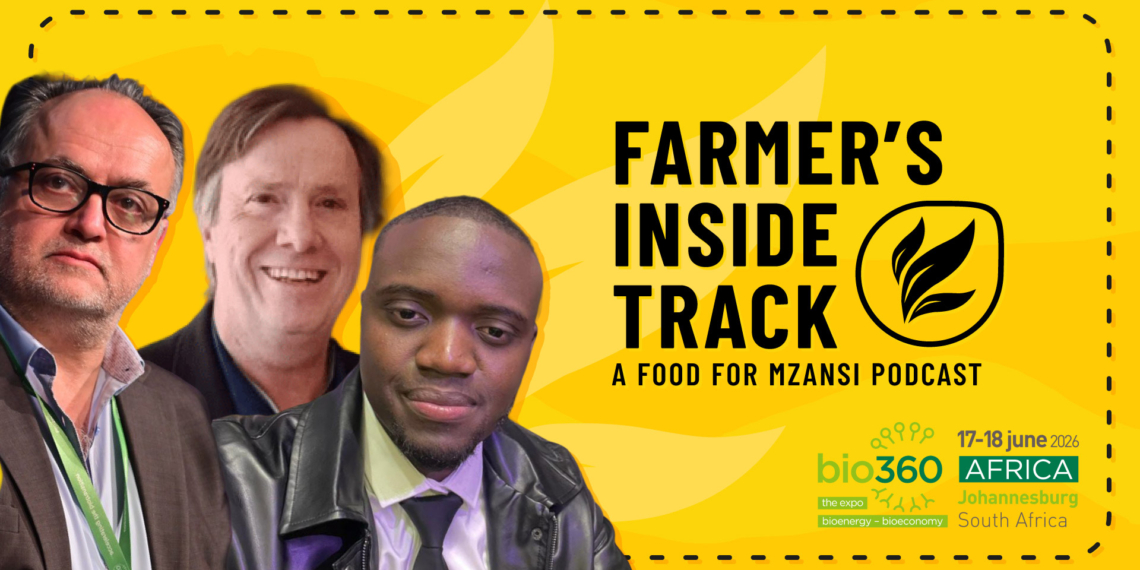
From left to right: Paul Stuart from BEES, Gordon Ayres from SABIA, and Lusani Khubana from Madam Waste unpack how local farmers can transform agricultural waste into sustainable bioenergy solutions. Photo: Gareth Davies/Food For Mzansi

From left to right: Paul Stuart from BEES, Gordon Ayres from SABIA, and Lusani Khubana from Madam Waste unpack how local farmers can transform agricultural waste into sustainable bioenergy solutions. Photo: Gareth Davies/Food For Mzansi

Share on FacebookShare on TwitterShare on WhatsApp

True sustainability in modern farming is about more than just food production; it is about building energy independence and financial resilience. Industry experts join us to discuss Bio360 Africa, exploring bioenergy, innovation, and sustainability.


Paul Stuart, CEO and director of Bioenergy Events and Services (BEES); Gordon Ayres, secretary general of the Southern African Biogas Industry Association (SABIA); and Lusani Khubana, project officer at Madam Waste, unpack the upcoming Bio360 Africa event at the Gallagher Convention Centre on 17 to 18 June 2026. They discuss how it is designed to help farmers bridge the gap between agricultural overheads and new income streams. 

With fluctuations in global markets leaving traditional farming activities vulnerable, the panel highlights why plugging into a dedicated bioenergy network is no longer optional for producers looking to secure their futures.

“One thing that farming experiences the world over is a need to diversify its income,” Stuart says. 

“Obviously, the main purpose of farming is to produce food for the table, but then with fluctuations in the markets, some farming activities can be quite vulnerable. So, the idea of having diversified income streams from the products and the co-products, and that’s what we’re talking about – talking about the co-products, which some people would describe as residues or wastes, but these are really co-products of agriculture.”


Related stories
  • Bio360 Africa: Turning farm waste into renewable energy
  • Sustainable farming: How to balance soil health and income
  • Agro-processing: Farmer’s guide to turning crops into cash
  • Innovation is the new vintage for SA wine amid climate crisis

An Africa-ready approach to innovation

Ayres explains that to ensure these solutions actually work on the ground, the BEES team has adapted 20 years of international experience by pivoting away from the failed, top-down funding models of the past. 

“The whole approach by the BEES team has been totally different; it’s all been about collaboration, talking to locals, local businesses, and local government,” he notes. 

By partnering directly with local entities like SABIA, this melded approach aims to create a more sustainable framework, especially as the South African market reaches a turning point in its understanding of green technologies. 

“We are starting to see biogas in schools, industries grabbing it, and water processing working with it,” Ayres adds.

Turning agricultural waste into a gold mine

For farmers sitting on tonnes of crop residue and livestock waste, Khubana emphasises that the agricultural sector holds the most valuable asset in the bioeconomy: the feedstock itself.

“To the farmers listening out there, the waste you’re sitting on is literally a gold mine; it’s a lot of money, actually.

“Farmers sit in a very nice seat because they already have the feedstock. This waste can generate electricity and heat, while simultaneously solving the problem of waste disposal. Instead of spending money to throw it away, they can get their money back,” Khubana says.

Beyond generating on-farm power, Khubana points out that the processing of this waste yields digestate, a nitrogen-rich fertiliser that directly addresses the deficiencies in South African soils. This circular model ultimately shields producers from external market pressures.

READ NEXT: Skills, tech and inclusion take centre stage at Gauteng farmers’ day

Sign-up for the latest agricultural news delivered straight to your inbox every day with Mzansi Today!

Lisakanya Venna

Lisakanya Venna is a junior journalist and content coordinator with varied multimedia experience. As a CPUT journalism alumni, she finds fulfilment in sharing impactful stories and serving as a reliable source of information.

Tags: agricultural wasteAlternative energyBio360 AfricabioenergySustainable agriculture
Oh, so oatsy! Creative ways to spice up breakfast
Recipes

Oh, so oatsy! Creative ways to spice up breakfast

by Vateka Halile
3rd June 2026

Want to upgrade your breakfast game? Discover how families and local chefs are reinventing oats. Plus, we’ve got an incredible...

Read moreDetails
Will new black warning labels on food save lives or hurt farming?

Will new black warning labels on food save lives or hurt farming?

3rd June 2026
North West and Land Bank partner to boost emerging farmers

North West and Land Bank partner to boost emerging farmers

3rd June 2026
Some of the participants at Food For Mzansi’s Gauteng farmers’ day hosted at the Cullinan campus of Agri Skills Transfer. Photo: Ivor Price/Food For Mzansi

Skills, tech and inclusion take centre stage at Gauteng farmers’ day
2nd June 2026

The new normal: How African agriculture can survive volatile risk

2nd June 2026

Skills, tech and inclusion take centre stage at Gauteng farmers’ day

Diesel shock: The silent threat to South African agriculture

Ex-cop beats poisoning disaster to build growing livestock business

North West and Land Bank partner to boost emerging farmers

Climate-smart genetics: How to choose the right cattle breed

Join Food For Mzansi's WhatsApp channel for the latest updates!

JOIN NOW!
Next Post
Backyard bounty: Soweto graduate grows smarter with hydroponics

Backyard bounty: Soweto graduate grows smarter with hydroponics

THE NEW FACE OF SOUTH AFRICAN AGRICULTURE

With 21 global awards in the first six years of its existence, Food For Mzansi is much more than an agriculture publication. It is a movement, unashamedly saluting the unsung heroes of South African agriculture. We believe in the power of agriculture to promote nation building and social cohesion by telling stories that are often overlooked by broader society.

Backyard bounty: Soweto graduate grows smarter with hydroponics

Turning agricultural waste into a gold mine for local farmers

State delays choke SA’s multi-billion rand poultry export potential

Farm insurance no longer optional as climate shocks intensify

Hopa brings hope and market access to EC grassroots farmers

Climate-smart genetics: How to choose the right cattle breed

  • Awards & Global Impact
  • Our Story
  • Contact Us
  • Cookie Policy
  • Privacy Policy
  • Copyright

Contact us
Office: +27 21 879 1824
News: info@foodformzansi.co.za
Advertising: sales@foodformzansi.co.za

Contact us
Office: +27 21 879 1824
News: info@foodformzansi.co.za
Advertising: sales@foodformzansi.co.za

  • Awards & Global Impact
  • Our Story
  • Contact Us
  • Cookie Policy
  • Privacy Policy
  • Copyright

Chat Options

I'm Lerato, your AI assistant!
No Result
View All Result
  • News
  • Changemakers
  • Lifestyle
  • Farmer’s Inside Track
  • Food for Thought

Copyright © 2024 Food for Mzansi

This website uses cookies. By continuing to use this website you are giving consent to cookies being used. Visit our Privacy and Cookie Policy.