With 70 000 jobs on the line in the citrus industry, the ongoing dispute between the Citrus Growers Association of Southern Africa (CGA) and the European Union (EU) has reached boiling point.
The citrus industry generates R15 billion in foreign earnings and if the EU regulations are not attended to with speed, local growers could find it difficult to operate their businesses as the EU is the biggest market for South African growers.
‘We need to act’
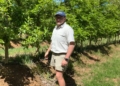
Deon Joubert, CGA special envoy on market access and European Union matters, said the situation has now become so serious that substantial losses in jobs and revenue are on the horizon unless immediate action is taken.

Joubert said they are calling on the government to declare a dispute with the World Trade Organisation (WTO) as a matter of urgency.
“The CGA has requested President Cyril Ramaphosa to urgently intervene, and halt unfair trade regulations enforced by the EU on our local industry, in particularly their discriminatory trade regulations on citrus black spot,” he said.
ALSO READ: Black citrus growers need urgent state support
EU’s actions are ‘unscientific and irrational’
Joubert explained that they have worked with the South African government for over ten years to put a stop to the citrus black spot (CBS) regulations, but the EU has continued to enforce rules that were unscientific and irrational.
“It is critical that the South African government draws a line in the sand and calls for an official WTO dispute with the EU on their CBS regulations.
“The industry has continued to raise the fact that CBS is a cosmetic issue that only affects a minuscule percentage of fruit exported, because of South Africa’s world-class control measures,” he said.
For their own members’ benefit
According to Joubert, even though there was conclusive evidence that citrus fruit without leaves was not a pathway for the spread of CBS, the EU had continued to enforce these unreasonable measures.
“The EU is the only overseas market holding this position on CBS. Other markets acknowledge that the risk of establishment and spread of the disease through trade in fresh fruit is completely negligible.
“The EU restrictions are nothing more than a protectionist impulse. Through their actions, they are blocking South African citrus to unfairly benefit their own members, specifically the Spanish citrus industry,” he said.
Growers cannot cope
Joubert said local citrus growers nevertheless have had to implement a comprehensive CBS risk management programme over the past few years.
According to Joubert, the Bureau for Food and Agricultural Policy (BFAP) has quantified the cost of CBS risk management for the EU market as more than R2 billion per year.
“This is completely beyond our industry’s financial ability. Our growers are already under pressure due to the electricity and logistics crises the country is currently experiencing and the major hike in input costs over the past two years.
“Time is running out for our growers, who are already feeling the extreme market pressures. The CGA calls on the South African government to work with the industry to put a stop to these CBS regulations and fight for South African jobs and revenue.”
Sign up for Mzansi Today: Your daily take on the news and happenings from the agriculture value chain.