While some view the United States’ 30% tariffs on South African exports as a chance to explore new markets, others warn that if the tariffs remain in place, they could trigger a social welfare crisis, especially within the agricultural sector and among consumers.
Hannes Noëth, executive director of Solidariteit Helpende Hand, said the 30% increase is not merely an economic blow, but a looming crisis that threatens employment, food security, and the overall well-being of communities.
“When job opportunities disappear, social welfare problems follow. A society without work eventually becomes dependent on welfare, and South Africa is already dangerously close to becoming a welfare state.
“We are deeply concerned that this tariff increase will severely affect job creation in key sectors such as agriculture, manufacturing, and mining. If people lose their jobs, the pressure shifts to the social welfare sector, and that path leads to greater long-term dependence and poverty,” he said.
Calm heads needed
Noëth said they are appealing to the government to recognise the link between economic decisions and social stability.
“When we fail to safeguard well-being through employment, warning lights start flashing across the social welfare sector. This cannot be ignored,” he cautioned.
Meanwhile, Louis van Ravesteyn, head of agribusiness at Standard Bank, said the US is a very important market that the country cannot afford to lose.
Related stories
- Blow to SA agricultural exports as US imposes 30% tariff
- SA pushes for extension of US tariff deadline
- Export ready? Here’s what to know about Sacu
“Africa is really not in a crisis; this is a time to be calm. If you look at sub-Saharan Africa, we only export 0.1% of our current agricultural produce to the United States. That tells you it is not a major crisis.
“But having said that, the United States market is very important to us, it is a market that we must develop because it brings in US dollars and good markets. South Africa, on the entire continent, is the one that is mostly impacted by these tariffs, which is why it is important for farmers and industry players that this issue gets resolved,” he said.
Exploring other opportunities
Van Ravesteyn further noted, “What this means for agriculture is, what opportunities are there, maybe in the Middle East or the United Kingdom, so the questions could be how do we develop new markets.”
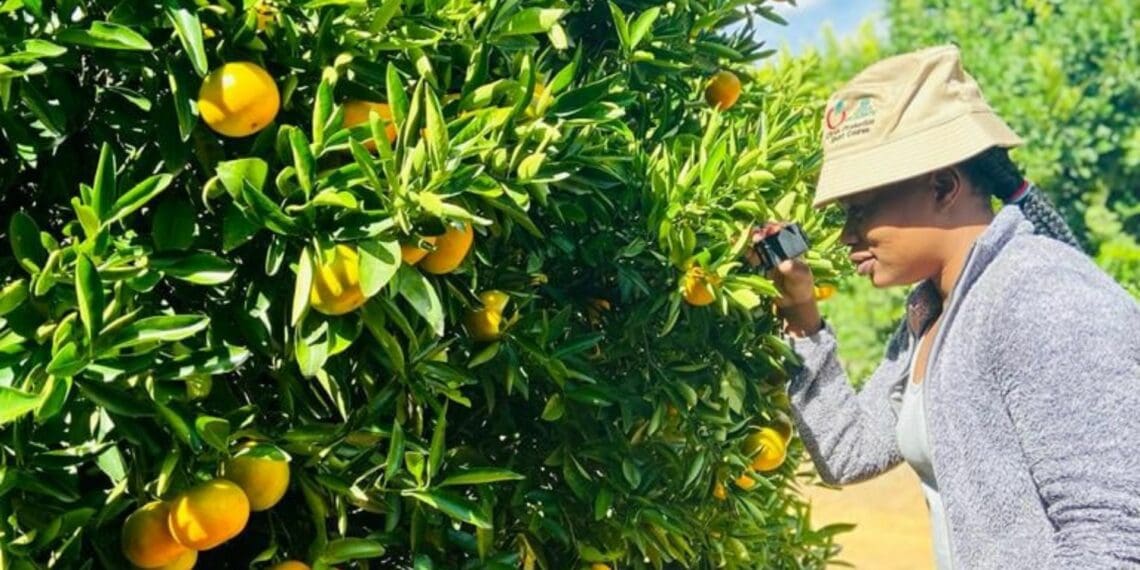
Chief executive officer of the Citrus Growers’ Association, Dr Boitshoko Ntshabele, said only citrus from the Western and Northern Cape is exported to the US. Entire rural economies, like that of Citrusdal in the Western Cape, are sustained by the US export citrus market.
“A 30% tariff would wreak havoc on entire communities. Producers from the Western and Northern Cape would have little choice but to increase shipments to other countries, rather than face severely diminished returns from the US.
“This diversion will add to citrus volumes in those other markets, possibly cause an oversupply, which can substantially reduce returns for all South African citrus producers,” he said.
Ntshabele said a mutually beneficial trade deal between South Africa and the US by 1 August is possible, or, at least, that an exemption for seasonal fresh produce could be negotiated.
“SA citrus growers do not threaten US citrus growers or US jobs. In fact, because we are counter-seasonal, quite the opposite is true. Our produce sustains interest when local US citrus is out of season, eventually benefiting US growers when we ‘hand over’ consumers at the end of our season,” he said.
Blow for wine trade
Meanwhile, South Africa Wine said the industry would push forward with its export diversification strategy, strengthening relationships in other key global markets, sharpening local marketing, and improving supply chain efficiency.
“This is a major blow, not only to our wine trade, annually worth more than R650 million with the US, but to jobs, sustainability, various input suppliers and growth across the value chain. Wine, as a discretionary and price-sensitive product, is particularly exposed.
“The industry is already dealing with uncertainty and tough cost pressures, including inflation, logistics, and rising excise duties. This tariff adds yet another burden,” the statement said.
READ NEXT: Farming sector hails David Mabuza as land reform champion