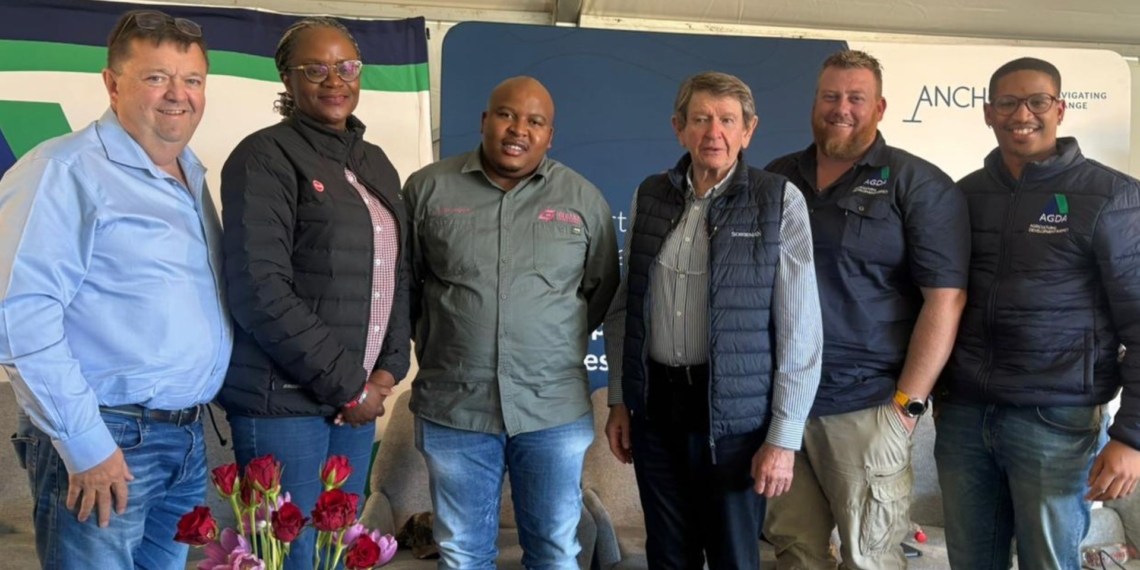
At Nampo 2026 in Bothaville, Free State, a panel tackled one of the biggest challenges facing South African agriculture: access to finance and what it truly means for farmers to be considered bankable.
Hosted by Food For Mzansi, the Agricultural Development Agency (Agda) and Anchor Capital, the discussion brought together financiers, investors and farmers to unpack the realities of agricultural funding, compliance and risk.
Dr Langelihle Simela, Absa agribusiness development specialist, said many farmers misunderstand what banks look for when evaluating funding applications.
“What tells us whether you know what you are doing is your records,” she explained. “Without records, it becomes a gamble.”
The four pillars of bankability
According to Simela, lenders focus on four key factors: operational records, whether the farming proposal can generate enough income to repay a loan, security or risk mitigation, and compliance.
Related stories
- Innovation drives resilience at Nampo Harvest Day 2026
- Land Bank back on track, boosting support for farmers
- Blended finance: Closing the gap for Africa’s smallholder farmers
- Compliance gaps threaten farmers’ access to finance
“The question is whether the business can take a loan, put production in the ground, sell into the market, repay the loan, and still retain enough income to meet its other obligations,” she said.
She added that security, including land, insurance or credit guarantees, helps reduce risk for financiers should production challenges arise.
Compliance also remains a major stumbling block for many farmers.
“Is the business formalised? Are your registrations in order? Are there existing debts? These are all issues financiers consider because if something goes wrong, the structure of the business matters,” Simela said.
Farmers still struggle to access finance
Thubelihle Ntombeni, who operates a livestock farming enterprise in Mpumalanga, shared how difficult it can be to secure funding even after years of growth.
“There were times when we approached financiers and were unsuccessful,” Ntombeni said. “The first challenge was compliance, and on the second attempt, the issue was the security required by financial institutions.”
In response, Sietze Snijder, transaction and fund development manager at Agda, said one of the biggest challenges for developing farmers is managing the operational systems behind the business.
“As farmers become more vertically integrated into the value chain, things become more complex,” he explained.
Snijder said the administrative and operational systems behind a farming business are often overlooked, despite playing a critical role in growth and sustainability. He added that many emerging farmers are forced to manage production, administration and compliance themselves, making it difficult to balance every aspect of the business effectively.
Agriculture needs patient capital
From an investment perspective, Peter Armitage, CEO at Anchor Capital, explained that agriculture differs from many traditional industries because of its long-term and unpredictable nature.
“Agriculture is an emotional industry for farmers, but investment itself is unemotional,” he said.
According to Armitage, investors weigh farming against lower-risk opportunities such as government bonds, meaning agriculture must justify its risk profile.
Armitage said agriculture faces a wide range of risks, including seasonality, weather, policy uncertainty and biosecurity threats, which makes the sector different from many traditional investments. He described farming as an industry that requires patient, long-term capital because returns are often delayed and cyclical, particularly in permanent crops, where farmers may wait years before generating income.
Despite these challenges, he noted that agriculture remains a major contributor to the economy, generating around R500 billion in production and sales annually, with approximately R250 billion exported.
“There is already around R260 billion of debt in the farming sector, so there is a lot of capital invested in agriculture. The challenge is that it remains frustratingly hard to access,” Armitage said.
Farming is stronger together
Kallie Schoeman, Agda board member whose family farming business spans more than a century, said collaboration and aggregation models can help reduce risk and improve market access for smaller farmers.
His company supports around 50 farmers producing small white beans through financing, extension support and market access programmes.
“We are stronger together,” Schoeman said. “If you want to go far, go together.”
He said cooperation remains essential in modern agriculture, particularly as farmers compete for access to transport, land and markets, adding that South Africa needs a mindset where farmers cooperate while still competing commercially.
In closing, Schoeman reminded farmers that lasting success in agriculture takes time, saying it often takes an entire generation to achieve what appears to be overnight success, and encouraged producers to keep pushing forward despite the challenges.
READ NEXT: Unlocking the potential of fallow farmland in SA’s former homelands