Sunday, May 10, 2026
SUBSCRIBE
21 GLOBAL MEDIA AWARDS
Food For Mzansi
  • News
  • Changemakers
  • Lifestyle
  • Farmer’s Inside Track
  • Food for Thought
No Result
View All Result
  • News
  • Changemakers
  • Lifestyle
  • Farmer’s Inside Track
  • Food for Thought
No Result
View All Result
Food For Mzansi
No Result
View All Result
in News

Mothers of the land: Celebrate women who feed and teach Mzansi

Across South Africa, women are redefining motherhood by nurturing the land and their communities. From mentorship gardens to goat dairies, these “Mothers of the Land” are ensuring food security by passing down vital agricultural wisdom

by Lisakanya Venna
10th May 2026
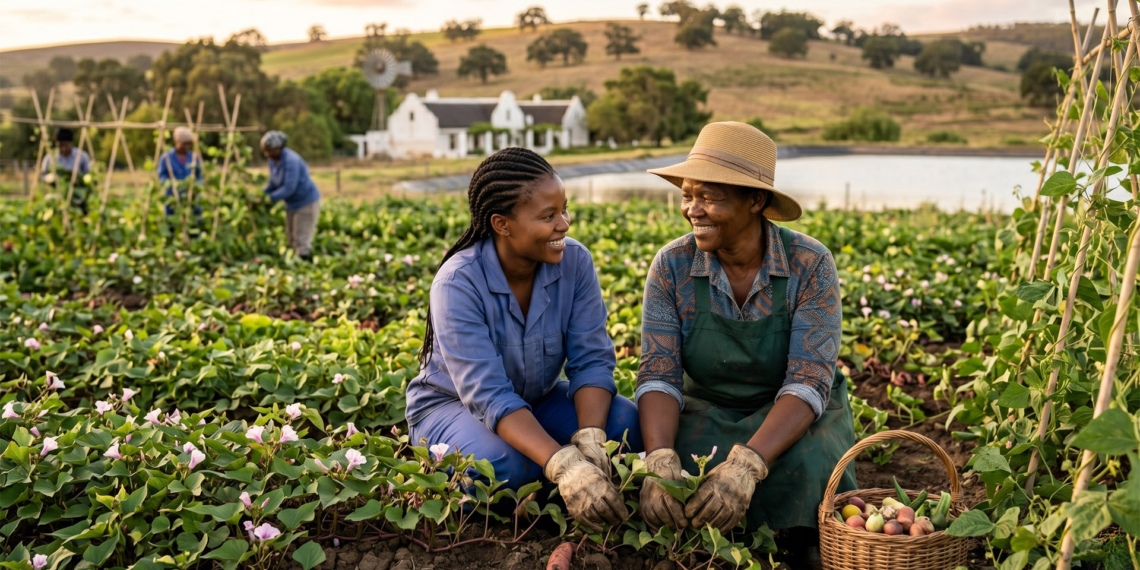
Beyond their own families, women farmers have become mothers of the land, sharing farming knowledge to empower their communities and secure a food-stable future for the next generation. Photo: Gemini

Beyond their own families, women farmers have become mothers of the land, sharing farming knowledge to empower their communities and secure a food-stable future for the next generation. Photo: Gemini

Share on FacebookShare on TwitterShare on WhatsApp

As South Africa celebrates Mother’s Day, women across the agricultural landscape are redefining motherhood by nurturing more than just their own; they are cultivating the soil, empowering their communities, and passing down vital farming knowledge to ensure the land’s legacy lives on for the next generation. 

Across the country, these established farmers have become mothers of the land, opening their gates to upcoming growers, unemployed women, and local youth. For them, farming is not a private business to be kept in the family; it is a communal responsibility to ensure that no one is left behind.

Teaching the village to feed itself

For Bongi Nzama, founder of Mbali the Village, today is a reflection of the open-door policy she inherited from her late mother, Nomali. Her mother’s lesson was simple: the soil must feed anyone who passes by. Today, Nzama has scaled that lesson into a structured system of mentorship.

“We run an informal garden for unemployed women and mothers. We invite seasoned women in the community to assist them on how to plant, and we pay them for the work done,” Nzama says. “Our motto is: ‘Each one teach one.’ If I show you how to plant, you must show your neighbour. That’s how knowledge multiplies.”


Related stories
  • Women farmers call for inclusive growth and development
  • Women farmers step forward to shape SA’s food future
  • CGE: Women farmworkers still trapped in systemic exploitation
  • Women gain ground in agri careers, but pay gaps remain

Nzama is also turning her feeding scheme into a classroom for the village’s children. “The children who come for breakfast will help us water, weed, and harvest on weekends. When they eat soup from fresh vegetables we grew together, they will understand the link between soil and survival.

FARMER POLL

📢 Which bank is powering your farming journey?

Tell us which bank you use so we can better advocate for the specialised financial tools and accessible capital needed to help South African farmers overcome growth barriers and thrive!

All submissions are kept strictly confidential. 

“If you lose the mother in a village, you lose half the farming knowledge in that village. We are going all out to make sure they are taken care of and given the knowledge to grow their own food,” she explains.

Bongi Nzama, owner of Mbali the Village, is nurturing the community through her “each one teach one” philosophy. Photo: Supplied/ Food For Mzansi

Community hero

The transfer of knowledge is often a selfless act, as seen in the work of Nothando Mthiyani. Her dedication was recognised on the national stage when she received an award at the 2025 South African Agricultural Awards in the Unsung Hero category. Since 2010, she has worked tirelessly, motivating children and her community to embrace the soil without expecting a pay cheque.

“My main job is to motivate children to love planting and look for funding for them. I just help the community so that they can use their hands, because truly our economy is on the soil,” she says.
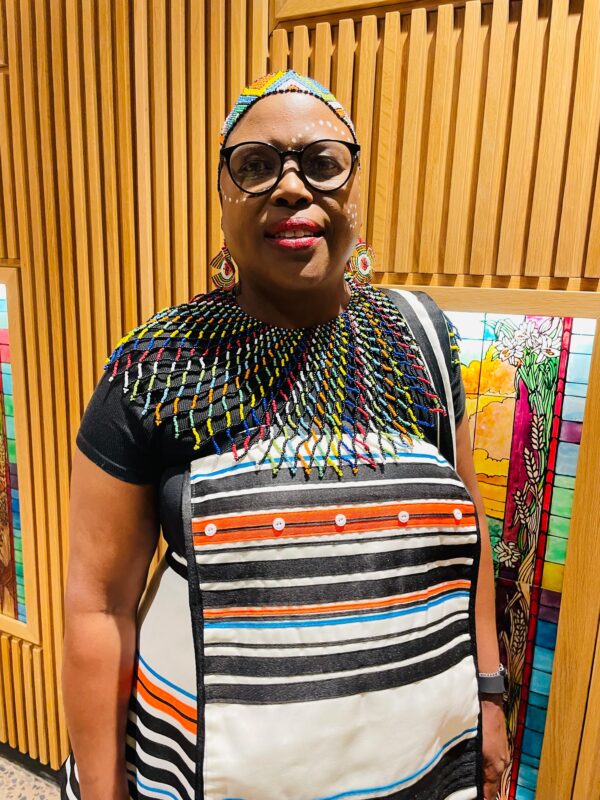
Nothando Mthiyani, a community motivator, teaches the youth and local communities to find their future in the soil. Photo: Lisakanya Venna/ Food For Mzansi

Bridging the generational gap

In the Western Cape, Sheena Paulus, founder of Tri Toad Nursery, is using her commercial seedling business to bridge the gap between generations. While she is building a legacy for her three daughters, her mission extends to the women and youth she employs in Philippi.
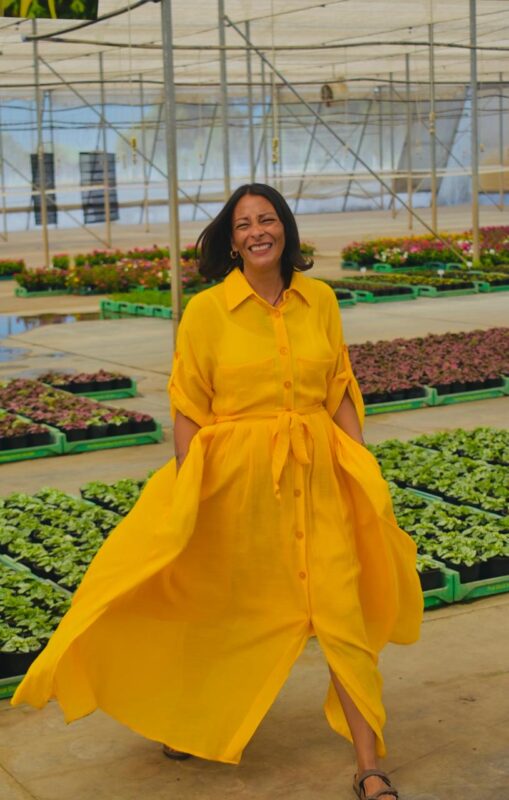
Sheena Paulus, owner of Tri Toad Nursery, is building a legacy of resilience for the next generation of women farmers. Photo: Supplied/ Food For Mzansi

“Knowledge-sharing is deeply embedded in how we operate. One of the most special parts of our nursery is Ma Yoli, who is 75 years old and still works with us every day. She trains others, works the land, and continues to experiment alongside us. That blend of youth, experience, and shared learning creates something truly powerful.

“I believe mothers play one of the most important roles in keeping farming knowledge alive. Their influence shapes not only what the next generation knows, but how they understand their relationship with the land,” Paulus says.

This drive to professionalise community farming is shared by Babalwa Hopa, CEO of Impact Dynasty and founding partner of the MMX Foundation. Hopa has volunteered her time to teach the community how to run food gardens in public spaces and is now helping them move into the formal value chain.

“I volunteered to start groups and teach the community how to run food gardens. I told them to look for schools and public places where space was available, and they are now doing so well.
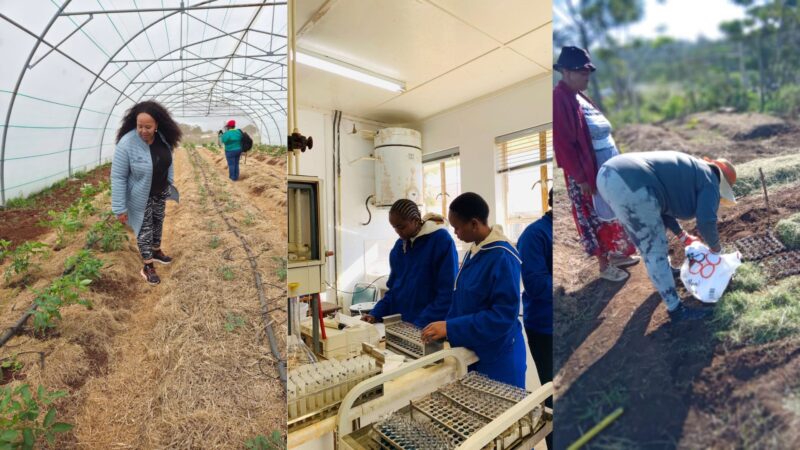
CEO of Impact Dynasty, Babalwa Hopa, with her mentees as they learn to master the agricultural value chain. Photo: Supplied/ Food For Mzansi

“Every woman is born with the gift of multiplication. We are taking the community back to regenerative agriculture, which is very welcoming to those who want to be at the forefront of farming and passing down knowledge,” Hopa says.

Turning setbacks into mentorship

The transition from student to mentor often comes from personal hardship. Nonkululeko Ximba, a goat dairy farmer from Ladysmith, KwaZulu-Natal, known as “uMama we mbuzi,” uses her past struggles to guide others.

“I started livestock farming in 2022 with just 10 goats, but early on, I faced setbacks as the goats fell ill due to my limited knowledge.

“Producing organic food is a long-term reward for their health,” she says. Today, she ensures her son is present for every business decision, from buying seeds to managing livestock.
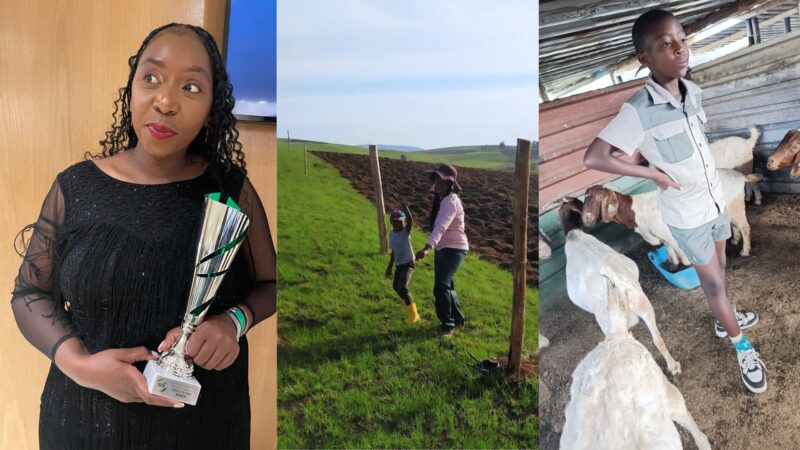
Nonkululeko Ximba, owner of a goat dairy farm, teaches her son, Asante, that independence starts with the land. Photo: Supplied/ Food For Mzansi

READ NEXT: Goss’s Wilt: What to look for and what to do

Sign-up for the latest agricultural news delivered straight to your inbox every day with Mzansi Today!

Lisakanya Venna

Lisakanya Venna is a junior journalist and content coordinator with varied multimedia experience. As a CPUT journalism alumni, she finds fulfilment in sharing impactful stories and serving as a reliable source of information.

Tags: Inspire meMother’s DayWomen in Agriculture
Poultry farming: Essential insights to boost your production
News

Govt and industry unite for phase 2 of Poultry Master Plan

by Staff Reporter
7th May 2026

South Africa is ready to take flight with phase 2 of the Poultry Master Plan. In this phase, the government,...

Read moreDetails

Citrus sector enters uncertain season as trade shifts reshape markets

6th May 2026
Start small, grow big: Tap into Mzansi’s mushroom market

Start small, grow big: Tap into Mzansi’s mushroom market

6th May 2026
SA and Brazil unite to tackle foot-and-mouth disease crisis

SA and Brazil unite to tackle foot-and-mouth disease crisis

6th May 2026
Goss’s Wilt: What to look for and what to do
Goss’s Wilt: What to look for and what to do
5th May 2026

Mother-daughter duo empowers 100 farmers through retail access

Baloyi’s mission: Designing ‘perfect plant babies’ for SA’s farmers

Mpondoland’s soil-to-pharmacy vision takes root

Goss’s Wilt: What to look for and what to do

SA and Brazil unite to tackle foot-and-mouth disease crisis

Join Food For Mzansi's WhatsApp channel for the latest updates!

JOIN NOW!

THE NEW FACE OF SOUTH AFRICAN AGRICULTURE

With 21 global awards in the first six years of its existence, Food For Mzansi is much more than an agriculture publication. It is a movement, unashamedly saluting the unsung heroes of South African agriculture. We believe in the power of agriculture to promote nation building and social cohesion by telling stories that are often overlooked by broader society.

Mothers of the land: Celebrate women who feed and teach Mzansi

Below-normal rainfall forecast threatens winter crops and dams

Late mandarins stabilise after years of strong growth

Mother-daughter duo empowers 100 farmers through retail access

Farmers battle floods, snow and damaged infrastructure

New platform launched to strengthen African food policy

  • Awards & Global Impact
  • Our Story
  • Contact Us
  • Cookie Policy
  • Privacy Policy
  • Copyright

Contact us
Office: +27 21 879 1824
News: info@foodformzansi.co.za
Advertising: sales@foodformzansi.co.za

Contact us
Office: +27 21 879 1824
News: info@foodformzansi.co.za
Advertising: sales@foodformzansi.co.za

  • Awards & Global Impact
  • Our Story
  • Contact Us
  • Cookie Policy
  • Privacy Policy
  • Copyright
No Result
View All Result
  • News
  • Changemakers
  • Lifestyle
  • Farmer’s Inside Track
  • Food for Thought

Copyright © 2024 Food for Mzansi

This website uses cookies. By continuing to use this website you are giving consent to cookies being used. Visit our Privacy and Cookie Policy.