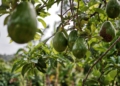
If you want to know what 159 000 kilograms of wasted food looks like, a U.S. farmer, Shay Myers, would like to show you a 14-hectare field that will not get picked because of a shortage of farmworkers.
“It’s a beautiful, phenomenal product but we can’t get the labour,” Myers, from Idaho, said in a video tweet last week. “We can’t get people to show up to do the work at $16 an hour even with housing, transportation, all of those things.”

(Editor’s note: yes, fellow South Africans, $16 is about R227.64. Compare that to the new national minimum wage R21.69 for our farmworkers.)
According to Idaho News, Shay describes himself as an agripreneur working with asparagus, onions, and sweet potatoes; a produce industry influencer and an agriculture keynote speaker.
“We grow enough food on our family farm to feed tens of millions of Americans,” he says on his LinkedIn profile.
Usually, Myers said, “[We] bring people in on a H-2A visa (a temporary agricultural worker visa for employers who anticipate a lack of available domestic farmworkers). But the border is so freaking screwed up that they can’t get people across, so we’re 30 days late.”
ALSO READ: Minimum wage: Workers rejoice, but job losses loom
The clock is ticking…
Myers said he expects it will be up to 45 days “before we have any labourers in the field to pick the crops. So what are we going to do? We’re going to throw it all away”.
Myers said he sent out the video “for people to see it and understand the ramifications of what’s going on at the border and the lack of labour that we have in this country so that we can make a difference and change things”.
Land border restrictions introduced in March 2020 due to Covid-19 have been extended every month since then, and are now expected to remain restricted to “essential” crossings only until at least 21 May.
Huge demand for foreign labour
Documented farmworkers are considered essential and can enter the U.S.
In California, the majority of field hands are undocumented Mexican-born immigrants, Sierra Garcia wrote for andthewest.stanford.edu. The labour shortage didn’t just start during the Covid-19 pandemic. It has been getting worse for years. According to the California Farm Bureau Federation, about 70% of Californian farmers reported that they struggled to find farmworkers in 2018, compared with 23% in 2014.
Unwelcoming immigration policies could cripple U.S. farms, according to the American Farm Bureau Federation, an industry lobby. “If agriculture were to lose access to all undocumented workers, agricultural output would fall by $30 to $60 billion nationwide… the reality is that a majority of farmworkers are in the U.S. illegally,” its webpage warns. “It’s time to deal with reality.”
Myers’ video about wasting 14 hectares of asparagus was met with some disbelief and denial on Twitter.
“He’s either lying about the pay or he’s in some remote area where no one is gonna drive to for $16,” @jayparson3 tweeted. “With Housing & Transportation paid for! Bull shit!” wrote Rashidbelike US ADOS @Rashidbelike.
“But where are all the Americans that say immigrants are stealing their jobs? Why aren’t they out there picking our veggies? $16 an hour plus housing and transportation and STILL they don’t want to work. Immigrants feed the world,”
@PattieSmitty tweeted.
“We need them. We should love and appreciate them,” @CathyOhrinGreip posted.
Shrinking agri workforce
The American agricultural workforce is shrinking for a variety of reasons, according to AgAmerican Lending, a mortgage lender that makes loans in the agriculture industry. These include:
- high real estate and land prices;
- steep initial investment cost of machinery and agrotechnology;
- volatile commodity pricing;
- unpredictable weather;
- unequal work-life balance; and
- the physical demand of the industry.
Immigration policies limit the available workforce pool, according to AgAmerican. Nearly half of all farmworkers are undocumented and 25% are of Mexican descent. Stricter deportation rules and increased border control enforcement have led to a decline in undocumented immigrants, the lender said in a February 2020 report.
U.S. agriculture has relied heavily on foreign farmworkers for decades.
In California, 89% of hired farmworkers were from Mexico and just 9% were born in the U.S., according to the 2013-2014 National Agricultural Worker Survey, Sacramento Business Journal reported.