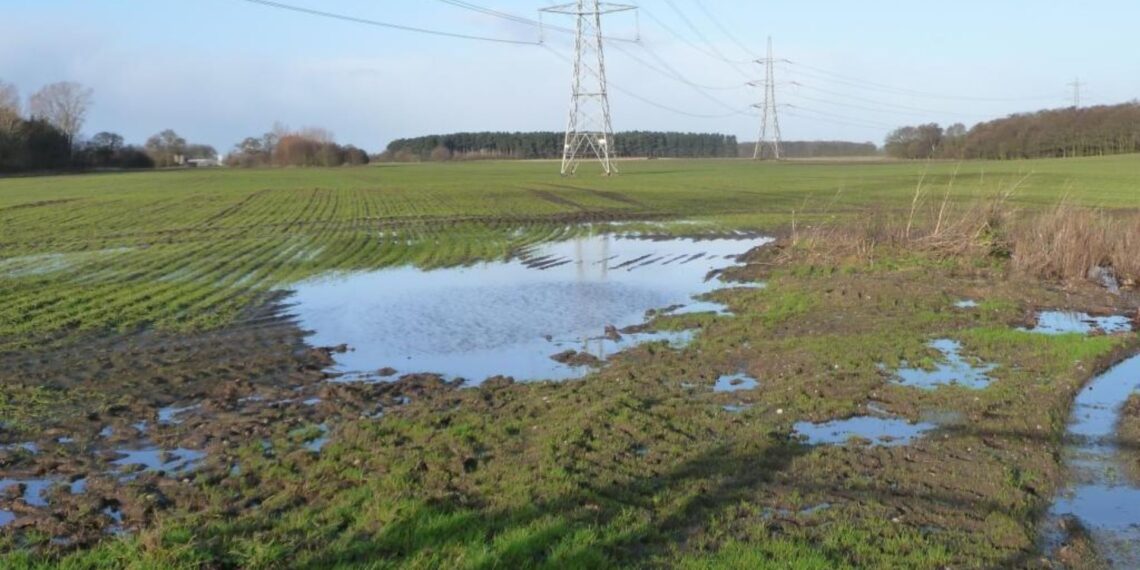
In South Africa, where rainfall patterns vary dramatically across provinces, understanding how water behaves in your soil is critical. Whether you’re planting maize in the Free State or managing orchards in Mpumalanga, the way your soil retains or drains water can make or break your crop yields.
With years of experience at companies like Omnia and AECI Plant Health, soil scientist Peter Mudau offers valuable insights into how farmers can navigate the complexities of free water in their soils.
What is free water or gravitational water?
Free water, also known as gravitational water, refers to the water that moves freely through soil pores under the influence of gravity. Mudau explains that this form of soil water behaves according to basic water mechanics, flowing downward due to gravitational pull, hence the term gravitational water. Recognising how this water functions is vital, as it directly influences irrigation practices, planting schedules, and crop selection.
“An understanding of soil water mechanics helps the farmer to monitor irrigation practices, to decide on the planting seasons and also planting densities. It affects further affects crop or cultivar selection,” Mudau says.

Related stories
- Healthy soil: The power of soil aggregates and microbes
- Managing soil acidity to improve crop quality
Rainfall, soil types, and the risks of waterlogging
With provinces like Limpopo, North West, and the Free State experiencing heavy rainfall recently, many farmers may wonder if they’re dealing with free water or something more problematic. Mudau clarifies that heavy or poorly drained soils are particularly prone to waterlogging. Soils with a high clay content and low-lying topography, common in parts of Gauteng and Mpumalanga, are especially susceptible.
“Among the types of soils we deal with in South Africa, you can find soils like Kroonstad, Sepane, Katspruit, Westleigh and so forth that has high possibility of surface run-off during heavy rains as a result of gravitational water or free water soil dynamic.”
He notes that waterlogging is more prevalent in southern regions such as Mpumalanga, Gauteng, and the northwestern parts of the Free State. These areas often have wet soils, particularly in depressed or low-lying terrains. In contrast, drier provinces like Limpopo and the Northern Cape are less affected due to lower rainfall and higher evaporation rates.
How to identify free water
The signs of free water in soil are often straightforward.
“You can just dig within the profile. If you find that it’s been a while since you’ve received rainfall and there is still water sitting within those layers, then you must know that that soil has free water,” Mudau says.
Soil colour can also serve as a clue. Shades of grey, green, and blue often indicate standing or permanent water accumulations. The presence of plinthic, gleyic and gleying horizons also suggests a higher risk of water saturation, as these layers stores water.
Key concepts
To effectively manage free water, farmers need to understand two critical terms: drainage capacity and infiltration rate.
“Drainage capacity is the ability of the soil to drain water out of the profile. Infiltration rate is the time at which the water moves within the profile.”
Coarse soils, such as sandy types, tend to drain faster, while finer-textured soils retain water for longer periods. Farmers can evaluate these properties using various tools and instruments, though more advanced measurements often require hydrology experts with specialised equipment.
What are the risks of too much free water?
Although water is essential for plant growth, an excess can be harmful. It can also complicate farming operations.
“If those crops cannot withstand excess water, they are going to have stunted growth, and there will be a lot of fungal and bacterial attacks in those crops.
“It then becomes very difficult to cultivate that land or to work it because the soil already is wet, and if a tractor has to work on it, it’s going to be very, very difficult.”
Properly managing free water, especially in the lower soil layers, can support groundwater recharge and reduce surface runoff. But if neglected, the consequences can be severe.
“Poor management of ‘free water’ and its impact being overlooked can reduce soil microorganisms, soil aeration, denitrify or leach nitrogen and increase phosphorus mobility, which might be washed into nearby water bodies and cause eutrophication,” Mudau explains.

If you suspect free water issues on your farm:
- Dig soil profiles to physically check for water availability in the lower horizons.
- Look for colour changes and presence of mottles – grey, green, and blue tones are warning signs.
- Use tensiometers or consult a hydrologist for detailed insights into water movement.
- Be selective with crop choices – opt for varieties that can tolerate wetter conditions if waterlogging is frequent.
- Improve drainage with raised beds, contouring, constriction of ditches or drainage channels.
While excess free water can pose serious risks to crops and soil health, it also offers important environmental benefits when properly managed. Free water that infiltrates deep into the soil profile contributes to the natural recharge of groundwater, a vital resource for irrigation especially in drought-prone regions.
“Effectively managing free water found in the lower layers of soil can support the water cycle by contributing to groundwater recharge and reducing surface runoff,” Mudau explains.
By improving drainage systems and understanding their soil’s infiltration capacity, farmers can harness the advantages of free water to support long-term soil fertility and enhance overall farm resilience.
READ NEXT: Endoparasite control: Treatments, timing and strategy
Sign up for Mzansi Today: Your daily take on the news and happenings from the agriculture value chain.