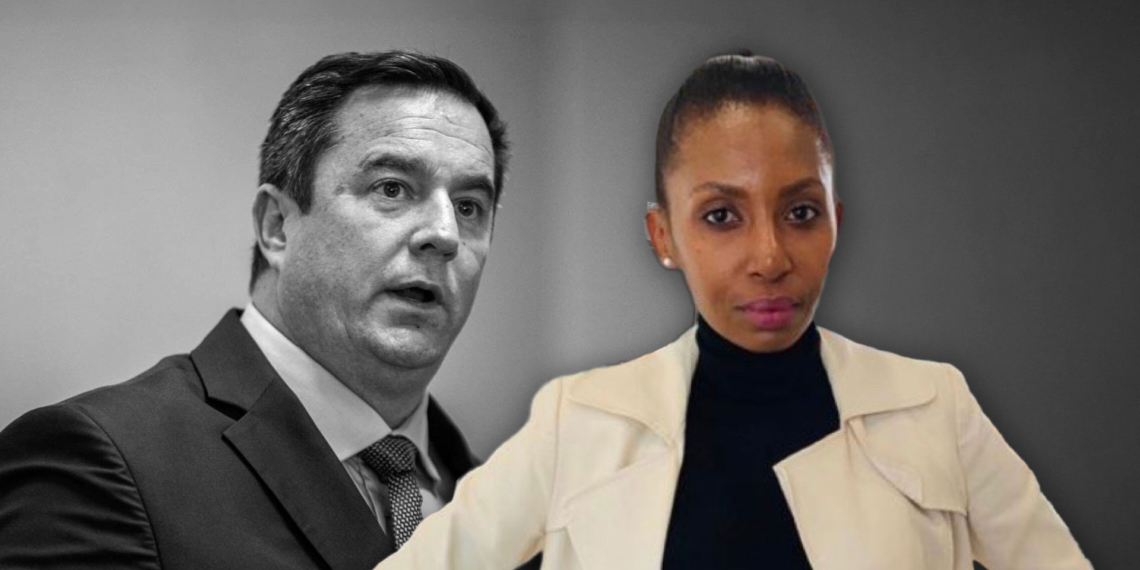
From high court battles over FMD vaccines to stalled water licences, legal expert Katlego Ngwane breaks down how John Steenhuisen’s handling of the farming crisis led to his ultimate downfall and what lies ahead for the industry.
John Steenhuisen did not lose the agriculture portfolio because of politics. He lost it because farmers stopped believing him – and in South Africa, that is a very particular kind of failure.
Last week, Steenhuisen broke his silence in an interview with News24, and the spectacle was something to behold.
The man who once stood at podiums demanding accountability from the ANC sat before a camera and told us he had been betrayed. That Tony Leon was “pulling strings”. That the “AfriMAGA mob” had been baying for blood, and that Geordin Hill-Lewis had handed them his head. His words: “Hill-Lewis gave my head to the hyenas.”
Remarkable language from a man whose chief of staff, just weeks earlier, received a letter from desperate farmers begging for help with the worst foot-and-mouth disease outbreak in South Africa’s recorded history – and forwarded it to senior officials with the note: “Attached just received for some amusement.”
Let that sink in.
Farmers writing in good faith, at Steenhuisen’s own invitation, about a national livestock emergency, and the minister’s inner circle treated their words as entertainment.
The FMD crisis was never just about cattle
The foot-and-mouth disease (FMD) outbreak has devastated South Africa’s livestock industry. For emerging farmers – the smallholder producers, the black commercial farmers who fought for land and then fought to keep it productive – this was not an abstract policy failure. It was animals dying. It was income collapsing. It was the fragile economics of land reform being undermined by bureaucratic inertia and ministerial ego.
Steenhuisen’s response was to centralise control, exclude independent experts, and, when challenged, reach for the oldest political tool in the book: character assassination.
He weaponised Theo de Jager’s decades-old community radio conviction in a desperate attempt to discredit legitimate criticism of his handling of the crisis.
Related stories
- Krige: Agriculture deserves answers on Steenhuisen exit
- Steenhuisen could be axed as agriculture minister as early as this week
- Steenhuisen quits DA leadership, pledges to end FMD
- Labour crackdown: Farmers face rising risks over undocumented workers
He removed Dr Danie Odendaal from the ministerial task team for refusing to sign a confidentiality agreement in the middle of a national emergency, when transparency should have been non-negotiable.
The Pretoria High Court agreed with the farmers. It granted an interim order allowing livestock owners to independently procure and administer FMD vaccines without state involvement. That is not a footnote. That is a court telling a minister: you got this wrong, and people cannot afford to wait for you to get it right.
The interview and the bombshells that weren’t
Steenhuisen’s News24 interview has been described as him “dropping bombshells”. I would call it something else: a man in denial performing victimhood for an audience he hopes will forget what actually happened.
He says this was never about performance. But the High Court disagreed. Farmers disagreed. Former DA members disagreed. His own party disagreed – publicly, in writing, with a cabinet reshuffle.
He blames Tony Leon. He blames external forces. He blames an “AfriMAGA mob”, a phrase designed to delegitimise Afrikaner farming communities by casting them as fringe extremists rather than what many of them are: people who watched their cattle die while waiting for a government that invited their input and then mocked it internally.
What Steenhuisen does not say – at least not in anything reported – is: I wish I had handled the FMD crisis differently. I wish Jana le Roux had never sent that email. I wish I had listened to the farmers sooner.
There is no accountability in the interview. There is only injury.
What this means for agriculture – and for us
Proposed new agriculture minister Willie Aucamp has been handed a poisoned chalice and told his immediate priority is to resolve the ongoing legal disputes around FMD. That is where the real work begins, and it will require him to rebuild trust with a sector that has been made to feel like a punchline.
For those of us who work in agricultural law and natural resource compliance, this moment matters. It is a reminder that the relationship between farmers and the state is fragile, and that when that relationship breaks down, it is not just cows that suffer. It is water use licences that don’t get processed. Environmental compliance programmes that stall.
Investment decisions that get shelved. Land that sits underproductive because no one trusts the department enough to engage it.
Water law, land use, environmental authorisation – all of this sits within a framework that requires the state and the agricultural sector to be in genuine dialogue. When a chief of staff treats a farmer’s letter as a joke, she is not just embarrassing her minister. She is eroding the legitimacy of the entire regulatory relationship.
The real lesson
John Steenhuisen is not the villain in some grand drama. He is something more ordinary and more instructive: a politician who reached the height of his ambition, chose the wrong battles, listened to the wrong people, and failed to read the room in the one sector where the room has very little patience for being misread.
South African agriculture does not have time for performative governance. The FMD crisis reminded us of that brutally. The farmers who wrote to Steenhuisen’s office did so in good faith because they believed the system could work. Jana le Roux’s email told them it couldn’t.
That is what Steenhuisen should be answering for in his interviews. Not Tony Leon. Not the hyenas.
The farmers.
- The views and opinions expressed in this article are those of the author and do not necessarily reflect the views or positions of Food For Mzansi.
READ NEXT: What we’re missing in regenerative farming: A new way to learn