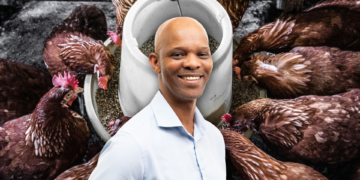
Many emerging farmers struggle not because they can’t produce, but because they lack proper business systems. Limpopo’s Matjee Mokgoadi is changing that. Through his work with Yard and the Phuti Ya Mashilape Group, this Farmer Mentor is equipping rural youth with the compliance, market access, and structured mentorship needed to thrive.
For Limpopo-based agripreneur Matjee Mokgoadi, agriculture is about more than producing crops. It is a pathway to economic development, youth empowerment and sustainable opportunities in rural communities.
As founder of the Phuti Ya Mashilape Group, Mokgoadi combines practical farming experience, agribusiness support and youth leadership to help emerging farmers build viable agricultural enterprises. Inspired by the challenges facing rural communities, particularly youth unemployment, he saw agriculture as a tool for creating opportunities and driving community development.
His agricultural journey began with vegetable production, focusing on tomatoes and leafy vegetables. Over time, his work expanded beyond farming to include farmer development, cooperative support and agricultural leadership.
As deputy chairperson of Youth in Agriculture and Rural Development (Yard) South Central, he works with around 100 farmers through compliance and technical support workshops conducted in partnership with stakeholders such as the Agricultural Research Council (ARC).
He is also helping establish a 10-member cooperative on 7.5 hectares of land allocated by a local traditional authority. The group has already established spinach beds with about 1 000 transplanted seedlings and is raising carrots, beetroot, onions and spinach seedlings for future planting.
Related stories
- Limpopo youth grows grain business from social grant savings
- Limpopo grain farmer combines business brains with farming brawn
- Ex-cop beats poisoning disaster to build growing livestock business
- Backyard bounty: Soweto graduate grows smarter with hydroponics
Helping other farmers grow
Through his work with farmers, Mokgoadi identified a common challenge facing many new entrant producers.
“Many farmers do not fail because they cannot produce,” he says. “They struggle because they lack systems, market access and business support.”
This insight led to the establishment of Phuti Ya Mashilape Group, which focuses on agricultural production as well as agribusiness development services. Operating mainly in Limpopo’s Sekhukhune district, the business assists farmers, cooperatives and small enterprises with business planning, funding applications, compliance support, governance systems, mentorship and market linkages.
“We are combining practical agricultural skills with the agribusiness element because many people still do not see agriculture as a viable business opportunity,” Mokgoadi explains.
His role in the cooperative project is to help develop the enterprise and build the capacity of members before management responsibilities are handed over to the cooperative’s leadership.
Scaling sustainably
On the production side, the business focuses primarily on vegetables, including tomatoes, Swiss chard, onions and beetroot. At the same time, Mokgoadi sees significant opportunities in agro-processing and value addition to increase rural incomes and create sustainable businesses.
Rather than waiting for opportunities, he has focused on building systems, strengthening partnerships and helping farmers become organised, compliant and investment-ready.
One of the key lessons Mokgoadi shares with farmers is the importance of building strong foundations before pursuing rapid growth.
“If you are coming from a rural farming background, focus on direct markets first because that is where you often achieve the best margins.”
He believes many farmers attempt to access large retail markets before they have sufficient production volumes and operational stability.
“People often compare themselves with large commercial producers farming 20 hectares or more. Young farmers need to understand that growth happens step by step. Focus on building systems first, improving profitability and then reinvesting to expand production,” he says.
Like many young agripreneurs, Mokgoadi has faced challenges ranging from limited access to funding and infrastructure to helping farmers meet funder and market requirements. His response has been to focus on organisation, compliance and building relationships with municipalities, government departments and other stakeholders.
He adds, “Collaboration and knowledge sharing are essential for rural agricultural development.”
Mokgoadi explains that his work is guided by four key principles: discipline, service, integrity and creating long-term impact. Success in agriculture, he emphasises, requires patience and consistency, while effective leadership involves supporting farmers to become compliant, grow their businesses and access opportunities.
He also highlights trust as a critical foundation for building strong relationships with communities, partners and stakeholders.
Creating a legacy of opportunity
Looking ahead, Mokgoadi hopes his contribution to agriculture will be measured not only by production outcomes but also by the people and systems he helps develop.
He believes agriculture offers significant opportunities for young people, particularly when combined with technology, innovation and sound business systems.
“I want young people to see agriculture as a serious business and career path, not as a last resort.”
His advice to aspiring farmers is simple: “Start small if necessary, but start professionally. Keep records, understand your market, build relationships and never stop learning. Agriculture changes constantly through technology, climate realities and market demands.”
Most importantly, he encourages young farmers to collaborate, noting that partnerships and shared learning create greater opportunities for growth and success than working in isolation.
READ NEXT: FMD: South Africa’s beef industry pays price for poor traceability